

I’ve reached a point where denying the relevance of electric vehicles feels pointless. As much as the petrolhead in me wants to resist that reality, it’s one that keeps hitting harder every year. This time, instead of running from it, I chose to lean in: to understand it, embrace it, and finally accept where the world is headed. The problem is that most electric vehicles I encounter are designed to be sensible first and soulful last, built to commute rather than excite. And yet, somewhere beyond the predictable and the practical, a few manufacturers are quietly trying to tempt people like me back in, building electric machines that aim to spark the same desire a combustion engine once did.
The conversation around electric vehicles, however, still feels stuck in the wrong place. I find that we obsess over numbers meant to reassure rather than inspire, range figures quoted like lifelines and charging times defended like excuses. It’s all very sensible, very rational, and painfully forgettable. What rarely gets discussed is whether an EV can make you want it for reasons that have nothing to do with practicality; whether it can stir something deeper than convenience; whether it can carry an identity strong enough to make an enthusiast choose it with the same conviction once reserved for loud exhausts and rising rev counters.
That’s where this story begins to matter for me. Tucked away from the commuter-friendly, efficiency-first electric narrative are two machines built with a very different intent. One leans into racing heritage and visual drama, wearing its performance inspiration proudly on its skin. The other feels raw, aggressive, and almost defiant, as if it exists purely to prove that electricity doesn’t have to come wrapped in restraint. Together, they signal a shift, not in technology, but in attitude, suggesting that the future of Indian electric performance might finally have something I can emotionally latch onto.
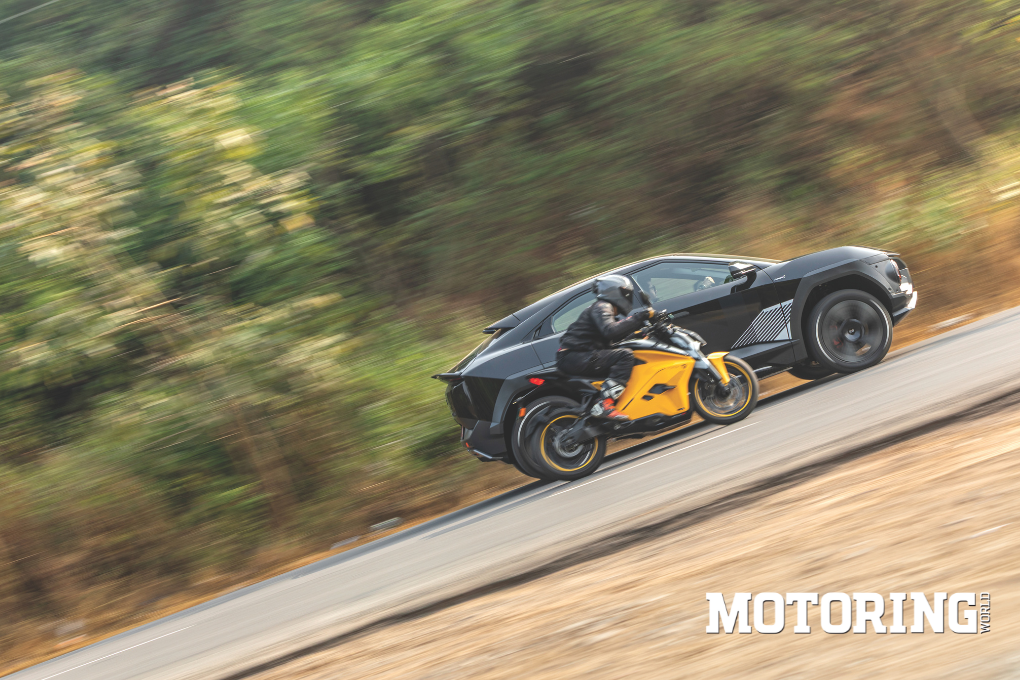
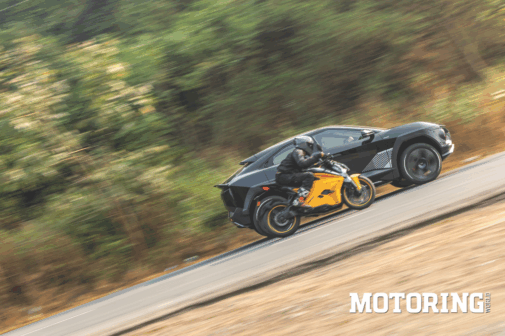
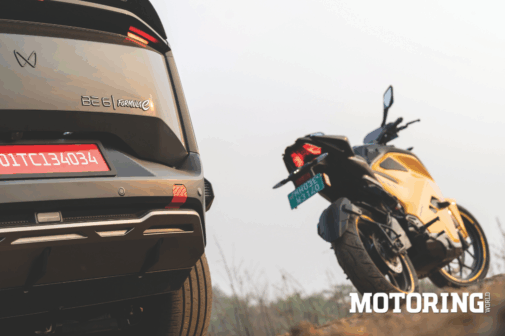
The BE 6 and the F77 Superstreet Recon aren’t just electric vehicles made in India; they are a deliberate push against the idea that EVs have to be sensible to a fault. They aren’t just here to be green; they are here to be cool. They have that ‘cool quotient’ in spades, and that is exactly what sets them apart in a crowded market. I think of the BE 6 as a love letter to Mahindra’s racing heritage, written with a battery rather than a fuel tank. It looks like it belongs on a track-day poster, not just a city street. And the F77 Superstreet? That’s the kind of electric streetfighter that doesn’t just turn heads; it spins them around and makes people rethink what an EV can actually be. These two machines are out to do more than just offer an alternative; they are here to reawaken that spark of excitement that enthusiasts feel when they see something truly special on wheels. They are proof that electric doesn’t have to mean boring; it can mean bold, and it can absolutely mean fun.
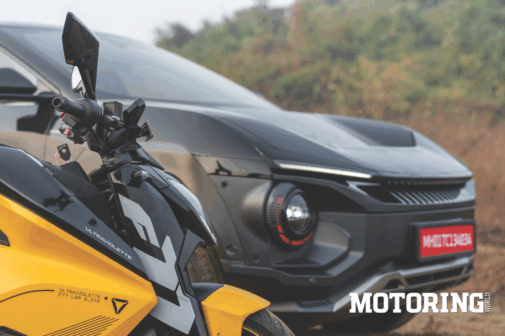
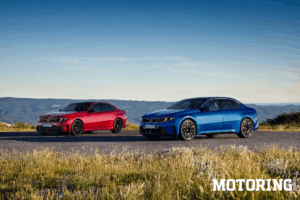
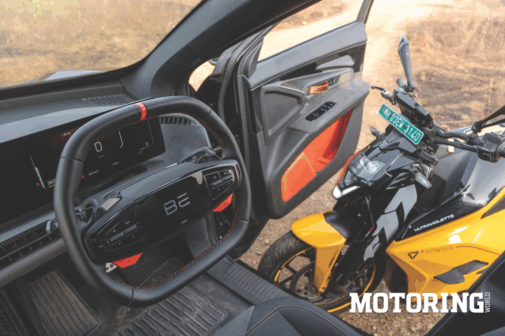
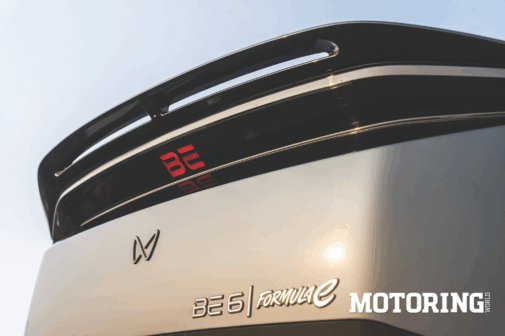
When I dive into the BE 6, the details are what really bring out its character. It isn’t just about slapping on some fancy paint; this Formula E edition takes cues straight from Mahindra’s racing DNA. I noticed a reworked front end where the usual C-shaped DRLs give way to these sleek LED eyebrow signatures. At the same time, the main headlights have shifted down into the bumper as neat circular projector units. But that’s just the start. The SUV features dark liquid-metal cladding along the lower edges, race-inspired graphics splashed across the doors, fenders, and bonnet, and a 12-stripe motif that runs over the fixed-glass roof and bonnet. There’s even a sporty boot lip spoiler, orange brake callipers, and Formula E badging and decals tucked around the front quarter panels and even on the carpet lamps, and you’ll also spot FIA branding on the windscreen. It is a machine that looks every bit as bold as it sounds.
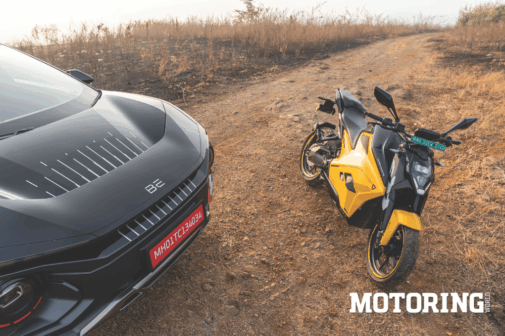
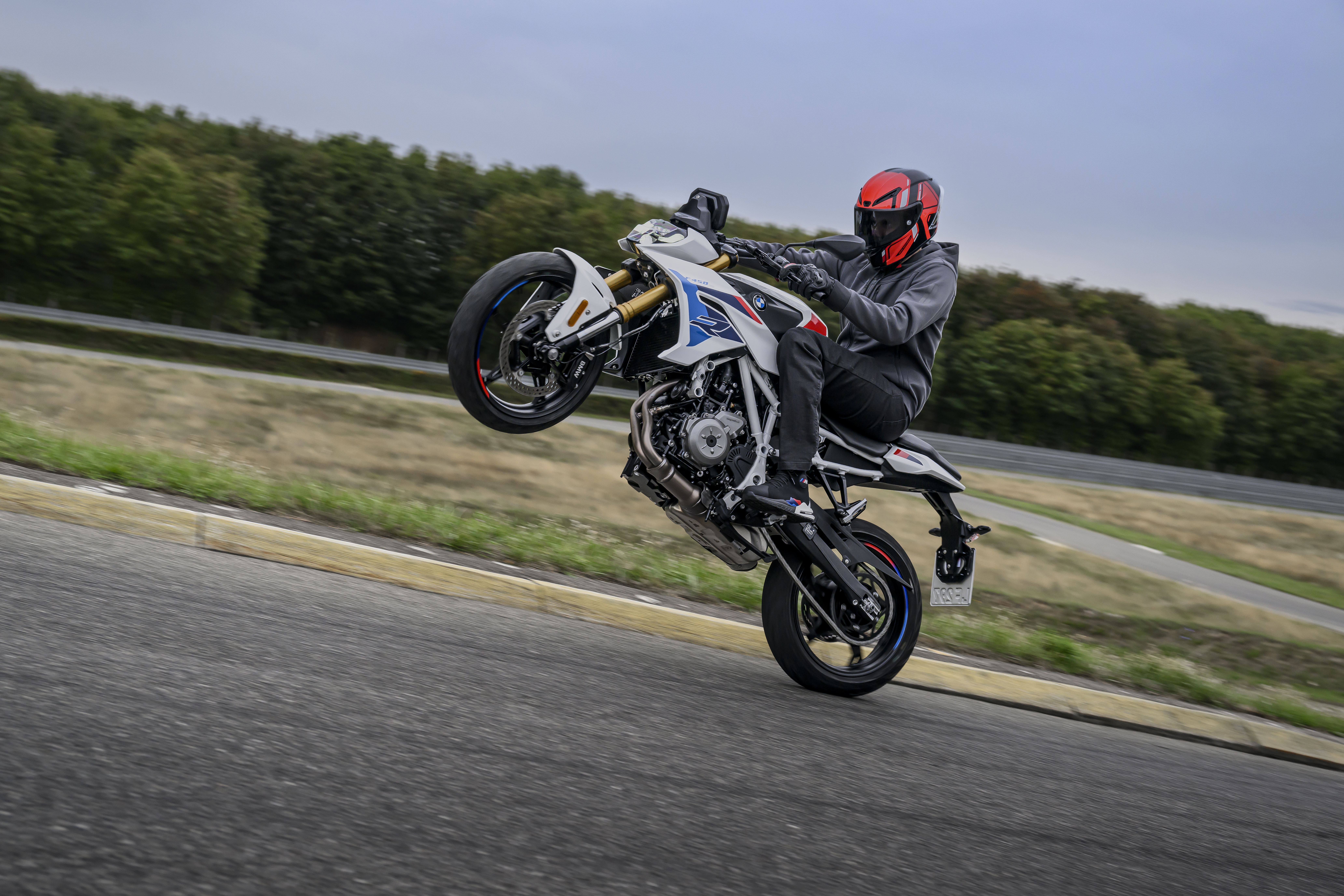
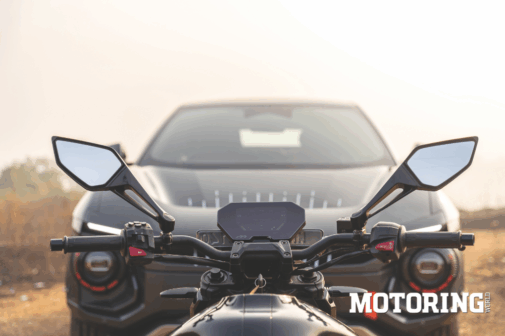
Then, there is the Ultraviolette F77 Superstreet. If a stealth bomber ever decided it was done with the skies and wanted to rule the asphalt jungle, I imagine it would look a lot like this. It isn’t just a motorcycle; it’s a piece of high-tech origami folded by a futuristic designer. Up front, it has this aggressive ‘Ultra-V’ LED face that looks like a mechanical predator sizing up its next move. Instead of the usual exposed gears and pipes, the F77 keeps its electric heart tucked behind sleek, jet-inspired fairings and sharp geometric lines. It stands tall and confident, trading the back-breaking clip-ons for a single-piece handlebar that gives it a broad-shouldered, ready-for-anything stance. No matter what colour I see it in, it looks fast even when it’s stationary. It has this sleek, almost superhero vibe, like something Batman might ride if he needed a two-wheeler. The F77 Superstreet isn’t just an electric bike; it’s a statement that electric can be every bit as thrilling as the machines I grew up dreaming about. On paper, the numbers already feel disruptive. Having over 200 horsepower going to the rear wheels, in a car that lands just north of Rs 20 lakh on road, is the kind of proposition that would’ve sounded absurd not too long ago. Tellingly, Mahindra isn’t screaming about efficiency charts or eco credentials from the rooftops. Instead, much like it does with its best petrol and diesel offerings, the focus here is squarely on performance, on the idea that electric propulsion can make serious pace far more accessible than ever before.
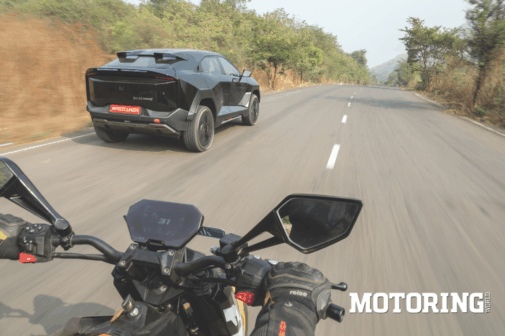
The 0–100 kph run is dispatched in 6.7 seconds, but that figure almost undersells the experience. What really stands out to me is how unbothered the BE 6 feels while doing it. There is no tyre screeching and no exaggerated shove into the seat, even with Boost mode engaged. It simply gathers speed in a clean, linear surge, feeling completely at ease as it sails past triple-digit speeds. It’s drama-free in a way that might initially surprise a seasoned petrolhead, but spend more time with it, and you realise that this composure is precisely what makes it so effective. That effortlessness translates beautifully into real-world driving. Overtakes are dispatched without hesitation, regardless of speed or passenger load, and there’s a reassuring sense of control that never feels synthetic. The brake energy regeneration, in particular, deserves credit; it’s calibrated with a level of finesse that many EVs still struggle to achieve, with no awkward pauses or jerky transitions between acceleration, coasting, and braking.
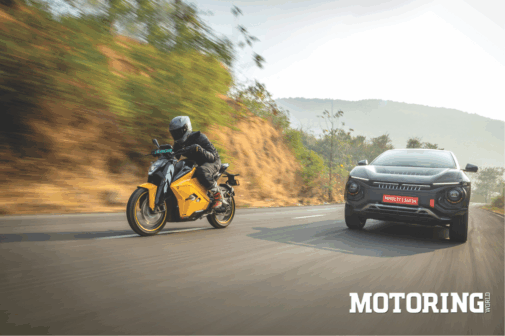
The ride comfort and refinement only strengthen the BE 6’s appeal. Despite riding on large 20-inch wheels, it avoids the overly stiff or floaty tendencies that plague many electric SUVs. There is some lateral movement over uneven surfaces, but crucially, the adaptive suspension never crashes through sharp potholes, maintaining a sense of polish that feels well-judged for Indian conditions. But what truly seals the deal for me is the drivetrain layout. Rear-wheel drive remains a rare indulgence in this segment, and the BE 6 uses it to great effect. The balance, the grip, and the way the power is deployed make it genuinely enjoyable to drive, not just quick in a straight line. It doesn’t try to mimic the theatrics of an ICE performance car, and that is precisely the point. Instead, it offers a different kind of engagement, one rooted in precision, confidence, and control, and in doing so, it proves that electric performance can still tick the boxes that matter to petrolheads like us.
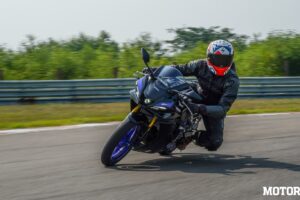
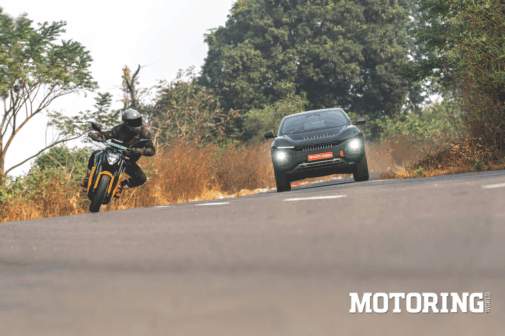
If the BE 6 wins me over with composure and confidence, the F77 Superstreet does it the old-school way: by making me want to keep twisting the throttle. It is properly quick, fast enough to put a few conventionally powered motorcycles to shame, and that becomes most apparent in its most aggressive setting. Ballistic mode isn’t subtle, and it isn’t meant to be. It sharpens the response and brings out the F77’s true character, revealing just how serious this electric motorcycle can be. What stands out immediately when I ride the F77 is the fun factor. It feels quick and planted through fast corners, stable when I get back on the throttle early, and reassuringly composed even when I keep pushing. There’s no noticeable drop in performance when I ride it hard back-to-back; no sense of the bike dialling things down to protect itself. The delivery remains consistent, which builds confidence and encourages me to keep going.
With close to 40 bhp and 9.6 kgm at my disposal, the Superstreet stays engaging throughout. In Ballistic mode, the traction control does step in occasionally, but more as a quiet safety net than an interruption, helping keep things tidy when enthusiasm runs ahead of grip. In Combat or Glide modes, the electronics fade into the background, letting the bike feel more relaxed and approachable. A short stint on public roads isn’t enough to judge long-term comfort, but that almost feels secondary here. The F77 Superstreet isn’t trying to be all things to all riders; it’s trying to make a point. It delivers its excitement in a sharp, immediate, and unapologetic way, reminding me why performance motorcycles are addictive in the first place. It may not sound like the machines I grew up idolising, but the thrill it offers is very real, and that’s what ultimately matters.
Ultimately, the BE 6 Formula E and the F77 Superstreet aren’t just machines; they are the first few frames of a new cinematic era for Indian performance. For years, I feared that the ‘electric future’ would be a sterile landscape of silent commuters and soulless appliances. I thought that by losing the scent of high-octane fuel and the mechanical symphony of a rising redline, I was losing the very pulse of motoring itself. So here is where I land. As a petrolhead, I’m starting to accept that EVs aren’t just the future, they are here now, and they are evolving fast. But at least for now, I’ve found two genuinely exciting Indian-made EVs that are actually performance-oriented. The BE 6 Formula E and the Ultraviolette F77 Superstreet are proof that I can get that familiar thrill, that emotional spark, even without a drop of petrol.
And that is really what this story is about. These aren’t just any EVs; they are machines that give enthusiasts something to latch onto. They are the kind of vehicles that make me want to take the long way home, that make me feel something when I drive or ride them. In other words, they are the spark that proves the future doesn’t have to be soulless. It can be every bit as fun. Looking at the BE 6 and the F77, and I’m realising that the future doesn’t just look inevitable; it seems like it could be a blast. The roar of yesterday might be fading, but the adrenaline is still here. It’s just taken on a new form. And for the first time, I’m genuinely excited about what’s next.