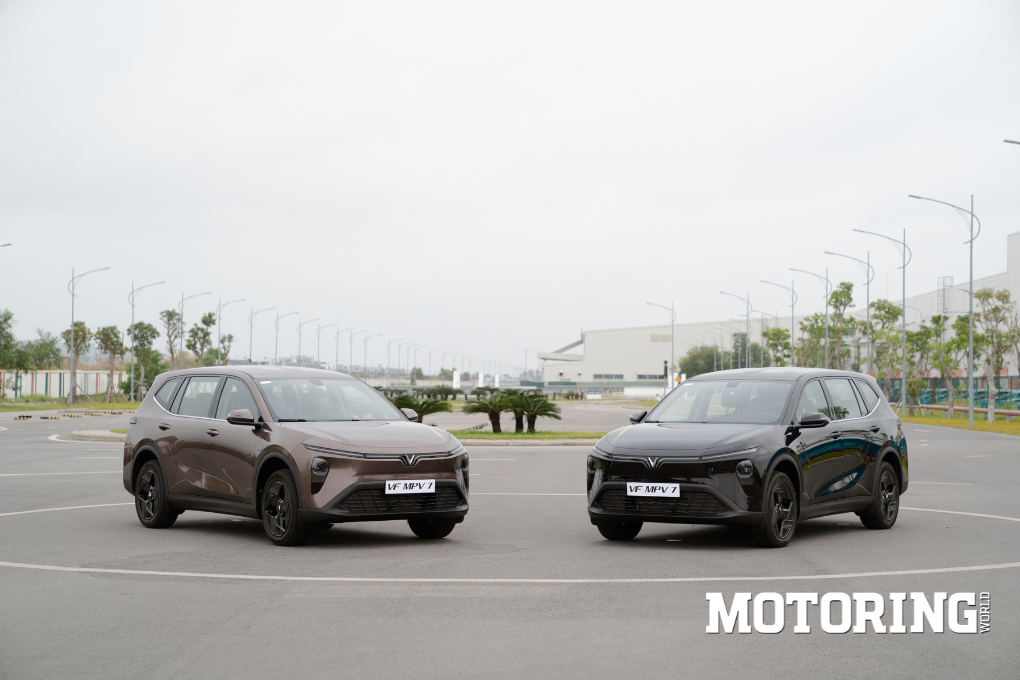


We hopped on a flight and made our way to Hanoi, Vietnam, for what was a rather quick but important drive. The car in question? VinFast’s latest offering for India is the VF MPV 7. While the journey was short, both in terms of travel and actual seat time, the intent behind it was clear. VinFast is serious about India, and the VF MPV 7 could very well be its most relevant product yet.
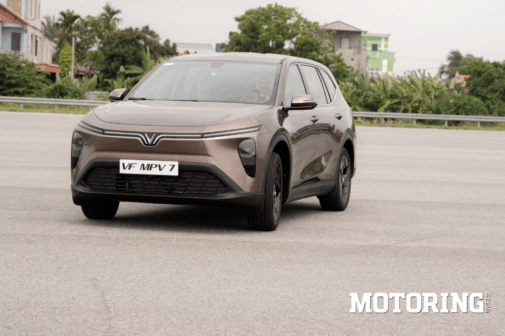
This marks VinFast’s third product for the Indian market, following the VF 6 and VF 7, both of which have already positioned themselves as strong value propositions in the EV space. With competitive pricing strategies, free charging initiatives, and attractive battery warranties, the brand has managed to generate early interest and a fair bit of trust among Indian buyers. Now, with the VF MPV 7, VinFast is shifting focus towards a more mass-market, family-oriented audience, a space that demands practicality just as much as it does value.
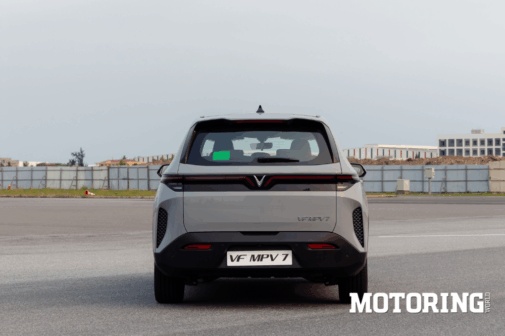
Before we dive deeper, it’s important to set the context. This was a very short drive, more of an initial impression than a comprehensive road test. Vietnam, being a left-hand drive market, meant we were driving the car in a configuration that isn’t representative of what India will get. More importantly, our driving was restricted to VinFast’s factory premises.
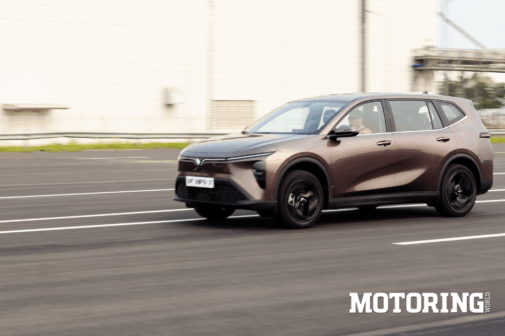
That said, the facility did give us access to a reasonably long straight for acceleration runs and a skid pad to get a basic sense of handling. We spent about two hours with the car, which is enough to form first impressions, but not enough to pass a final verdict.
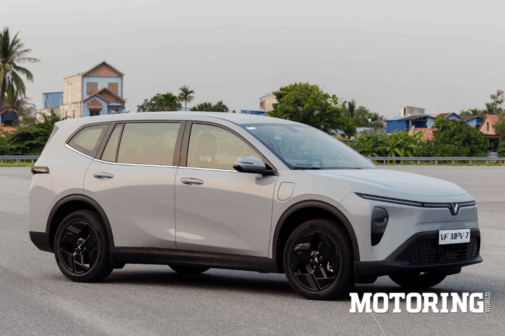
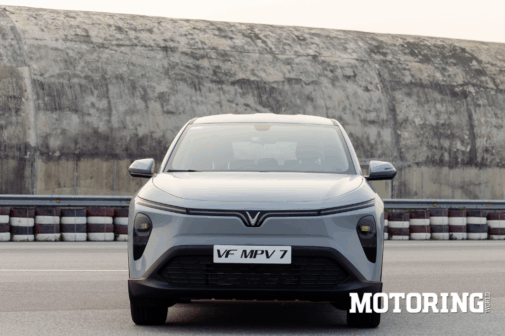
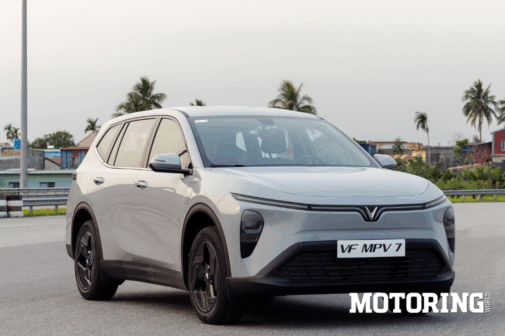
At first glance, the VF MPV 7 sticks to the classic MPV silhouette. It’s upright, practical, and prioritises space over flamboyance. But spend a bit more time with it, and you begin to notice the blend of influences.
From certain angles, especially at the rear, there are hints of design inspiration that feel familiar, almost reminiscent of something like the Tata Safari. Up front, however, the car takes a more futuristic approach. The signature ‘V’ lighting element, which has become a hallmark of VinFast’s design language, gives it a distinctive identity. There’s also a slight Tesla-like minimalism in the front fascia.
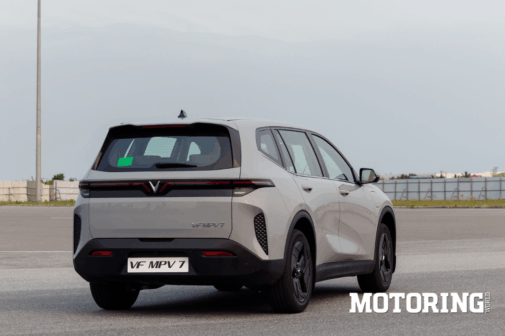
The overall result is a design that doesn’t scream for attention but still manages to stand out. It looks modern, clean, and unmistakably electric, something that matters more than ever in today’s EV landscape.
VinFast is also offering a wide range of colour options, including Infinity Blanc, Jet Black, Zenith Grey, Solar Ruby, Moonlit Ocean, and Introspective Brown, giving buyers enough room to personalise their choice.
Inside, the VF MPV 7 continues its practical approach. The cabin is clearly designed with families in mind, focussing on usability and comfort rather than excessive gimmicks. The first thing you notice is how soft and comfortable the seats are; you really sink into them, and they’re definitely more comfortable than its existing competition.
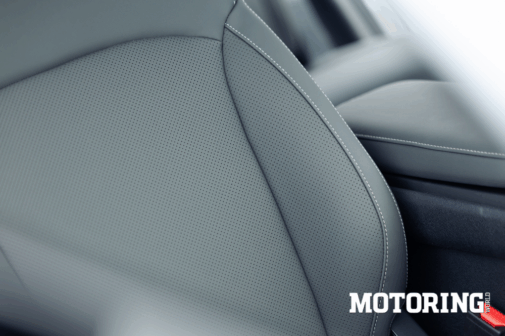
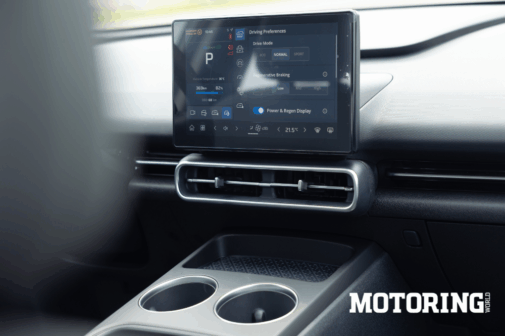
At the centre is a 10.1-inch touchscreen infotainment system, which handles most of the car’s functions. The layout is clean and intuitive, something that should make it easy for first-time EV buyers to adapt to. The use of leatherette upholstery adds a premium feel, while the inclusion of AC vents for all three rows ensures comfort across the cabin, a critical requirement in a market like India. VinFast also says India will get a more powerful AC compressor.
The second row features split seats with a tumble function, making access to the third row relatively easy. Speaking of which, space in the third row appears usable, something that many three-row vehicles struggle with.
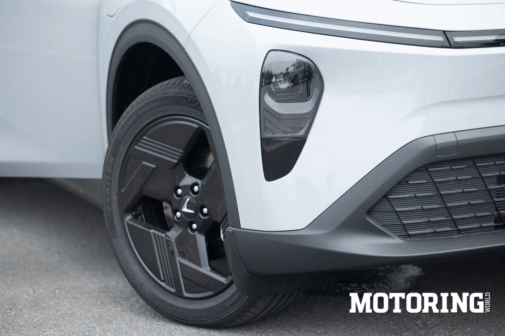
In terms of practicality, the VF MPV 7 scores well. Boot space stands at 100 litres with all three rows up, expands to 510 litres with the third row folded, and goes up to a substantial 1500 litres with the second row folded. That flexibility makes it well-suited for everything from daily errands to long road trips. You also get USB Type-A and Type-C charging ports, 19-inch alloy wheels, and all-LED lighting, features that align well with its positioning as a modern, family EV.
The VF MPV 7 is powered by a 60.1 kWh battery pack paired with a single electric motor driving the front wheels. The setup produces 201 bhp and 28.55 kgm of torque, with a claimed 0-100 kph time of under 10 seconds. VinFast also claims a range of over 500 km on a single charge. We will have to wait for an official ARAI range rating for this car, but given the battery’s size, it should be able to get more than 500 km on a single charge.

Given our limited driving environment, we couldn’t test real-world range or high-speed stability, but what we could assess was how approachable the car feels, and that’s where the VF MPV 7 impresses. Despite its size, it is surprisingly easy to drive. Visibility is good, the steering feels light, and the power delivery is smooth — exactly what you’d want from a family-focussed EV. On the straight, it picks up pace briskly, and while it’s not outrightly sporty, it never feels underpowered.
On the skid pad, there was enough grip to inspire confidence, and the car felt stable through quick directional changes. It’s not a handling-focussed machine, nor does it try to be, but for its intended purpose, it feels composed and predictable.
There are three drive modes and three levels of regenerative braking on offer, allowing drivers to tailor the experience based on their preference. Even during this short drive, it was evident that the VF MPV 7 is tuned more for comfort and ease of use rather than outright performance, which, again, aligns with its target audience.
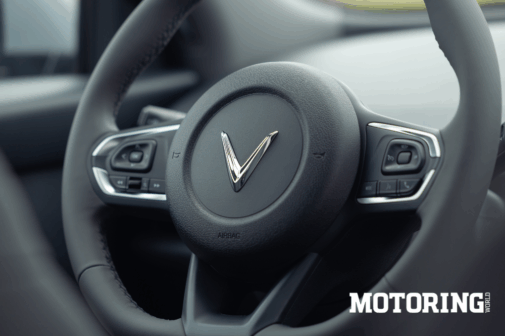
One of the more reassuring aspects of the VF MPV 7 is its build quality. The car feels solid, well put together, and capable of handling the demands of everyday use. Panel gaps are consistent, materials feel durable, and nothing about it gives off a ‘first-gen product’ vibe. This is important, because for a new brand like VinFast, perception matters just as much as the product itself. Early impressions suggest that the car has the fundamentals in place to build that trust.
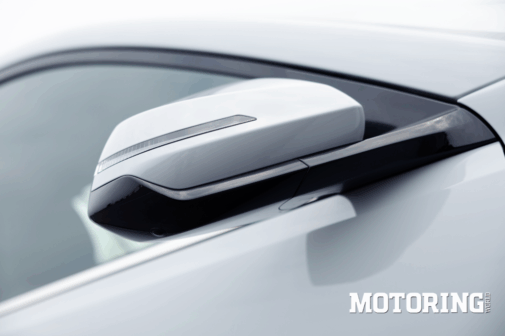
With pre-bookings now open at ₹21,000 and prices set to be announced on April 15, the VF MPV 7 enters the Indian market with a clear objective: to be a practical, premium electric family car. This is also where the real challenge lies. Our market is particularly cautious when it comes to new brands, especially in the family car segment. Buyers here don’t just look at the product; they evaluate the entire ownership experience, after-sales support, service network, resale value, and long-term reliability.
If VinFast prices the VF MPV 7 too close to established ICE rivals from Toyota, Kia, Hyundai, or MG, buyers may lean towards the familiarity those brands offer. On the other hand, aggressive pricing could make it an extremely compelling proposition, one that encourages buyers to take a chance on something new.
On paper, the VF MPV 7 has all the right ingredients — a sizeable battery, a claimed 500 km+ range, practical dimensions, and a cabin designed around real-world usability. More importantly, it feels easy to drive, well-built, and thoughtfully put together.
There’s still a lot we need to test, especially in Indian conditions, but as a first impression, the VF MPV 7 comes across as a well-rounded package. It may not be flashy or revolutionary, but it doesn’t need to be. What it aims to be is far more relevant: a sensible, electric family car. And if VinFast gets its pricing right, this could very well be the product that helps the brand move from being ‘interesting’ to ‘seriously considered’ in India.