

You know, I’m beginning to suspect Royal Enfield has a problem with me. Every time the firm invites me abroad to ride one of its motorcycles, it seems determined to freeze me to death. My previous three international outings, in California, involved the Interceptor, Shotgun 650 and Bear 650. The weather was glorious and the skies were blue, sure, but unfortunately it was also bloody cold once we got moving. I survived all three rides, although there were moments when I wondered whether this was a particularly elaborate way of disposing of inconvenient motoring journalists.
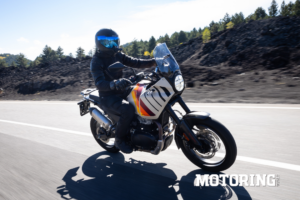
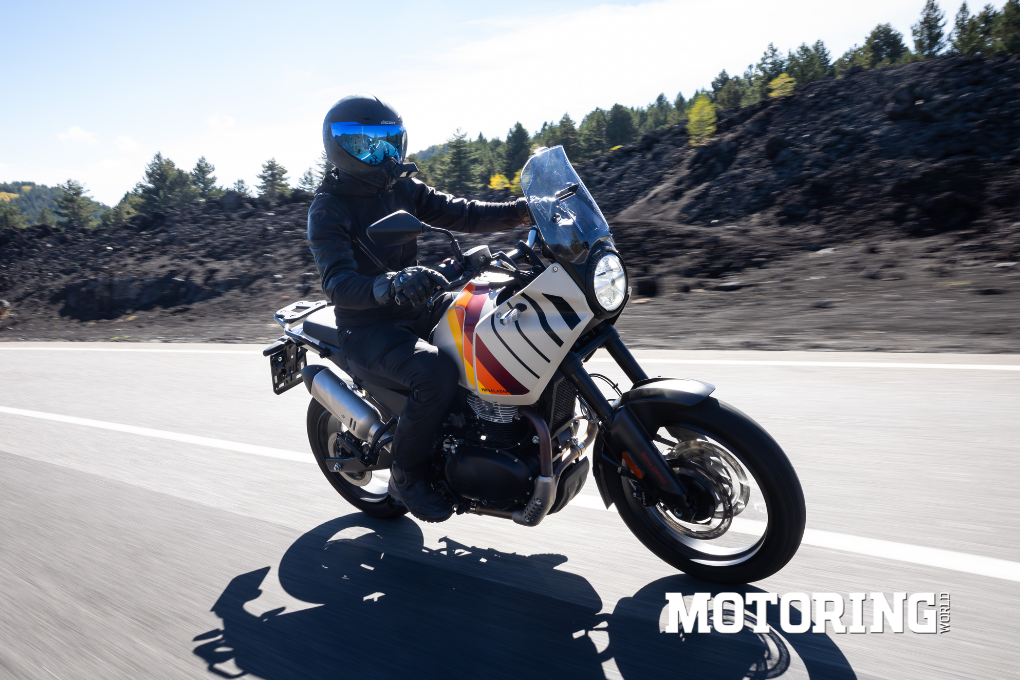
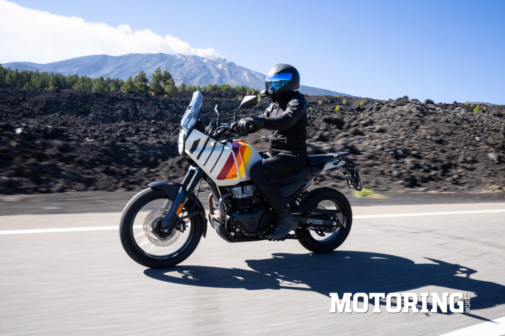
The latest attempt on my extremities took place in Sicily, in the foothills of Mount Etna, aboard the new Himalayan 750. Once again, glorious weather. Once again, temperatures that suggested Royal Enfield had mistaken a motorcycle launch for an expedition to the Arctic Circle. I’m beginning to think somebody in the events department has a grudge. Still, there are far worse places to suffer. Etna is absolutely spectacular, and the Himalayan 750 is an interesting bit of machinery. In fact, it might be the most significant motorcycles Royal Enfield has produced in recent years.
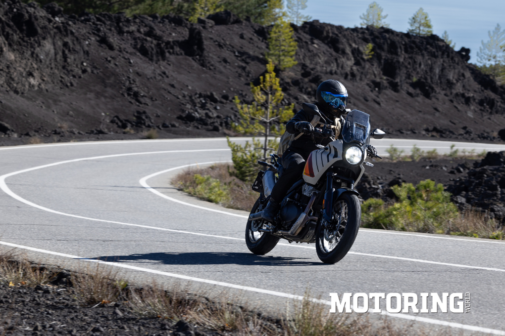
The route, however, was rather less adventurous than the motorcycle’s name might suggest. We spent much of the day going up and down the mountain, negotiating one bend after another. Initially, this was tremendous fun. The road wound through the landscape in a succession of sweeping curves and tighter corners, giving the Himalayan plenty of opportunities to demonstrate its handling. After a while, though, I began to crave something different. An adventure motorcycle, surely, ought to be allowed the occasional straight road. I wanted to settle into a steady cruise, stretch my legs and see what the thing was like covering serious distance. Instead, Etna kept throwing corners at us like a particularly enthusiastic driving instructor.
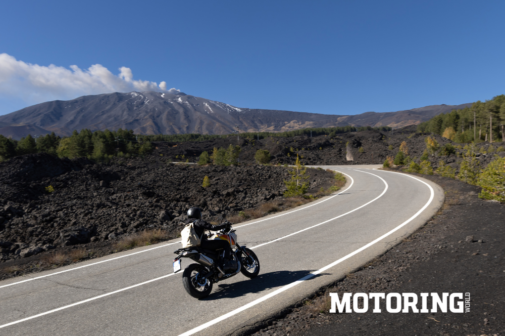
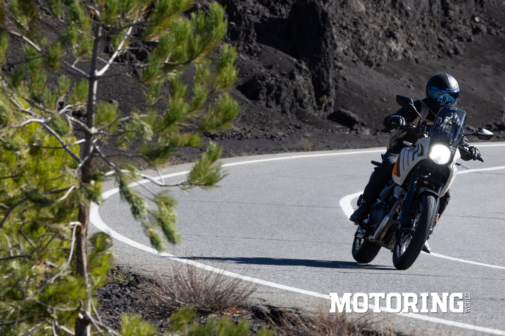
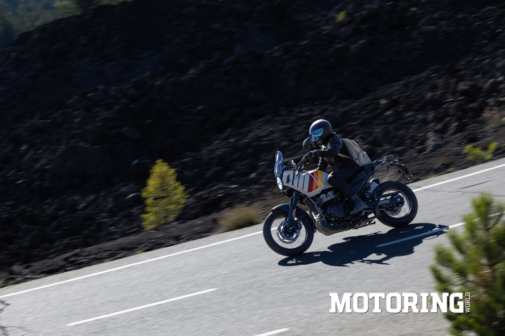
That said, the Himalayan 750 handles exceptionally well. I am not what one might describe as a full-gas motorcyclist. I enjoy riding, appreciate a good machine and am reasonably comfortable leaning into a corner, but I have no particular desire to scrape body parts off Italian tarmac. The Himalayan made the business very easy. Despite weighing 224 kg, it feels surprisingly light on its feet, changing direction willingly and settling into corners with considerable assurance. The tyres deserve some credit here. Grip was excellent, and the bike never gave me reason to question its composure. Throw it into a bend, adjust your line and power out, and it responds without fuss. There is a reassuring naturalness to the way it behaves.
Much of that confidence comes from the new engine. This is Royal Enfield’s first 750cc motorcycle, powered by an all-new 743cc air/oil-cooled parallel twin producing 54.2 bhp and 63 Nm of torque at 5,000 rpm. More importantly, 90 per cent of that torque is available from just 3,500 rpm. That makes for a very tractable motor, with plenty of muscle available without having to work it particularly hard.
In fact, I found myself quite happy keeping the engine below 6,000 rpm. There is ample performance there, and the Himalayan will get to 120 kph and beyond without appearing particularly concerned about the effort. It pulls cleanly, builds speed effortlessly and has enough in reserve for pretty much anything I would reasonably ask of it. I suspect riders with more ambitious intentions will find plenty to enjoy, too, but I am perfectly content with an engine that doesn’t require me to behave like I am auditioning for a racing team.
The refinement on offer is impressive. The motor sounds lovely, with a substantial exhaust note, and delivers its power smoothly. The Arrow exhaust available as an option in Europe won’t make it to India, although I suspect the aftermarket industry is already sharpening its pencils. There will be no shortage of louder alternatives for those who feel the neighbourhood hasn’t been sufficiently informed of their arrival. The ride-by-wire throttle is particularly well calibrated, making it easy to meter out power without sudden surprises. The six-speed gearbox is equally impressive. Every shift was clean, positive and slick, with not one missed gear or false neutral. A small miracle, really, considering how many modern motorcycles seem to have gearboxes designed by people who have never actually ridden one.
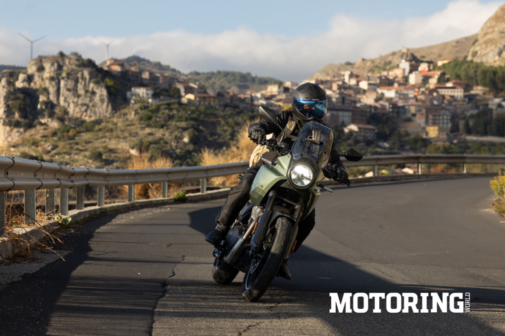
Comfort is another strong point. The riding position is relaxed and natural, the seat accommodating, and the overall ergonomics make it easy to spend time in the saddle. The standard seat height is 815mm, with a narrow waistline that helps when putting a foot down. The windscreen is adjustable through five positions, offering 60mm of movement, and the independent rider and pillion seats make sense for a motorcycle intended to spend considerable time touring.
The suspension is of particular interest. Up front are fully adjustable 43mm Showa USD forks offering 190mm of travel, while the rear gets a Showa monoshock with rebound damping adjustment and remote preload adjustment, providing 175mm of wheel travel. Our bikes were set to their default mid-settings, which worked beautifully on the smoother sections of Sicilian tarmac. Unfortunately, Sicily has an abundance of roads that appear to have been repaired by people using a teaspoon and some leftover cement. On broken surfaces, the ride became noticeably stiff. Colleagues who took the time to fiddle with the suspension reported considerable improvements. I didn’t, largely because I was busy riding the motorcycle and trying to retain feeling in my limbs. Adjustable suspension is a wonderful thing, provided you remember to adjust it.
Electronics are plentiful, although mercifully they don’t seem to have been installed merely to give the marketing department something to photograph. There are five riding modes: Road, Road Sport, Rain, Trail and Custom. A six-axis IMU looks after cornering ABS and lean-sensitive traction control, while cruise control, TPMS and the other assorted electronic guardians provide additional reassurance. You can tailor the motorcycle’s behaviour to suit the conditions, which is particularly useful when those conditions change unexpectedly.

I discovered this rather vividly when we ventured onto a loose sand and gravel trail. In Trail mode, faced with a steep uphill section, the rear wheel began to fishtail from side to side with the sort of enthusiasm usually associated with a Labrador that has spotted a squirrel. My delicates were somewhere in the vicinity of my throat. Somehow, I stayed upright, remained on the motorcycle and made it to the top. This was a considerable personal achievement, although I suspect the motorcycle deserves all of the credit. I have subsequently concluded that off-roading is not for me. Give me tarmac, a decent set of corners and a motorcycle that behaves itself. I have no desire to spend my weekends wrestling two hundred kilos of metal up a mountain while contemplating the various ways in which gravity might rearrange my skeleton.
The Himalayan, though, is perfectly capable of handling such abuse. Its 19-inch front and 17-inch rear wheels are available in cast alloy or spoked configurations, both with tubeless tyres. The dual front discs provide strong stopping power, and the electronics offer a useful safety net when the surface becomes unpredictable. The 205mm ground clearance should also help when things get properly rough.
The Himalayan manages its size impressively, considering its bulk. At 224 kg, it is a substantial motorcycle, especially when the road narrows or the surface deteriorates. The weight is carried well. The bike feels planted without becoming ponderous, and the narrow waist makes it easier to move around at a standstill than its bulk suggests. The 815mm seat height should suit a broad range of riders, although inseam length and confidence have the final say. This is an adventure machine, not a lightweight trail bike.
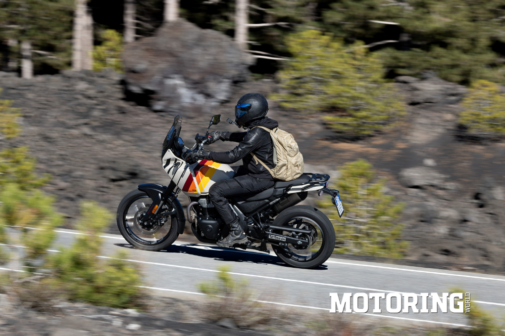
The brakes are reassuring, too. Twin discs up front provide strong stopping power, with a progressive feel that suits the bike’s performance. Cornering ABS adds confidence when the surface is less than ideal or a bend tightens unexpectedly. The six-axis IMU measures the motorcycle’s movement and helps the rider aids respond to changing conditions. None of this makes poor judgement disappear, but it gives the rider room for error. I favour technology that quietly helps rather than demands attention.
The adjustable windscreen is a practical touch. Its five positions and 60mm range should make it easier to find a setting that suits different heights and conditions. I couldn’t assess its long-distance effectiveness on our route, which was largely a succession of bends rather than a sustained highway run. That remains something I would like to investigate. The same goes for cruise control. It’s welcome on a touring motorcycle, but its value becomes apparent after an hour or two on an open road, when holding a steady speed can become tiresome.
For now, the first impression is of a motorcycle conceived as a complete package. Adventure touring involves more than riding up a mountain for a photograph. It means carrying luggage, accommodating a passenger, covering distance and dealing with whatever the weather or road surface provides.
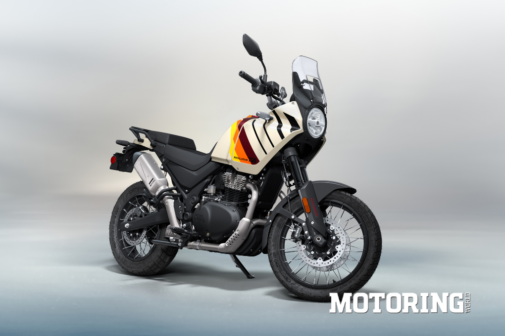
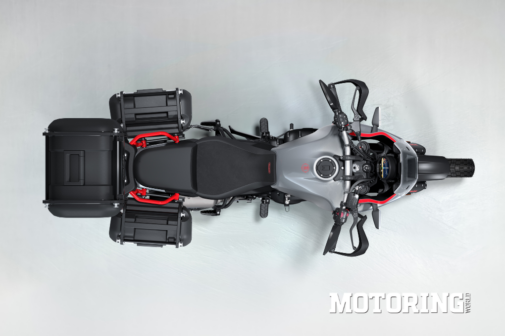
Visually, the 750 has its own identity. It looks distinct from the rest of the Royal Enfield family, with a more substantial stance and a purposeful appearance. The colour options are particularly attractive. Antarctic Silver, Viking Bronze, Siberia White, Aztec Green and Teutonic Black give buyers plenty to choose from, and the different finishes lend the motorcycle quite different personalities.
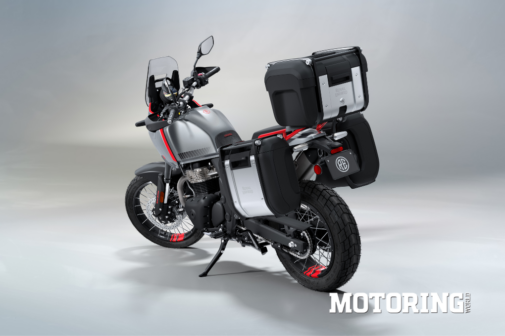
Touring practicality has clearly received considerable attention. The 17.8-litre fuel tank should deliver a theoretical range of around 400 km, depending, naturally, on how enthusiastically one uses the throttle. The claimed payload capacity is a generous 195 kg. There are plenty of accessories, including alternative seats, hand guards and luggage solutions. Royal Enfield has partnered with Givi to develop a dedicated hard-luggage system, including panniers and a top box, with mounts integrated into the motorcycle rather than requiring an assortment of aftermarket brackets and engineering improvisations. Soft luggage is available, too. The top-spec Antarctic Silver variant gets the Touring Pack, complete with Givi luggage, heated grips, hand guards and an aluminium sump guard. The heated grips, incidentally, might have saved me from the onset of hypothermia. Somebody should have mentioned them earlier.
The technology package is comprehensive. A four-inch circular TFT display handles navigation and connectivity, while the new seven-inch LED headlamp promises a wider, brighter spread of illumination. The Tripper interface has been updated, and the Wingman app adds further functionality. There are plenty of buttons and menus to negotiate, though, and the switchgear takes a little getting used to. The simple joystick helps, but I suspect owners will spend their first few weeks discovering features they didn’t know existed. At least there is enough technology here to keep the motorcycle current, without making the riding experience feel like operating a particularly complicated washing machine.
What I particularly like about the Himalayan 750 is its approachability. It is a substantial motorcycle, with a proper big-bike feel, yet it doesn’t make unreasonable demands of its rider. It is forgiving, predictable and easy to get along with. You can potter about quite happily, exploit its plentiful low-down torque and enjoy the ride without feeling compelled to demonstrate your credentials. Ask more of it, and it responds.
Royal Enfield now has an adventure motorcycle for very wide audience, beginning with the 440 and going up the ladder. The 750 adds another dimension, with a torquier twin-cylinder engine, greater touring ability and the sort of equipment that makes long journeys more inviting. It should appeal to riders who want to cross countries rather than merely cross streams.
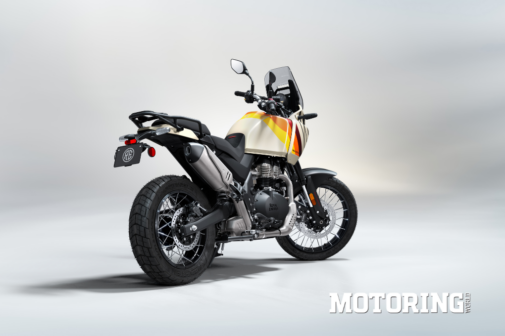
The final piece of this particular puzzle is the price, which will determine just how successful the Himalayan 750 becomes in India; logic dictates something in the region of Rs 4.5 lakh onwards. Royal Enfield has built a motorcycle that ticks an awful lot of boxes: it looks good, goes well, handles beautifully and comes with a generous spread of useful technology. It should be comfortable over long distances, carry a substantial amount of luggage and remain accessible to riders who aren’t particularly interested in pretending to be rally champions. If I were getting into adventure motorcycling and wanted a substantial, versatile machine, the Himalayan 750 would be very high on my list. It doesn’t intimidate, doesn’t demand much and has plenty to give when you ask. That’s a rather appealing combination.
Now, if only Royal Enfield could organise its next international ride somewhere warm, preferably somewhere below 2,000 metres, without a mountain in sight. I have a feeling the company is running out of opportunities to finish me off with hypothermia.