

What is driving Studds’ shift towards premium, performance-focused riding equipment?
Two things. First, the Indian rider is changing. Premium motorcycle sales are rising, and buyers increasingly ask about international certifications like ECE and product specs like Anti-Fog and D-Ring DOT, not just design. Second, economics supports it. Exports carry meaningfully higher realisations than domestic sales, and that gap has widened as our export mix has grown, from around 17.5 per cent of revenue in H1 FY26 to about 20 per cent for the full year, with a target of 25 per cent over the next two to three years. SMK, our premium brand priced between ₹4,000 and ₹13,000, is how we capture that. Studds still carries the volume; SMK is the second engine we’re building at the top of the market.
How is motorsport shaping SMK’s credibility and next-generation gear internationally?
Credibility abroad has to be earned, not bought, and racing is the most honest way to do that. SMK is still new to this, we’re not yet on a MotoGP grid. We’ve started with Moto4, a Road To MotoGP Talent Development Programme, backing young riders globally, some as young as nine, at the very start of their careers. The plan is to progress with them into Moto3, Moto2, and eventually Superbike and MotoGP over the next two to three years, depending on how the riders and programme develop.

We chose this route deliberately, starting with riders at the beginning of their careers rather than buying a logo position we haven’t earned. It’s slower, and there’s no fixed timeline to a MotoGP or WSBK grid. But when a dealer or rider abroad sees SMK progress from Moto4 to Moto3 and beyond, it’s a track record they can verify rather than a claim they have to trust.
The value isn’t only the marketing story, it’s the testing. Racing exposes engineering flaws that lab testing doesn’t always catch: impact loads, heat management, visor stability at speed, material fatigue over an extended race circuit. Our R&D is centralised across the group, so those learnings feed into shell geometry, EPS liner tuning, and retention systems across the portfolio for both brands.
How does race-tested engineering translate into safety technology for everyday Indian riders?
Aerodynamics, weight and impact management aren’t styling choices, they’re safety variables. Buffeting fatigues a rider’s neck, excess shell weight does the same over long rides, and how the EPS liner and shell handle impact energy is the core reason a helmet company exists. Racing pressure-tests all three at speeds and impact energies road use rarely produces.
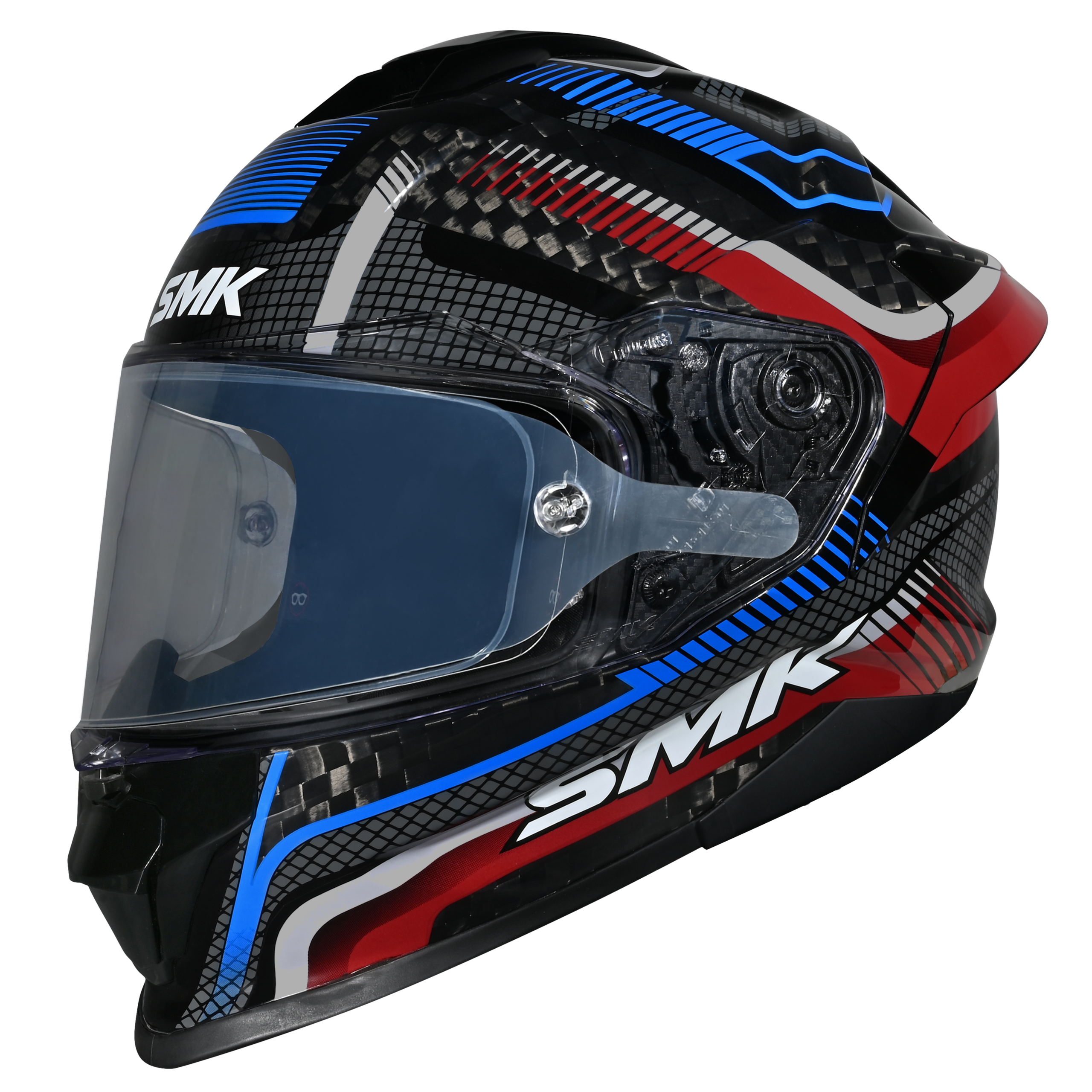
Because R&D, tooling and manufacturing sit under one roof across the group, those learnings don’t stay locked in a race-spec line. The Titan Carbon Racing model, built for the Moto4 Latin Cup, is a good example, a carbon-fibre shell with a race-configured interior, built to survive real racing conditions. That work on shell construction and impact management feeds directly into how we design the next generation of helmets across our portfolio.
It matters more in India than most markets. Helmet penetration here is still low against global norms, and with helmet-with-purchase mandates already active in several states and a draft rule proposing two helmets per two-wheeler under discussion, mandated volume is only going to grow. Our job is to make sure riders get gear built on the same engineering we prove on track, not just something that clears the compliance minimum.
How is Studds using its in-house R&D and manufacturing capabilities to accelerate innovation?
We’ve stayed vertically integrated by design. Shell moulding, EPS liner installation, padding fitment, and in-house crash testing all happen under one roof. When R&D, tooling, and testing sit together, the gap between finding a problem and engineering a fix is measured in weeks, not quarters spent coordinating with outside vendors.
We’re also scaling that base. Our capacity expansion is underway in two phases: the first, adding 1.5 million units, is targeted to be operational around Q2 FY27; a second phase of another 1.5 million units follows over the subsequent 18 to 24 months. Together this takes installed capacity to about 12.5 million units annually, roughly 30 per cent above FY26 levels. Across the group, we run close to 19,000 SKUs and 240-plus designs, SMK and Studds combined, supported by an in-house R&D team of 70+ people.
What are your key priorities as the company expands its presence across global markets?
Faster time-to-market in Europe, and the right footprint to enable it. We’ve set up a wholly owned subsidiary in Italy, with a direct-to-dealer distribution model, expected to become operational around beginning of Q3 FY27.

Beyond Europe, we’re prioritising large, under-penetrated markets, including Colombia, Mexico, Indonesia, and the Philippines, rather than spreading thin everywhere at once. Our Decathlon engagement, which began in October 2025 to supply bicycle helmets for the Indian market, is progressing well with commercial production to begin soon, with the intent to extend into Decathlon’s international markets over time.
What does the next phase of Studds’ evolution look like as a global riding gear company?
Scale with intent, on both ends of the portfolio. On the Studds side, that’s capacity: installed capacity rising to around 12.5 million units annually, funded internally and without external debt, in line with how we’ve grown historically. On the SMK side, it’s staying the course on the motorsport programme and letting it build credibility step by step, rather than rushing the timeline.
FY26 was a strong execution year: revenue grew 8.6 per cent to ₹634.2 crore, PAT grew 18.7 per cent to ₹82.7 crore, and EBITDA margin held at 19.3 per cent. For FY27, we’re guiding to revenue growth of high teens, although margin pressure is there due to spike in raw material prices in Q1; the first half of this fiscal year is still in progress, so we’ll let the numbers speak for themselves when it closes. The underlying approach hasn’t changed since 1972: build it ourselves, test it harder than the rulebook requires, and let the product’s performance, on the highway or on the racetrack, carry the argument.