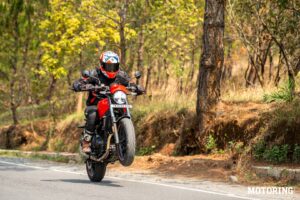
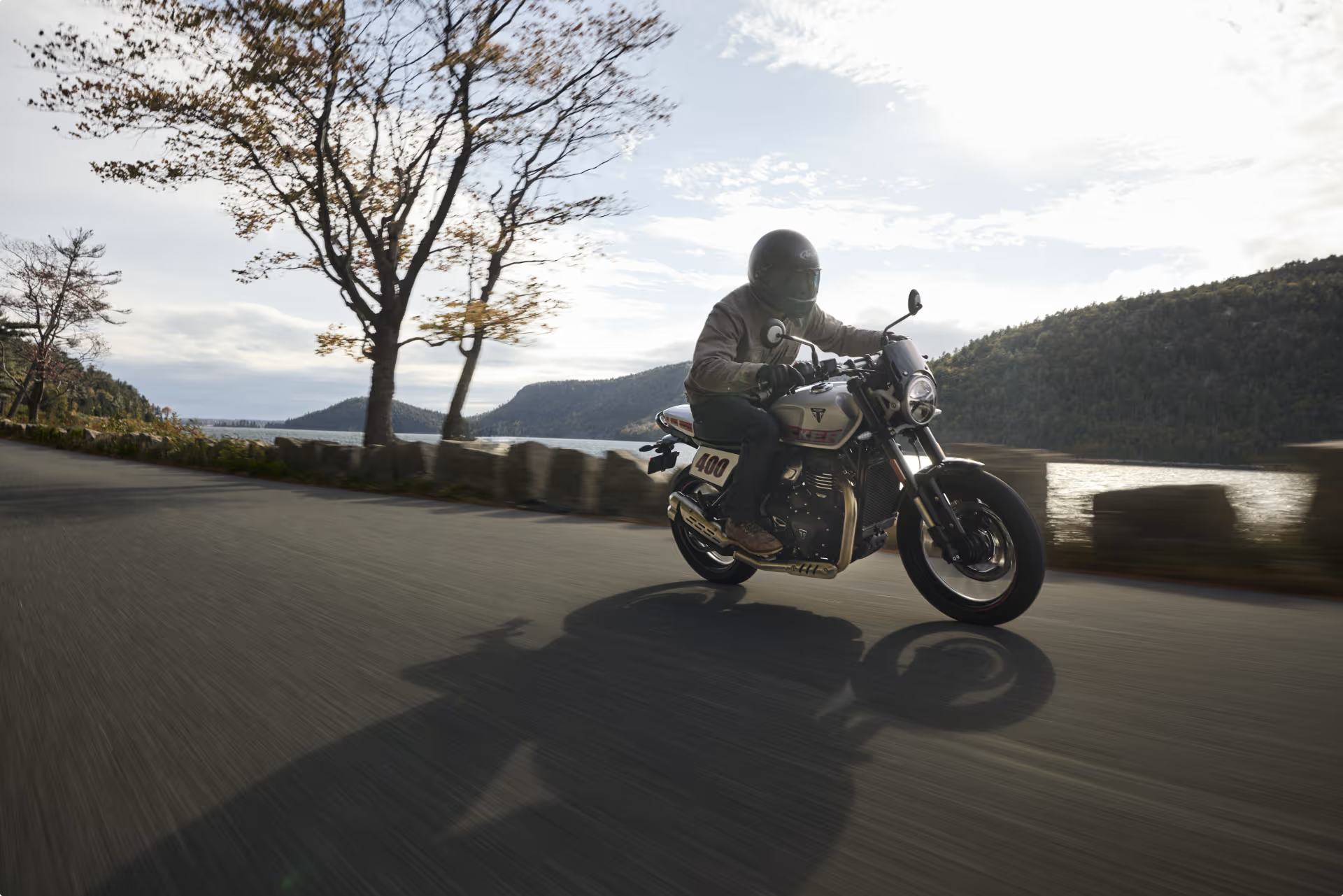


Triumph has expanded its 400cc line-up with the Tracker 400, a model that draws heavily from flat track racing for both its styling and riding posture. Positioned as a Modern Classic with a more aggressive edge, the Tracker 400 departs from the roadster-focused Speed 400 by adopting a stripped-back, competition-inspired silhouette.
Visually, the Tracker 400 leans into classic flat track proportions, with a sculpted fuel tank featuring knee cut-outs, a compact flyscreen, a colour-coded seat cowl and alloy wheels shod with Pirelli MT60 RS dual-purpose tyres. Signature Triumph design elements remain intact, including the brand’s characteristic engine profile with powder-coated covers and machined cooling fins, a round LED headlamp and twin upswept exhaust silencers.

The motorcycle is offered in three colour schemes — Aluminium Silver Gloss with Racing Red accents, Racing Yellow with Phantom Black elements, and Phantom Black with contrasting silver and white highlights. All three feature prominent ‘Tracker’ branding on the tank and a number-board-style side panel marked ‘400’, a nod to flat track racing heritage.
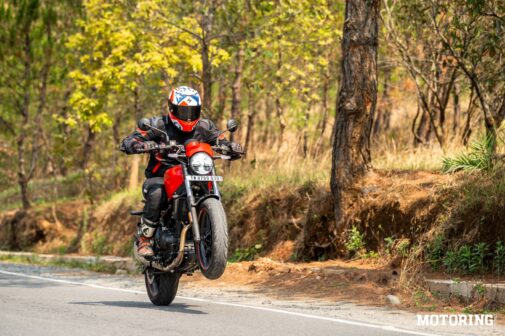
Ergonomically, the Tracker 400 has been reworked to reflect its racing inspiration. The handlebars are wider and lower than those on the Speed 400, while the footpegs are set further back and higher, resulting in a more assertive, forward-biased riding position. The seat height is rated at 805 mm, keeping the bike accessible despite its sportier stance.
Under the bodywork sits an updated version of Triumph’s 400cc TR-series single-cylinder engine. Mechanical revisions and a new engine tune have resulted in a five per cent increase in peak output, with the motor now producing 42 bhp at 9000 rpm. Torque output remains unchanged at 3.7 kgm, with the majority available from low in the rev range, aiming to balance top-end performance with everyday usability. The engine is paired with a six-speed gearbox and ride-by-wire throttle.
The chassis features a dedicated suspension setup, with 43 mm upside-down front forks offering 140 mm of travel and a rear monoshock providing 130 mm, along with preload adjustment. Braking is handled by a four-piston radial front caliper, supported by switchable ABS and traction control.

Instrumentation is kept deliberately simple, combining an analogue speedometer with a digital tachometer and display. Overall, the Tracker 400 positions itself as a style-led, performance-oriented alternative within Triumph’s entry-level range, blending flat track aesthetics with modern hardware and technology.
Now, the big question — when will get this in India? Given the current GST situation, Bajaj & Triumph are unlikely to launch this bike here, despite being manufactured in India.