

The first thing I noticed about the 2025 Ducati Streetfighter V4 S wasn’t the sound, the stance, or even the numbers attached to it. It was how little it asked of me at first. The bike stood there on the side of the road, red and sharp against a fading evening sky, looking less like something eager to be ridden and more like something perfectly comfortable waiting.
The Streetfighter’s LED DRLs stared ahead, fixed and unreadable. I stopped a few steps short. Normally, a motorcycle like this triggers a grin. This one didn’t. Instead, there was a pause I hadn’t planned. Nothing had happened yet. And yet, my body reacted as if it had.
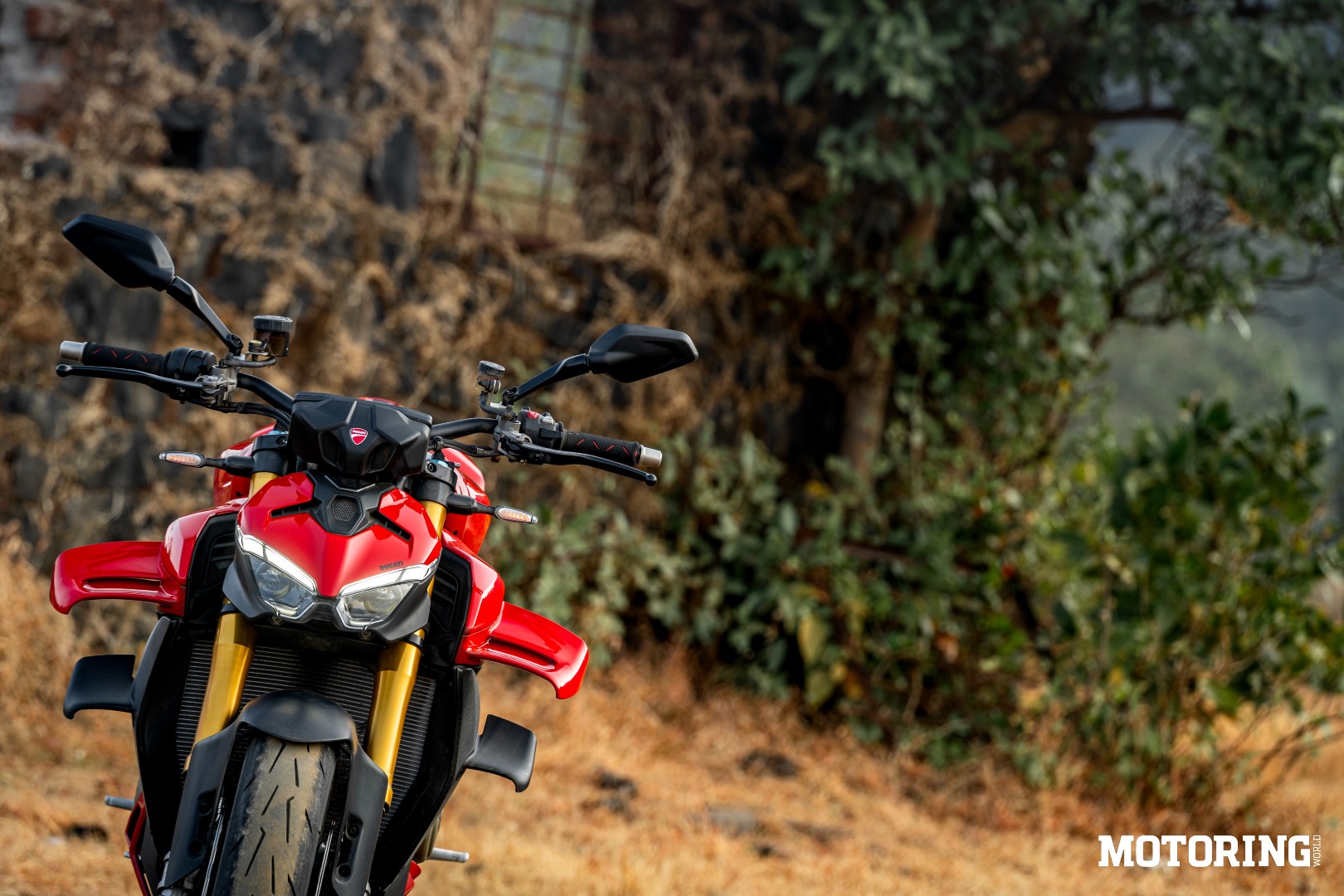
This is the closest the Streetfighter has ever been to the Panigale it comes from. At its core sits the same 1103cc Desmosedici Stradale V4, producing 211 bhp and 12.26 kgm. Ducati hasn’t softened or detuned the engine for the road. What it has done is strip away the fairings, the wind protection, and any buffer between rider and machine. The only difference in power comes from the smaller air intake.
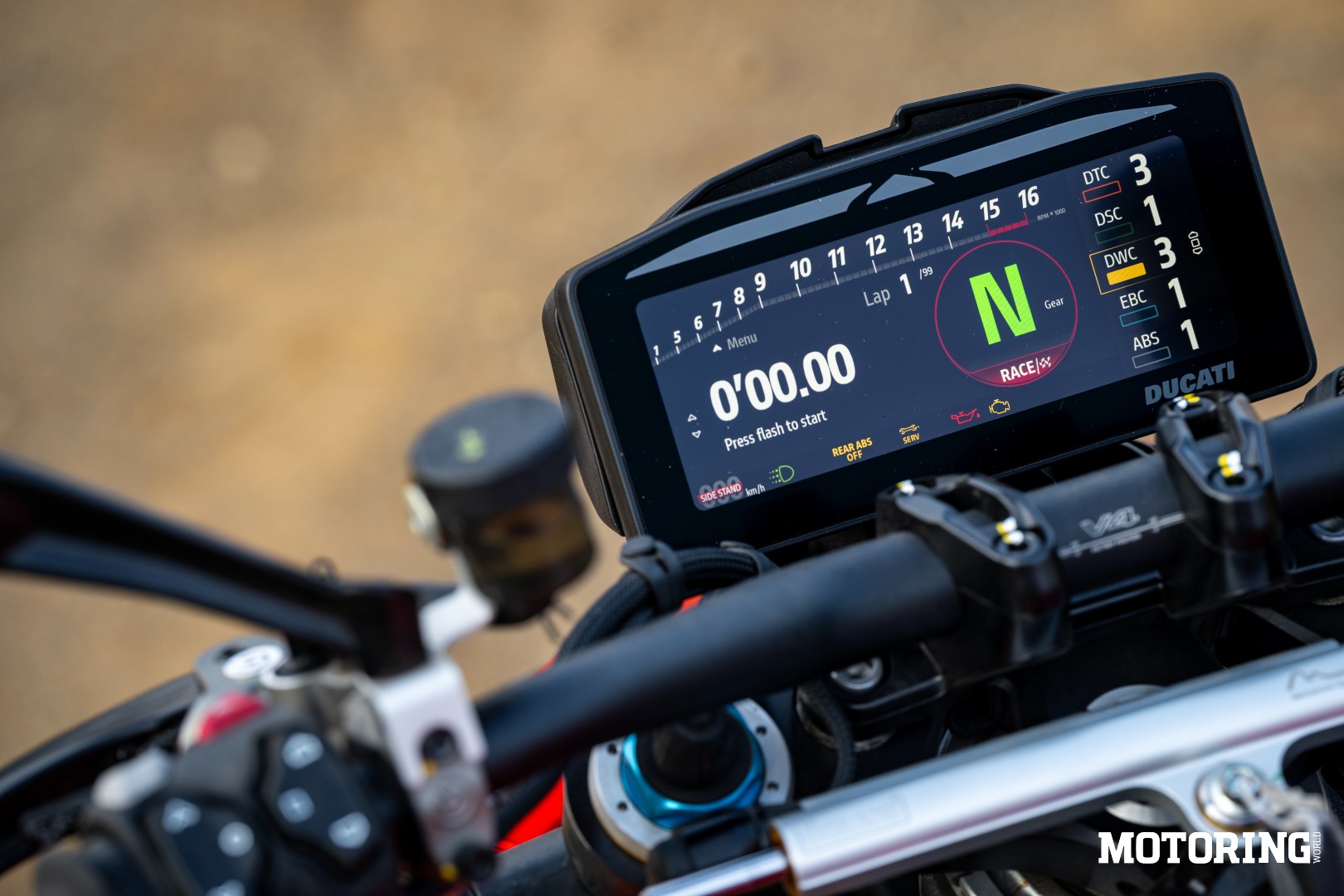
I rolled out into the city in Road mode, power reduced, throttle response dulled just enough to take the edge off. Traction control was set conservatively and the wheelie control stood alert. Ducati’s six-axis IMU monitored everything quietly in the background. At low speeds, the Streetfighter was almost ordinary. The engine was smooth, the fuelling clean and the clutch felt light. It filtered through the city traffic without any protest.
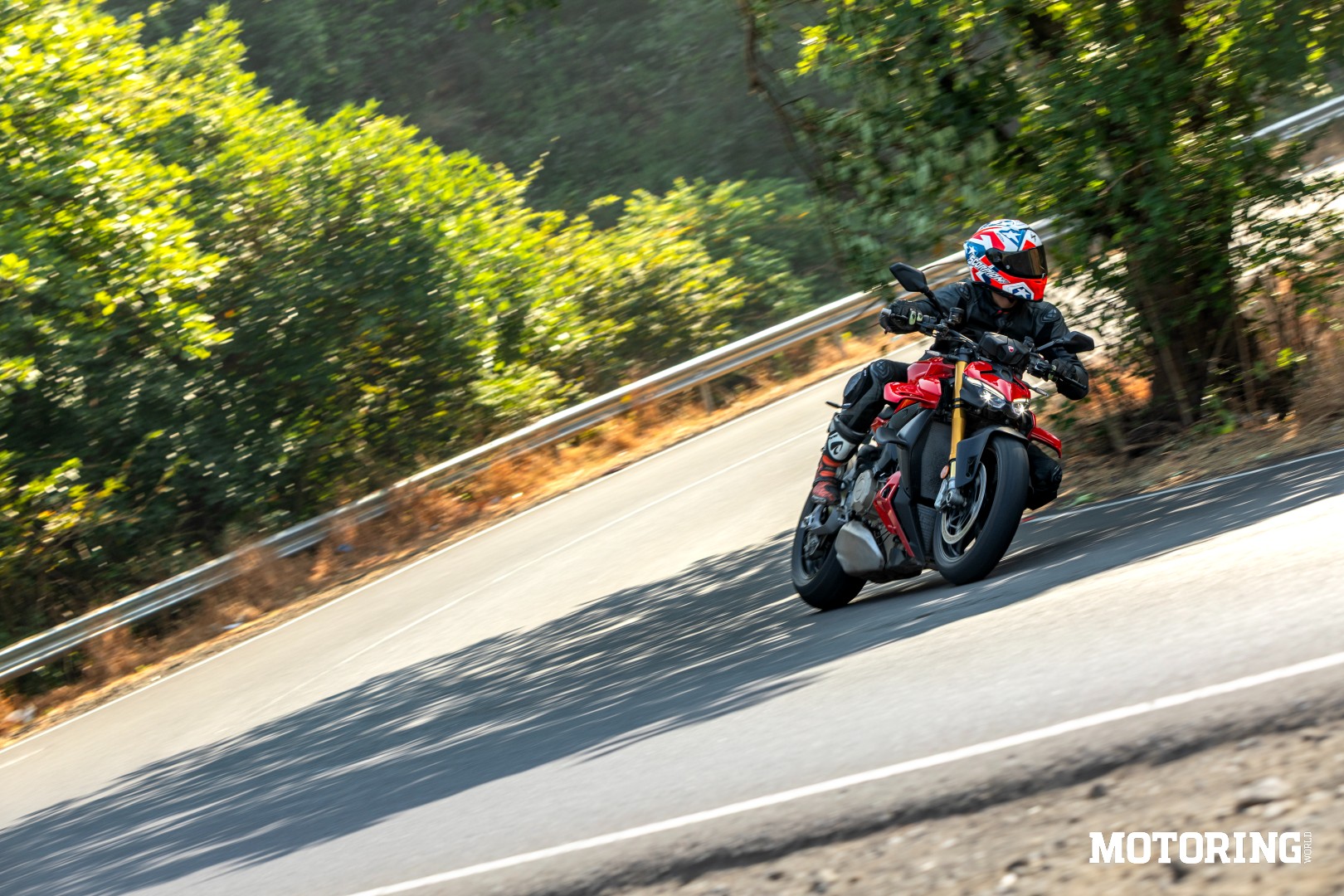
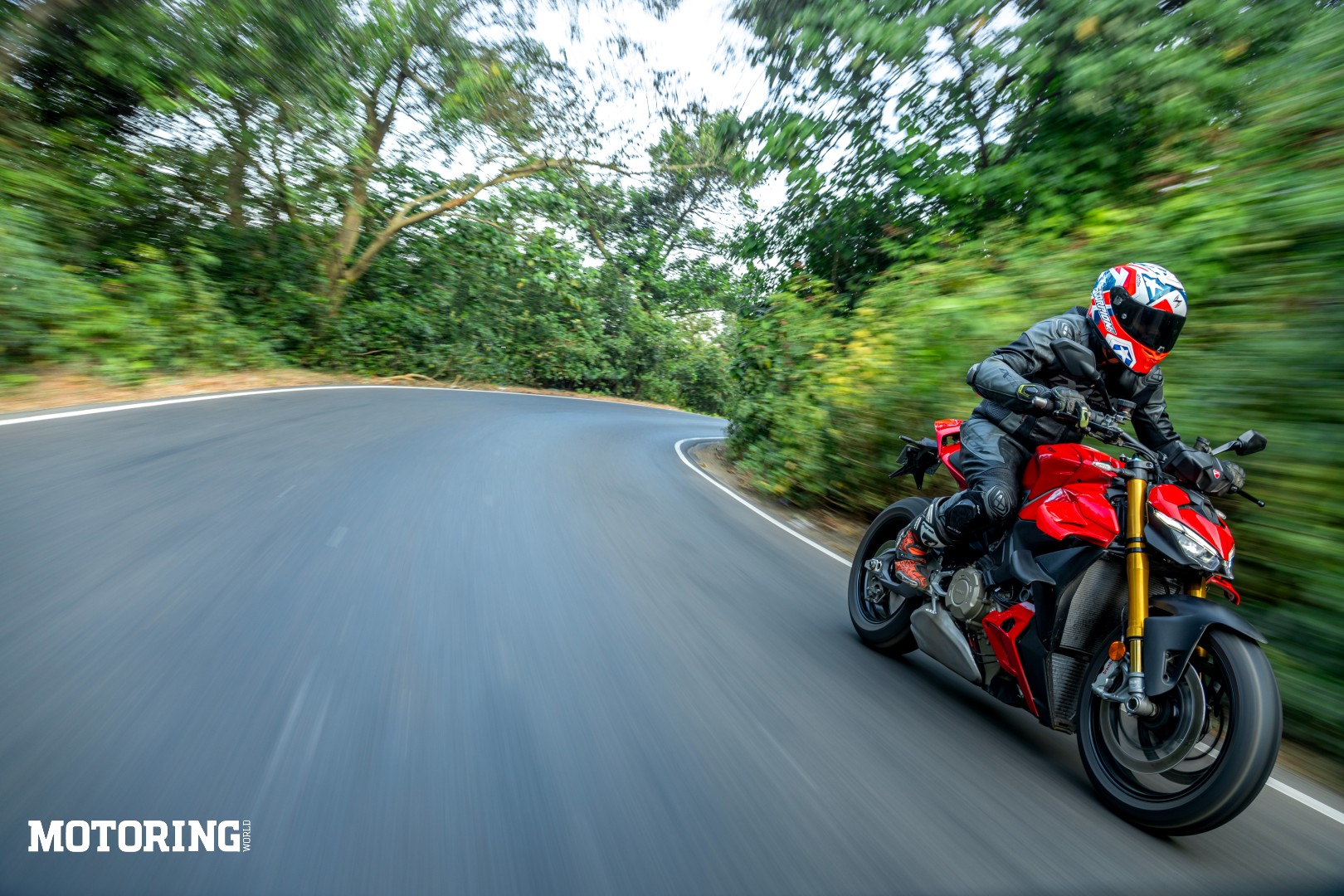
That normalcy was unsettling in its own way. After all, this was the flagship naked from the Italian marque. As the city opened up and the road began to flow, the bike revealed more of itself. The Pirelli Diablo Rosso IV Corsa tyres warmed quickly, gripping with a confidence that felt slightly unnerving and inspiring at the same time. Even with measured inputs, the traction control light flickered more often than expected. Not because the bike was misbehaving, but because it was always closer to its limits than my senses suggested.
The electronics weren’t cutting in sharply. They were smoothing things out, trimming just enough to keep everything composed. It felt less like intervention and more like feedback for me adapt to our roads.
The earlier Streetfighter had a reputation for being overwhelming — brutal acceleration, relentless pace and too little patience. This one felt different. Don’t get me wrong. It wasn’t calmer or slower, but clearer. Ducati hasn’t reduced the numbers, in fact they had gone up. Yet, the bike felt more controlled than before.
The S-spec plays a big role in that. Semi-active Öhlins Smart EC 2.0 suspension constantly adjusts damping based on speed, throttle position, brake pressure, and lean angle. At 189 kg kerb, the bike feels improbably light once moving. Over uneven city roads and expansion joints on the highway, it stayed composed without feeling detached.
An hour in, I pulled over at the edge of the highway. Engine off. Helmet off. I realised I’d been riding defensively out of habit, not necessity. The bike hadn’t tried to surprise me. That realisation was mildly uncomfortable.
Back on the move, the road stretched out, empty enough to stop pretending. The engine sat at around 7000 rpm, smooth and unbothered. No vibration or urgency. A glance at the speedometer showed numbers that felt higher than they should have. That’s when I switched to Race mode.
The change was immediate. Throttle response sharpened. Electronic assistance stepped back. The Öhlins firmed up, controlling pitch and squat with precision. Full power was now available, delivered cleanly and without delay.
Past 7000 rpm, the Streetfighter changed character. The V4 surged forward with a force that compressed the sense of distance and time. Acceleration didn’t arrive in a rush; it built steadily, relentlessly. I laughed inside my helmet, caught off guard by how natural it felt.
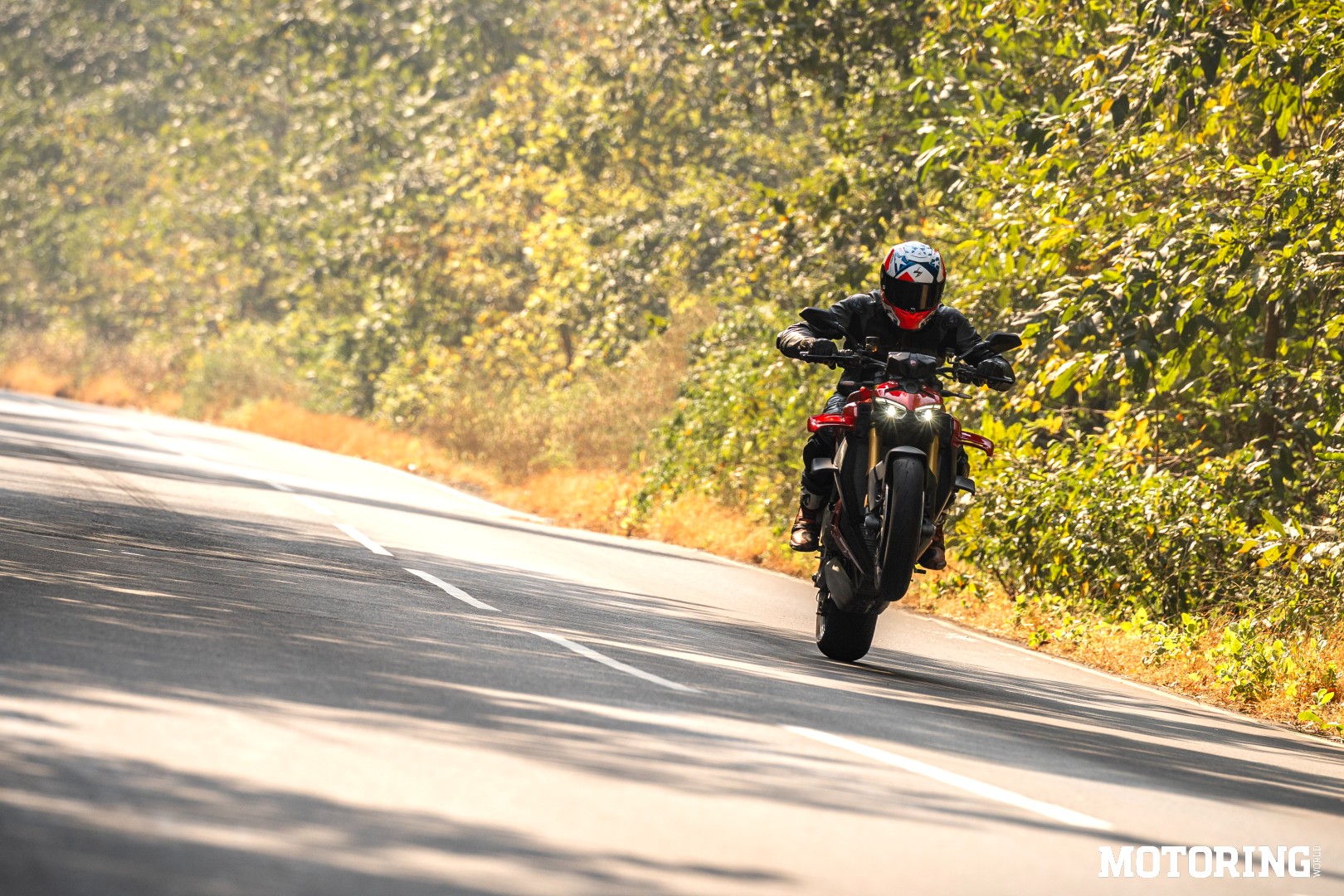
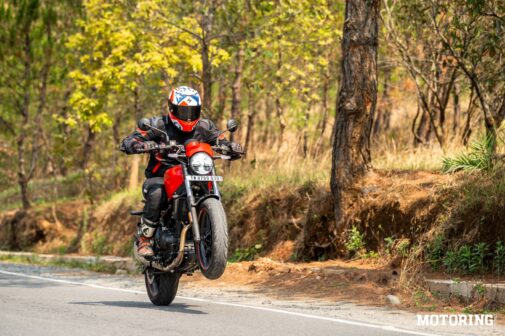
The front wheel lifted in first gear. Then again in second. And again in third. Ducati claims the biplane wings generate 45 kg of downforce at 270 kph, but what mattered more at sensible speeds was stability. The chassis never felt unsettled. The throttle stayed precise. Wheelie control didn’t interrupt the moment; it shaped it.
This wasn’t technology correcting mistakes. It was technology allowing better decisions to happen sooner. Soon enough, speed stopped feeling dramatic and started feeling manageable. That was the unsettling part. The Streetfighter didn’t overwhelm me or demand courage. It made everything feel logical, repeatable, and easy to return to.
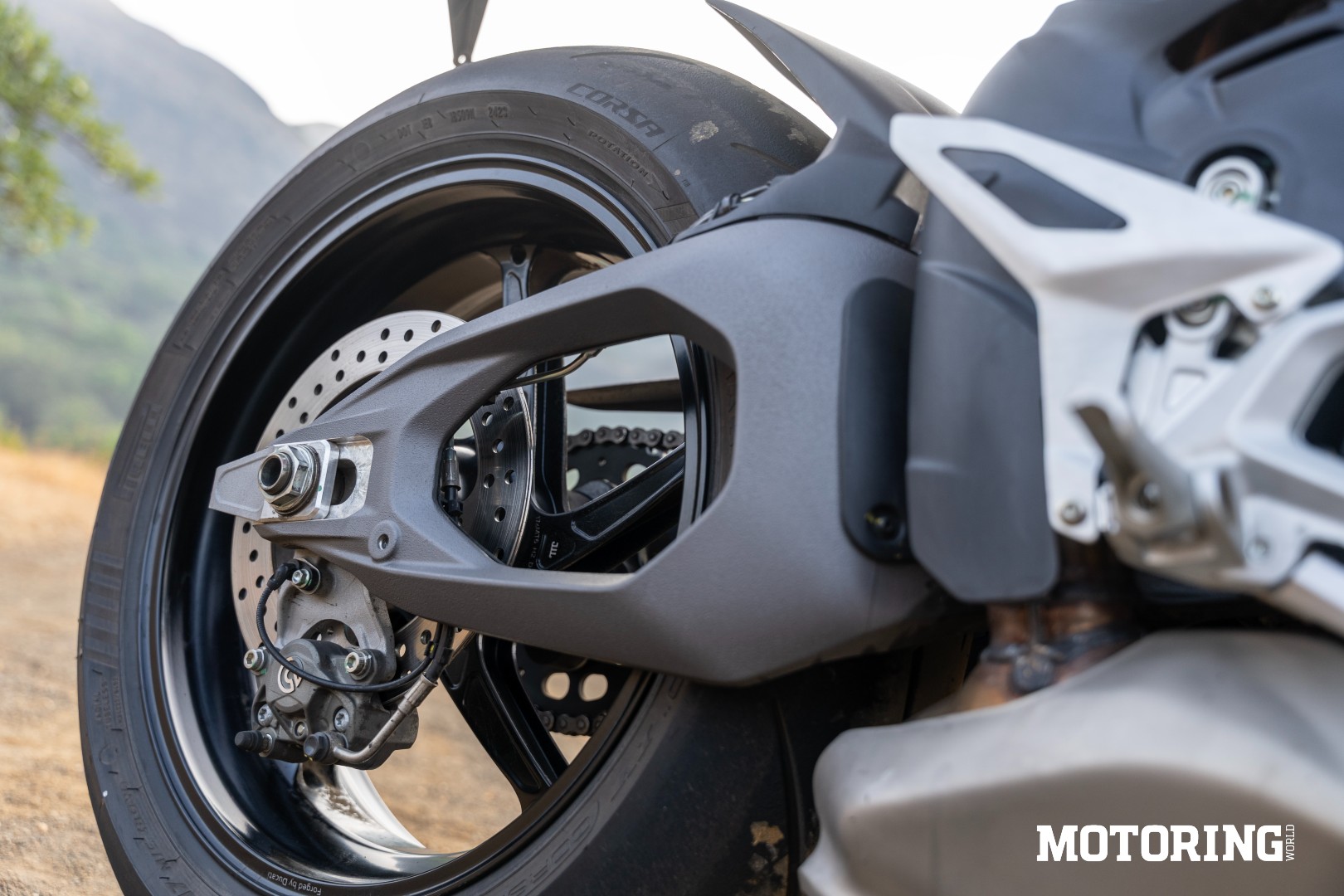
The Brembo Hypure calipers erased speed with effortless authority. Each pull of the lever was firm and consistent. The quickshifter snapped through gears cleanly, keeping the engine in the thick of its power. Numbers faded into the background. Inputs became instinctive.
At some point, the ride stopped being about discovering the motorcycle and turned into a quiet negotiation with myself. The Streetfighter felt capable of sustaining this pace indefinitely. I was the variable.
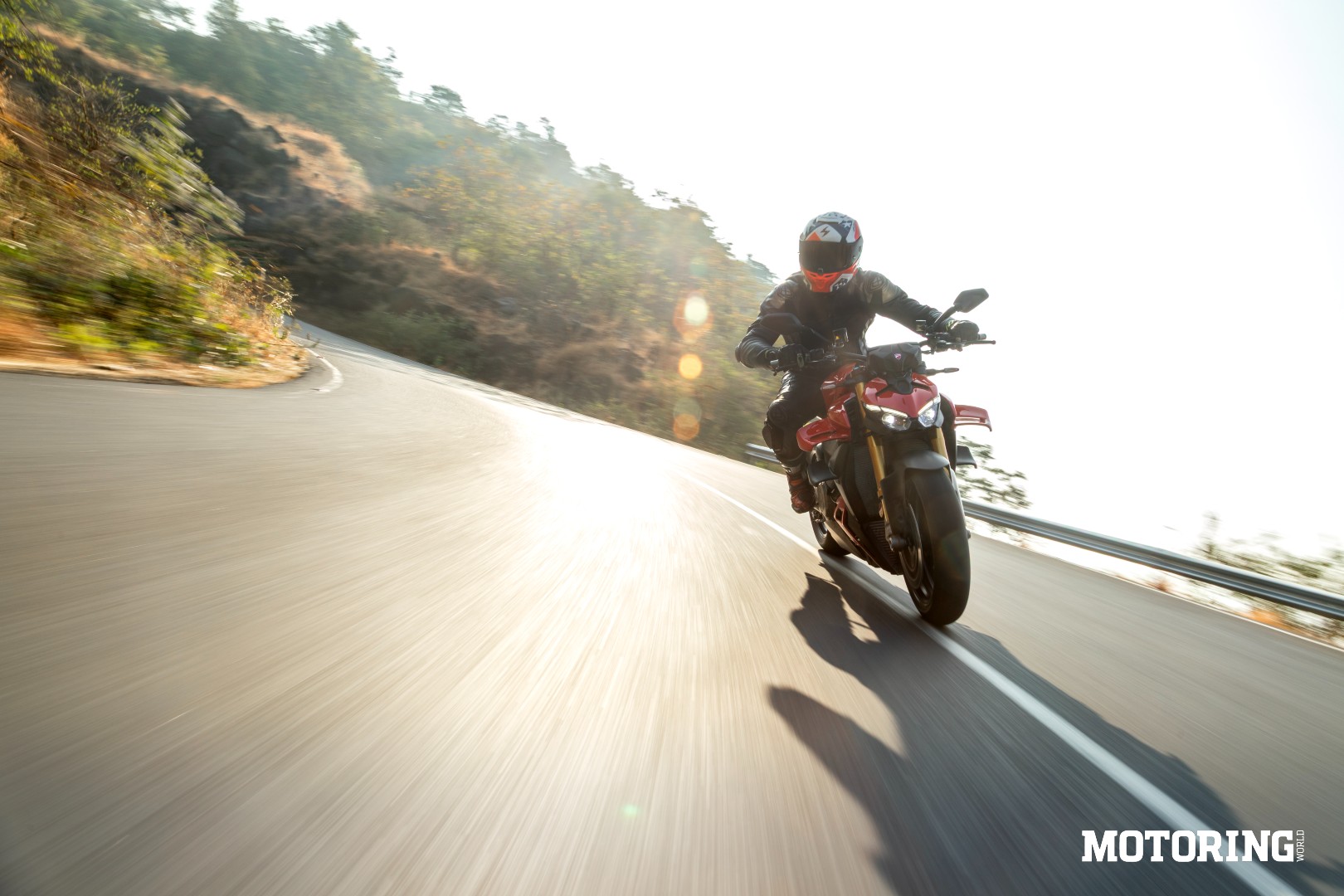
When I finally shut it off, what lingered wasn’t excitement or relief, but composure. I was fully aware that this bike’s absolute limits have no place on public roads. That awareness didn’t reduce the attraction. If anything, it enhanced it. There is nowhere to hide on a motorcycle like this. No fairings, no insulation, no softening of sensation. Every decision is yours.
I stood where I had begun, the Streetfighter still parked in the quiet, unchanged. I lingered longer than necessary, helmet in hand, replaying that laugh in my head. The bike hadn’t demanded anything. It had simply shown me how much was available.
Some machines leave you satisfied. Others leave you thinking. This one left me aware of how easily restraint can give way and how calmly it makes that choice feel reasonable. At ₹32.38 lakh (ex-showroom) this Ducati is squarely placed in the realm of choice rather than justification.