

June in Delhi NCR is usually predictable. The days are punishing, and if you’re foolish enough to spend hours outdoors, you’ll be questioning every decision that brought you there. The weather forecast suggested exactly that, so when Indrojit Sircar, better known as Sparky, told me not to be late, I assumed he was thinking about the heat.
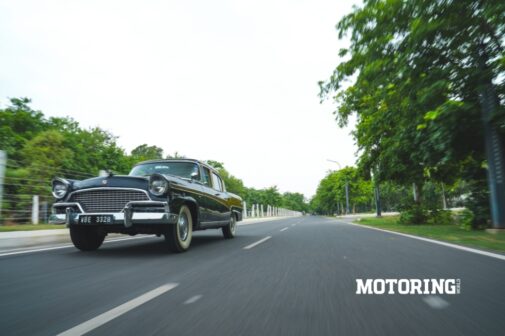
‘If the sun comes out, you’ll regret it,’ he warned the previous evening. As it turned out, the weather had other ideas. Thick clouds rolled in, and we were handed one of those rare June mornings that almost make you forget where you are. Good thing too, because we had a 1956 Studebaker President waiting for us. The car has been with the Sircar family since 2001, when Sparky’s father, Rahul Sircar, bought it in Kolkata. After years of careful ownership, Sparky restored it in 2022 before bringing it to Delhi, where it now lives a considerably easier life than it did in its younger days.
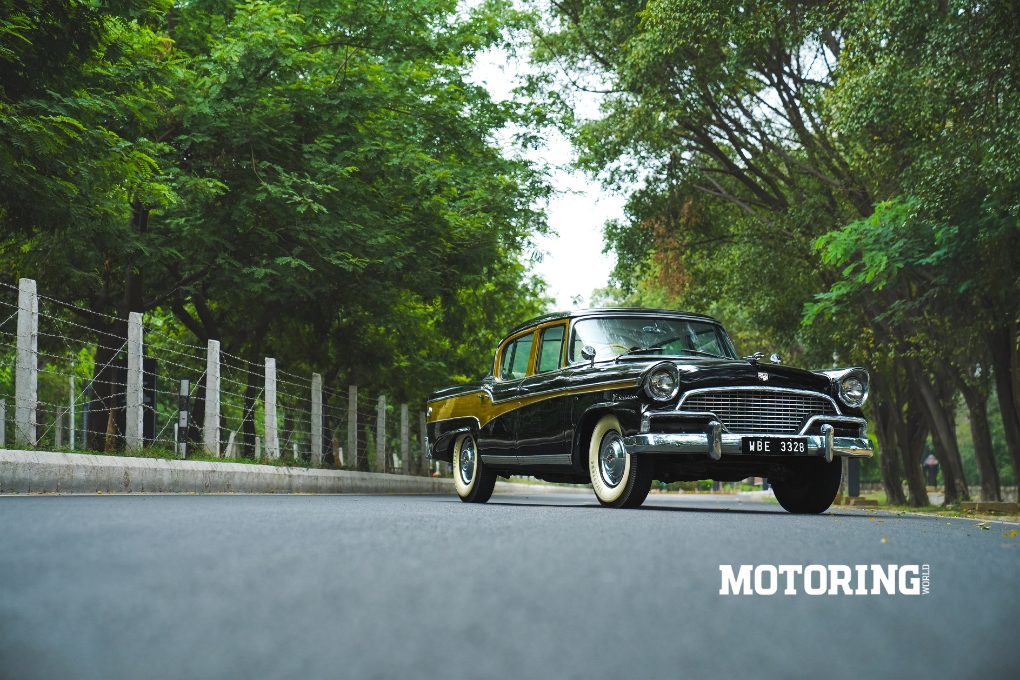
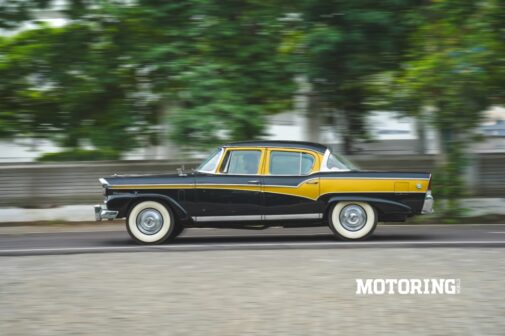
The President is one of those cars that instantly commands attention without resorting to theatrics. It isn’t covered in tailfins or dripping with chrome in quite the same way as some of its American contemporaries. Instead, it has an understated elegance that has aged remarkably well. The long bonnet, restrained detailing, and black-and-gold paintwork give it a confidence that suits its name perfectly.
Under that expansive bonnet sits a 289 cubic-inch V8, or 4.7 litres if you’re more comfortable with metric measurements. In 1956, its 210 bhp and 41 kgm of torque made it a properly capable family car, and firing it into life today still feels like a small event. Twin exhausts tucked neatly into the rear bumper produce a deep, lazy burble that quickly grows into something much more authoritative with a squeeze of the throttle. Before we could enjoy any of that, however, there was one small concern. The President hadn’t been driven for almost three months.
Classic cars have a habit of reminding their owners who’s really in charge, so Sparky and I exchanged the sort of hopeful glance that every enthusiast knows, before he turned the key. The starter motor spun for a moment before the V8 burst into life with a booming bark that echoed around the basement garage. Within seconds, the air smelled faintly of petrol and warm oil, and both of us were grinning.
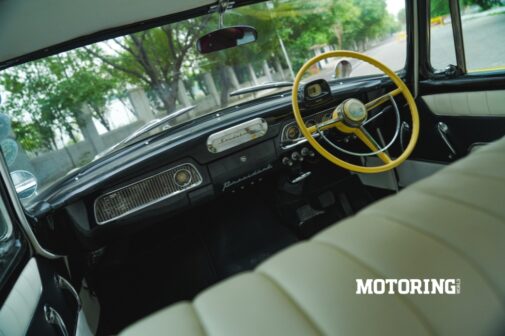
One detail often catches people by surprise. Although this is an American car, the steering wheel sits on the right. That’s because Hindustan Motors assembled Studebakers in India long before becoming synonymous with the Ambassador and, later, the Contessa. This President is one of those locally assembled examples, making it as much a part of India’s motoring history as America’s.
Hindustan Motors’ story extended well beyond Studebaker, of course. The company would later assemble several Mitsubishi models, including the Pajero and Lancer, before eventually fading into history. Fortunately for enthusiasts, its partnership with Studebaker left behind a handful of fascinating cars like this one.
With the engine warm and idling happily, Sparky handed me the keys.
‘Just don’t rest your left foot on that button,’ he said as I climbed aboard.
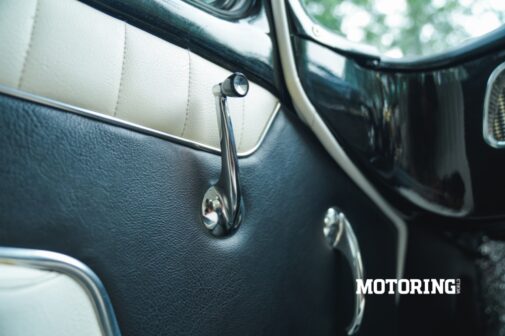
The mysterious button turned out to be the headlamp dip switch, mounted on the floor beside the pedals. It’s one of those wonderfully old-fashioned details that makes complete sense once someone explains it to you, although I’d probably have spent the first ten minutes flashing every oncoming driver had Sparky not warned me.
Greater Noida might not feature prominently on anyone’s list of scenic driving destinations, but it does have one significant advantage. On the right day, there are enough open roads to let an old American cruiser stretch its legs without constantly worrying about traffic. The President immediately feels every bit of its age, though not in a negative way. The steering wheel is enormous by modern standards, yet surprisingly light once you’re moving. The bonnet stretches so far ahead that it almost feels detached from the rest of the car, while the broad bench seat encourages a relaxed driving position rather than anything remotely sporty.
The three-speed Flight-O-Matic automatic gearbox takes a little familiarisation. First gear is selected by pulling the column shifter towards you and down, while second and third require pushing it away before moving between the remaining positions. Reverse takes a deliberate shove, which is just as well because manoeuvring something this large through modern streets demands concentration.
The V8 delivers exactly what you’d hope for from a car of this era. There isn’t an explosive rush of acceleration or tyre-smoking theatrics. Instead, the engine produces an effortless wave of torque that gathers the President’s considerable mass with surprising ease. By modern standards, it isn’t fast, but judged within the context of the 1950s, this was serious performance.
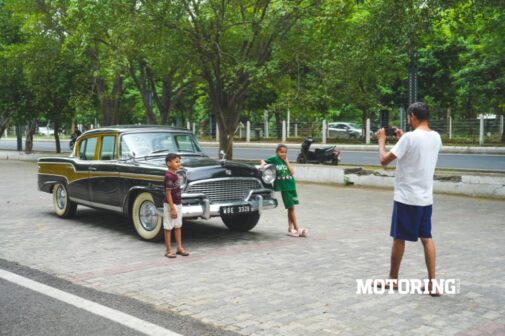
Driving the President also means accepting that you’ll never really be alone. At our first photo stop, people appeared from seemingly nowhere. Some wanted pictures, others simply wanted to know what it was. A few walked around the car in silence, taking in details they’d probably never seen before. Modern supercars attract attention because they’re expensive and exotic, and cars like the President do so because they’re… beautiful.
After slipping away from the crowd, I finally had the chance to settle into a longer drive. That’s when the Studebaker really began to make sense. Everything happens at an unhurried pace. You don’t hustle it through corners or brake impossibly late into junctions. The President encourages you to slow down, relax, and enjoy the journey rather than fixating on the destination. It is wonderfully honest about what it is, and never pretends to be anything else.
There are plenty of reminders that this car comes from another era. The fender-mounted mirrors look magnificent but aren’t especially helpful once traffic begins filling the lanes around you. Blind-spot monitoring was still decades away, so changing lanes involves equal parts optimism and neck movement.
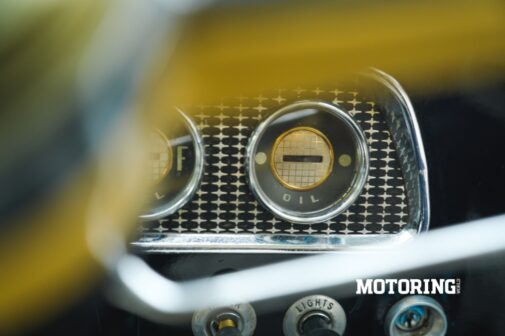
Then there are the cupholders. Yes, this 1956 Studebaker has them, although not where you’d expect. They fold out from the dashboard in a delightfully simple fashion. They’re also unlikely to stop your coffee escaping the first time you encounter an enthusiastic speed breaker, but it’s charming to discover that even seventy years ago, someone decided drivers deserved somewhere to put a drink.
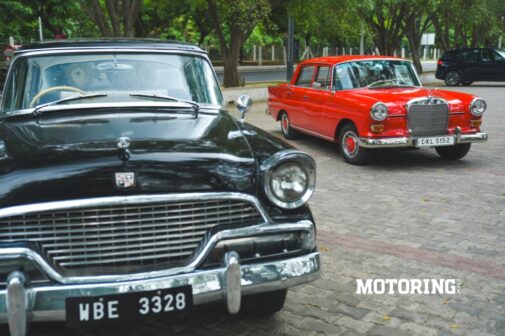
The quality of the restoration deserves massive praise. Sparky and Rahul Sircar have spent years bringing classic cars back to life, and their experience shows in every panel gap, every piece of trim, and every carefully finished surface.
‘The car wasn’t originally this colour,’ Sparky explained as we stood admiring it between photographs. ‘I wanted something that suited the shape a little better. The black paint paired with the gold window surrounds certainly does that. Under bright sunlight, the colours would have looked even richer, but the overcast skies that day gave the President a quieter, more dignified character.
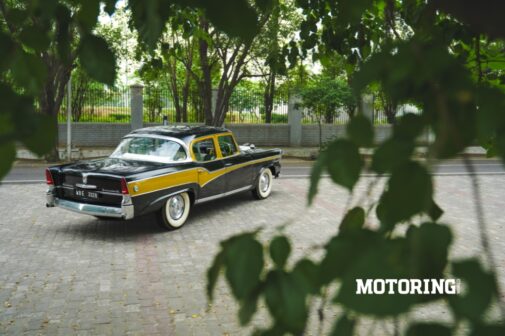
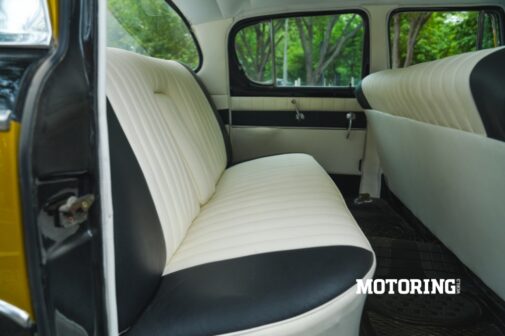
I’ve spent time around this car before, mostly as a passenger during vintage rallies around Delhi, but driving it was an entirely different experience. The seats are broad enough to qualify as furniture, the suspension seems capable of flattening almost any pothole, and the V8 settles into a gentle rhythm that makes covering distance remarkably relaxing. You begin to understand why large American sedans dominated family motoring for so long.
As the afternoon drew to a close, we were packing away cameras when another beautifully preserved classic rolled into view. One of Sparky’s clients had arrived in an immaculate 1962 Mercedes-Benz 190D, instantly creating the sort of dilemma every enthusiast dreams about. Naturally, I couldn’t resist asking for the keys. But that’s a story for another day.