

Not to put too fine a point on it, but Audi has spent the last few years in the India looking a bit lost. BMW and Mercedes have been busy selling cars, launching products and generally behaving as though they have somewhere important to be. Audi, meanwhile, has had the air of a company waiting for somebody to remember it exists.
This may be a slightly unfair assessment, perhaps, but the luxury car business has never been especially kind to manufacturers who allow the conversation to move on without them. Buyers have short memories and a remarkable capacity to spend money on another badge. If your showroom isn’t offering something new and desirable, there is always another German waiting to take your customer home. Enter the third-generation Audi Q3, with the unenviable responsibility of helping its maker regain some momentum in India. No pressure, then, just the modest task of reminding buyers why they liked Audi in the first place.
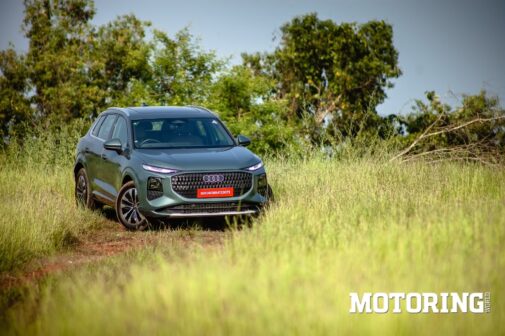
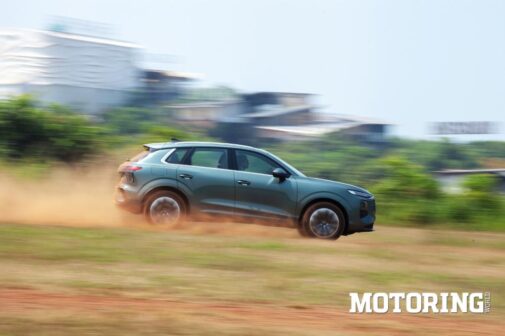
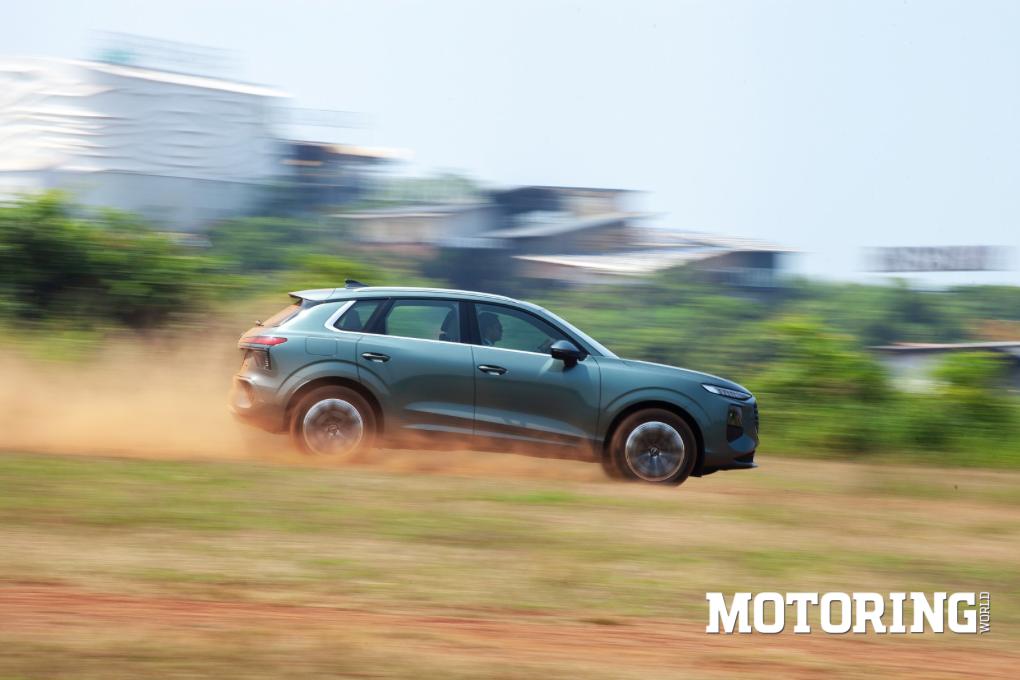
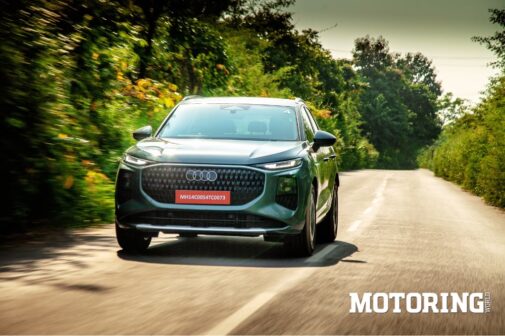
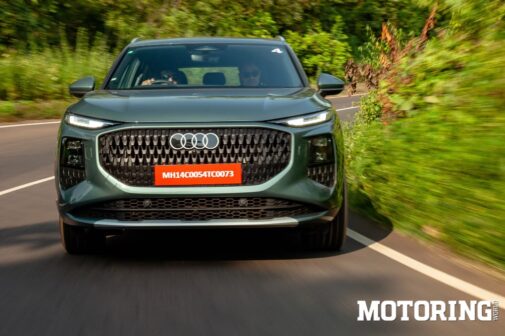
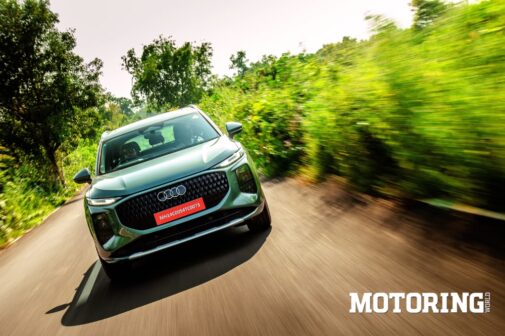
The previous Q3 was perfectly competent, but competence is a dangerous quality in a luxury car. It is what you settle for when the interesting options are unavailable. The new one has character, which is a welcome development in a segment where everybody seems to have been issued the same wind tunnel, design software and a stern instruction to make the vehicle look vaguely threatening. The new Q3 is more assertive without being ostentatious. Its surfaces are cleaner, its proportions more purposeful and its appearance considerably stealthier. It looks like a car that would rather get on with its business than announce its arrival with a brass band.
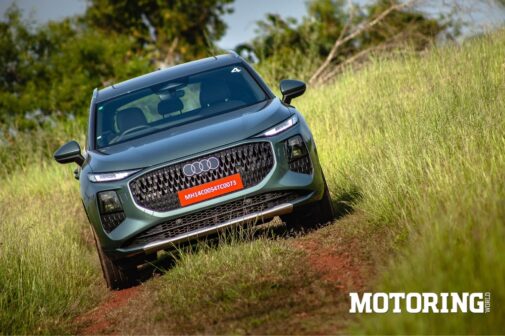
The face, with its broad grille and split lighting arrangement give it a slightly serpentine expression, rather like Kaa from <I>The Jungle Book<I> after a particularly successful session with a cosmetic surgeon. You half expect it to persuade passing motorists to hand over their wallets voluntarily. The resemblance is not necessarily unpleasant, although I would advise against looking directly into its eyes, if you are particularly susceptible to hypnotic sales techniques.
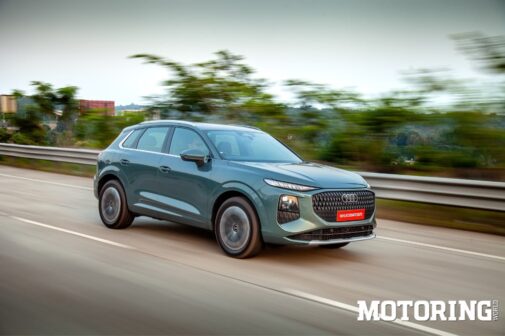
The proportions have changed little. At 4,531 mm long, the new Q3 is 40 mm longer than its predecessor. That modest increase in length is hardly enough to require a new parking strategy, but the revised styling makes the car feel more substantial. The larger grille dominates the front, the split headlamps lend it a distinctive identity, and the rear gets a connected lighting treatment that brings it into line with contemporary Audi design (it also looks like the Q7).
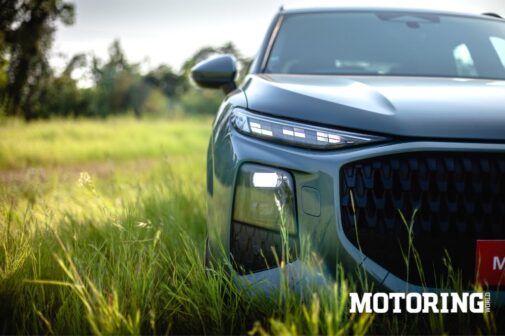
The lighting deserves special mention. The daytime running lights offer four configurable signatures, allowing owners to choose their preferred expression of automotive menace. The Matrix LED headlights can also project a carpet of light to illuminate your lane, while directional arrows can warn you when you are drifting out of it or when another vehicle occupies your blind spot. This is clever tech, rather than the usual automotive equivalent of a smartwatch telling you to stand up after an hour of sitting down. Audi has managed to make something that looks like a gimmick perform a useful job, so there may be hope for the industry yet.
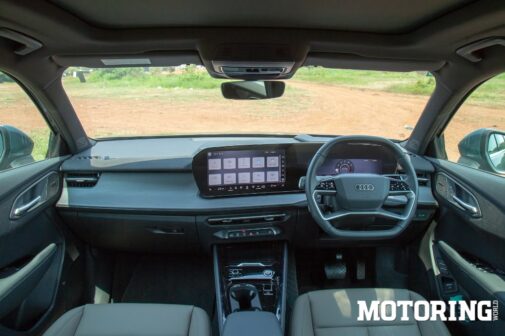
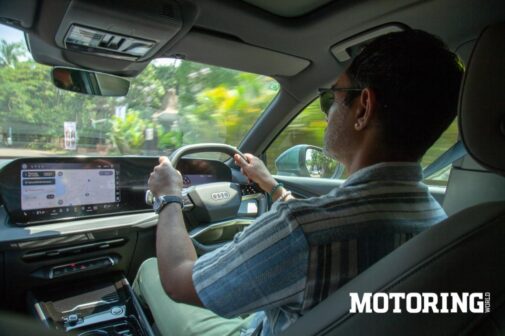
Inside, the Q3 makes an equally substantial leap forward. The cabin is spacious, comfortable and finished to a standard that feels appropriate for a premium SUV. The driving position is good, visibility is respectable and there is plenty of room for passengers. The boot is generous, too, which should prove useful for the sort of buyer who regards a weekend trip as an opportunity to transport half the contents of a wardrobe.
There are, however, some disappointments. The plastics could be better, particularly in places where your fingers inevitably wander while you are looking for something to fiddle with. The faux wood finish across the dashboard doesn’t quite convince, either. It has the slightly unfortunate appearance of something selected by a committee that had heard of wood but had never actually encountered any. Audi has also gone all-in on touchscreens, apparently deciding that physical controls are a relic of an uncivilised age. I miss the company’s old switches and beautifully damped rotary dials. They had a precision that made even adjusting the air-conditioning feel like operating a piece of properly engineered machinery.
The new arrangement is more contemporary, but I remain unconvinced that every function in a car needs a digital interface. The touchscreen is impressive enough, yet the simple act of changing a setting should not require the concentration normally reserved for defusing an explosive device.
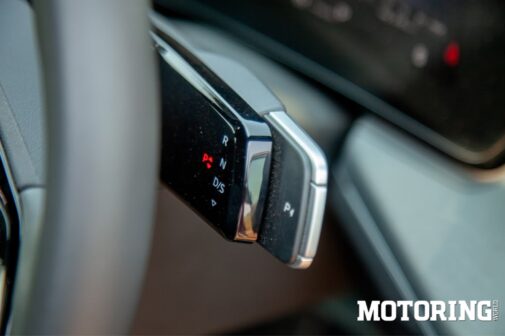
Audi has at least done something interesting with the controls. The indicators and wipers are operated through the left steering-column stalk, while the gear selector occupies the right stalk. The latter arrangement works well. The former requires some acclimatisation. I managed to activate the wipers while attempting to indicate, which was a helpful way of informing the people behind me that I was both turning and deeply concerned about the weather. The stalks themselves feel excellent, with satisfying clicks and a reassuring mechanical heft.
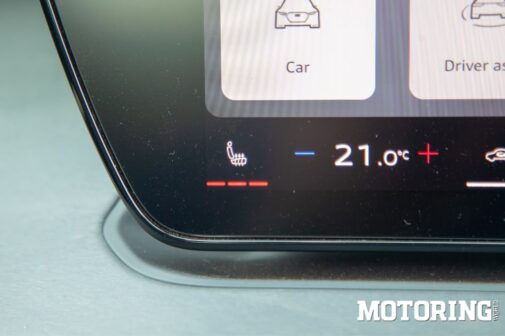
Equipment levels are generous in some areas and oddly parsimonious in others. Three-zone climate control is useful, especially when the driver and passengers have differing opinions about what constitutes a tolerable temperature. The Sonos audio system is very good, delivering clear sound and enough depth to make a decent recording enjoyable. The seats, however, are on the firm side. They offer support, although anyone expecting to sink into them as though settling into a particularly indulgent hotel suite may be disappointed.
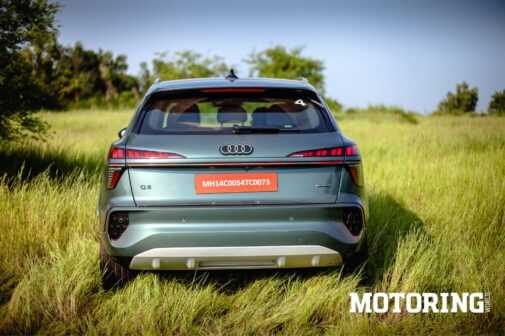
There is no 360-degree camera, nor are cooled or massage seats available. Granted, neither the X1 nor the GLA offer these either, but these omissions are difficult to ignore when cars several segments below now offer buyers an increasingly elaborate catalogue of equipment. A massage function is hardly essential to the operation of a motor vehicle, but neither is an illuminated logo, and the industry seems to have reached a consensus on which of those two deserves greater attention. A small suite of advanced driver assistance systems is included. The technology adds a layer of reassurance without turning the Q3 into a self-driving laboratory experiment, which is probably for the best.
Under the bonnet sits the VW group’s familiar 2.0-litre turbo-petrol four-cylinder engine, producing 204 bhp and 320 Nm of torque. Power is sent to all four wheels through a seven-speed dual-clutch automatic gearbox and Audi’s quattro all-wheel-drive system. It is a proven combination, and one of the better powertrains available in this class. The gearbox is smooth and unobtrusive in ordinary driving, shifting with little fuss. It doesn’t spend its life searching for the right ratio, nor does it insist on turning every gentle acceleration into a dramatic event. However, even in Sport mode, it’s a bit laggy with downshifts, and using the paddles doesn’t sharpen things up. The engine is eager, responsive and sounds satisfyingly punchy when you ask it to work harder. It has enough character to make the Q3 enjoyable without requiring you to drive everywhere as though a stopwatch were involved.
And yet.
Audi offers a more powerful version of this engine in other markets, namely a 265 bhp variant. We get 204 bhp. There is nothing wrong with 204 bhp, unless you happen to know that another 61 bhp is available and somebody has decided you don’t need it. This is the sort of decision that makes perfectly reasonable people consider moving to another country. The Q3 is quick enough for most situations, and its claimed 0-100 kph time of around 7.1 seconds is respectable, but the chassis is good enough to handle more power, and the engine feels as though it has a little more enthusiasm available than the Indian specification permits it to express.
That said, the Q3 is a thoroughly enjoyable car to drive. The steering is accurate, the handling composed and the quattro system provides reassuring traction when the road becomes less than perfect. It feels sure-footed through corners, with a chassis that responds neatly to changes in direction without becoming nervous or excessively stiff.
The ride is particularly impressive. The 18-inch wheels provide a sensible compromise between appearance and comfort, allowing the suspension to absorb rough patches without sending every imperfection directly into your spine. Goa’s roads are not always a reliable test of suspension engineering, but the Q3 handled the changes in surface quality well. It feels settled and mature, which is precisely what a compact luxury SUV should be.
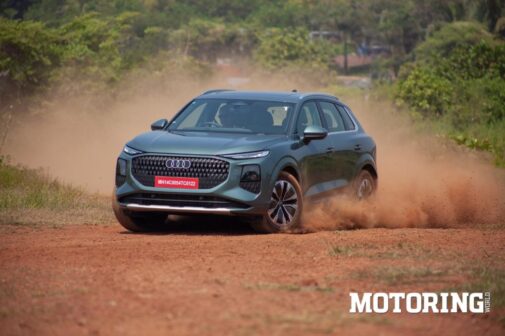
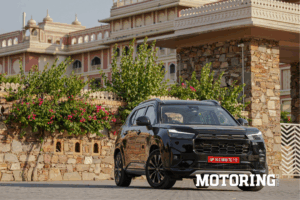
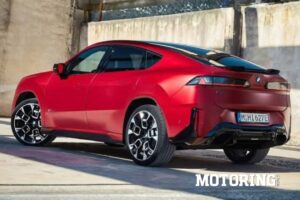
Compared with the BMW X1 and Mercedes-Benz GLA, the Audi has a particularly appealing balance between comfort and driver involvement. The BMW is capable and polished, while the Mercedes leans towards a more comfort-oriented experience. The Q3 manages to be comfortable without feeling detached from the road, and that makes it the one I would reach for if I wanted to enjoy the drive rather than simply complete it. There is enough grip to encourage a little enthusiasm, and the all-wheel-drive system gives the driver confidence when conditions deteriorate.
The Q3 is, therefore, a compact SUV with enough ability to make a winding road entertaining, which is a more useful quality than the ability to set an impressive lap time at a circuit most owners will never visit. The larger question is whether this is the car Audi needs in India – and I think it is a strong step in the right direction. It looks distinctive, has a well-packaged cabin and offers a powertrain that remains among the best in the segment. Its shortcomings are real, particularly the inconsistent cabin materials and the omission of equipment that buyers may reasonably expect at this price. The touchscreen-heavy interface will appeal to some customers and irritate others, though that appears to be the direction in which the entire industry is marching.
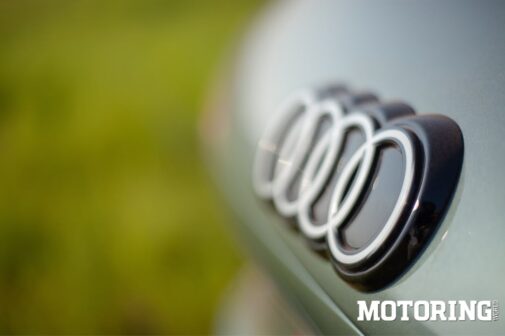
Pricing will matter enormously, and one would expect an ex-showroom figure of Rs 50 lakh or thereabouts. The Q3 competes in a segment where buyers are acutely conscious of what they get for their money, even if they occasionally pretend otherwise. Audi needs to make the car attractive enough to bring people back into its showrooms, rather than relying on the four rings to do all the work. The new Q3 gives it a fighting chance. It is more distinctive than the car it replaces, more enjoyable to drive than its anonymous predecessor and sufficiently accomplished to stand up to its German rivals. A 265 bhp engine would have made the argument stronger, and a few more physical controls would have made the cabin more satisfying. Still, Audi has finally produced a Q3 with some personality. That is no small achievement in a market full of expensive vehicles trying very hard to look like they could eat one another.
The snake has shed its skin. Now Audi needs to make sure the buyers come back to see it.