

Polestar has never been particularly interested in following the crowd, and its Formula 2030 concept looks like a very low, very fast reminder of that.
The Swedish electric performance brand has unveiled the Formula 2030 concept, a new design study that offers a glimpse into its future direction. Created under the leadership of Head of Design Philipp Römers, it is the physical expression of the brand’s wider Formula 2030 strategy, built around three familiar pillars: design, performance and sustainability. More importantly, this isn’t just a pretty concept destined to spend its life under the lights of a motor show. Polestar has confirmed that several of its design elements will make their way into the next-generation Polestar 2 and the forthcoming Polestar 7.
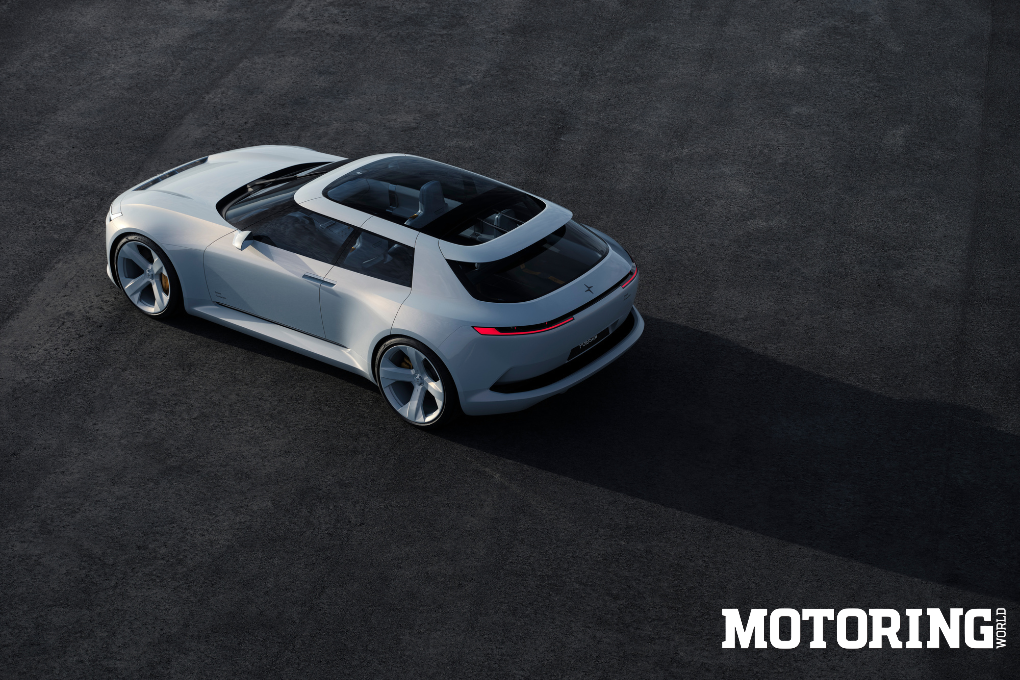
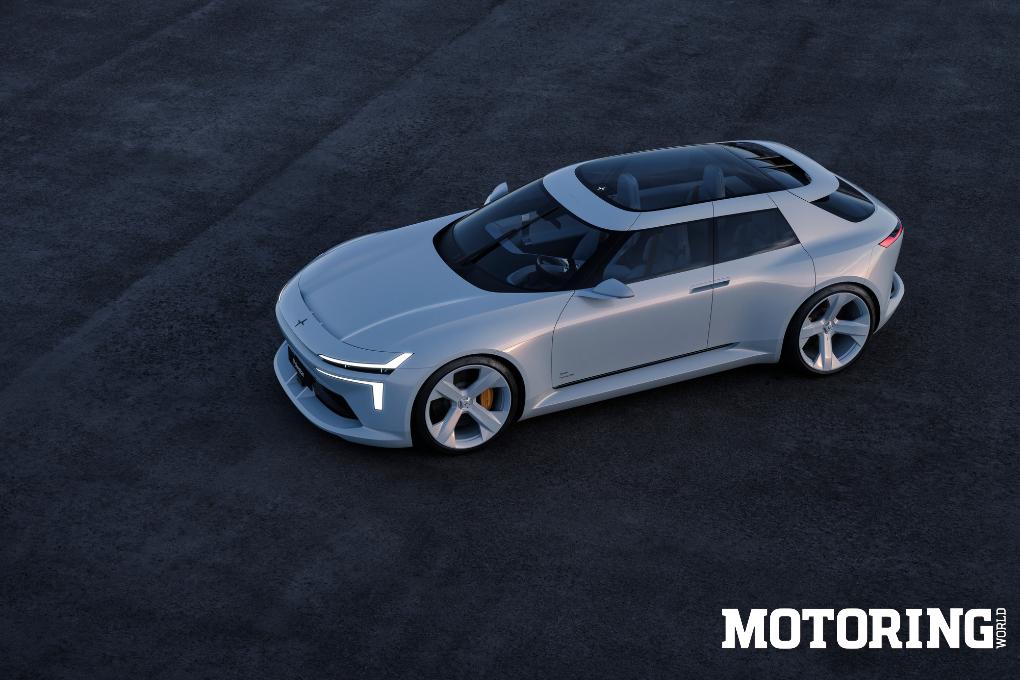
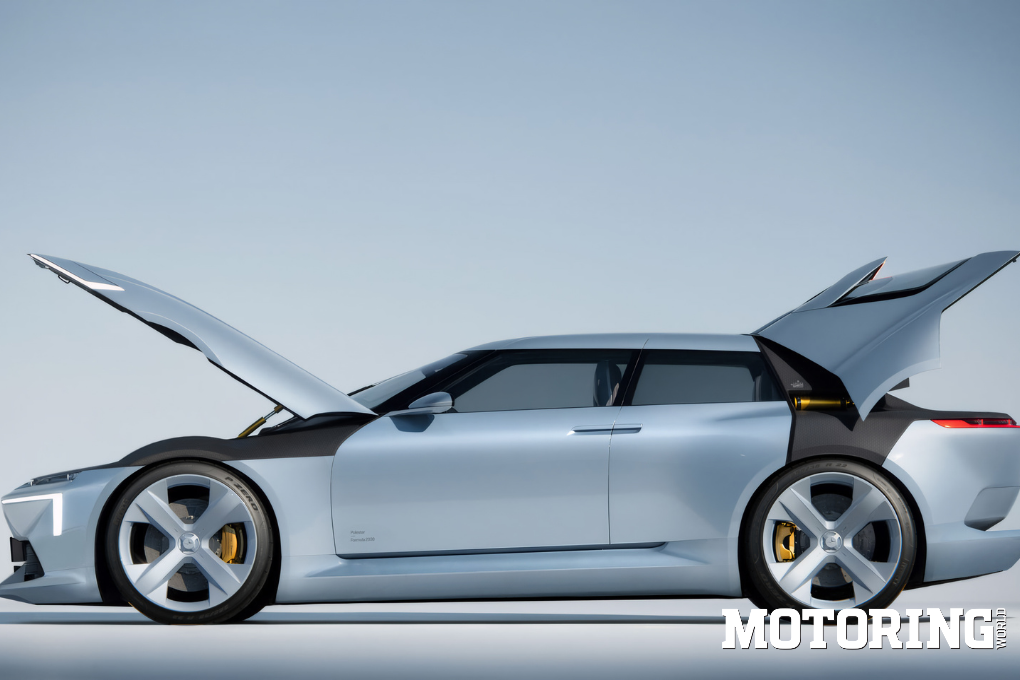
The philosophy behind Formula 2030 is refreshingly straightforward: remove the unnecessary, improve what remains and refuse to compromise. The result is a compact, four-door sports car with proportions that are anything but conventional. It measures 4,680 mm in length, 2,021 mm in width and just 1,350 mm in height, with a 2,780 mm wheelbase. It is even lower than the Polestar 5 Grand Tourer, giving it a distinctly squat stance.
The silhouette is defined by a long bonnet, short overhangs and pronounced rear haunches, with 22-inch wheels filling out its muscular proportions. The design takes inspiration from the Polestar 4 SUV, particularly in its attempt to combine low-slung sports car proportions with everyday practicality. From above, the bodywork features the familiar coke-bottle shape, with visual weight concentrated towards the rear.
Up front, the signature Dual Blade headlights are integrated into an aerodynamic wing, offering a preview of the face of the next-generation Polestar 2, planned for 2027. A sharply sculpted nose, deep front splitter and central spine give the concept an unmistakably focussed appearance. There is even a vertically mounted windscreen wiper, inspired by motorsport machines, sitting beneath a wraparound, visor-like windscreen.
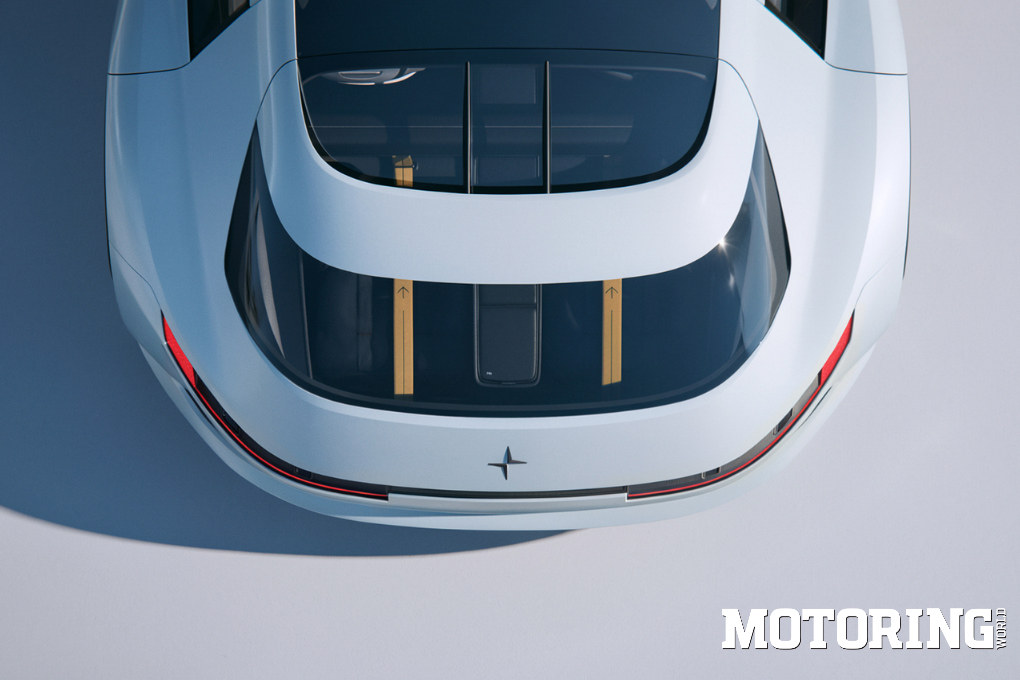
The rear is perhaps the most radical part of the design. Polestar has done away with the now familiar full-width lightbar and introduced a new Single Blade lighting signature. A centrally mounted rear wing, illuminated mounting points and a pronounced diffuser complete the look. The concealed LiDAR unit also gets an aerodynamic housing, revealing itself when the concept’s autonomous driving capabilities are in use.
Inside, Formula 2030 takes a rather interesting approach to the increasingly screen-heavy modern cabin. The cockpit is designed around the driver, with a 20-inch HyperDIM driver information display mounted directly to the steering column and a 12.2-inch central screen integrated into the rising centre tunnel. The dashboard wraps around the driver, while four individual seats use inflatable bolsters and cushions to adapt to each occupant.
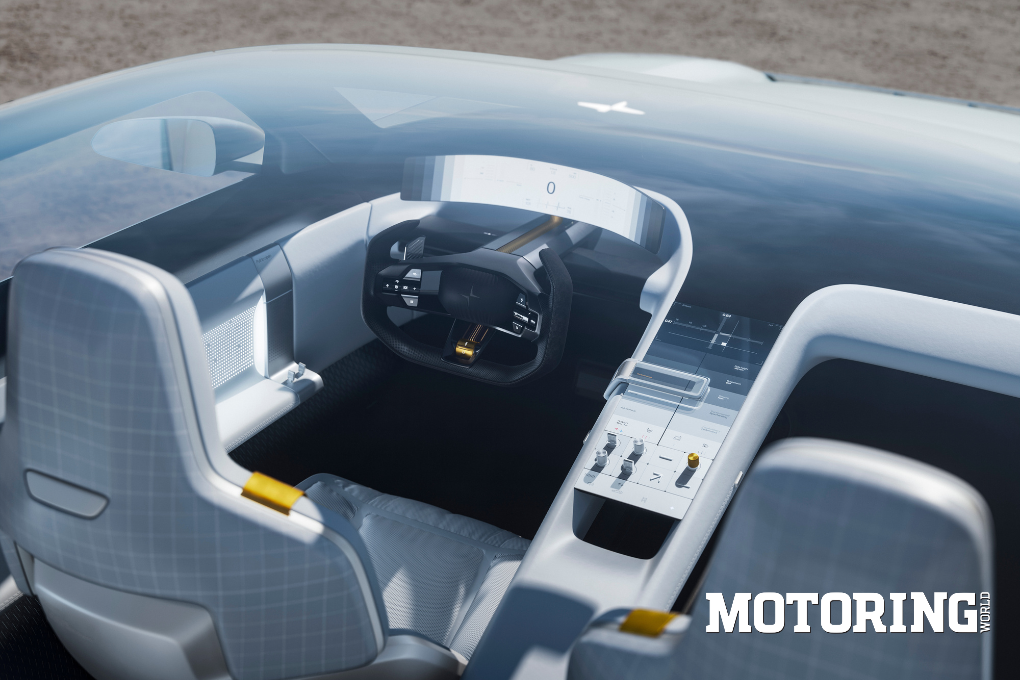
The cleverest feature, however, is the way the cabin physically changes depending on the selected driving mode. There are three settings: Performance, Normal and Autonomous. In Performance mode, the central screen lowers into the dashboard, while the steering wheel and driver’s display move closer to the driver. Select Autonomous mode and the screen rises, the steering wheel moves away and the seat adjusts to accommodate a more relaxed position. It is a properly mechatronic interpretation of how a car’s interior could respond to the person using it.
Polestar is also looking to restore some tactility to the driving experience. Eight customisable physical controls sit below the central screen, allowing owners to choose between rocker switches and rotary controllers, alongside programmable shortcuts. The concept also integrates Google Gemini through Google built-in, bringing conversational AI into the cabin without abandoning the brand’s emphasis on clear, driver-friendly interfaces.
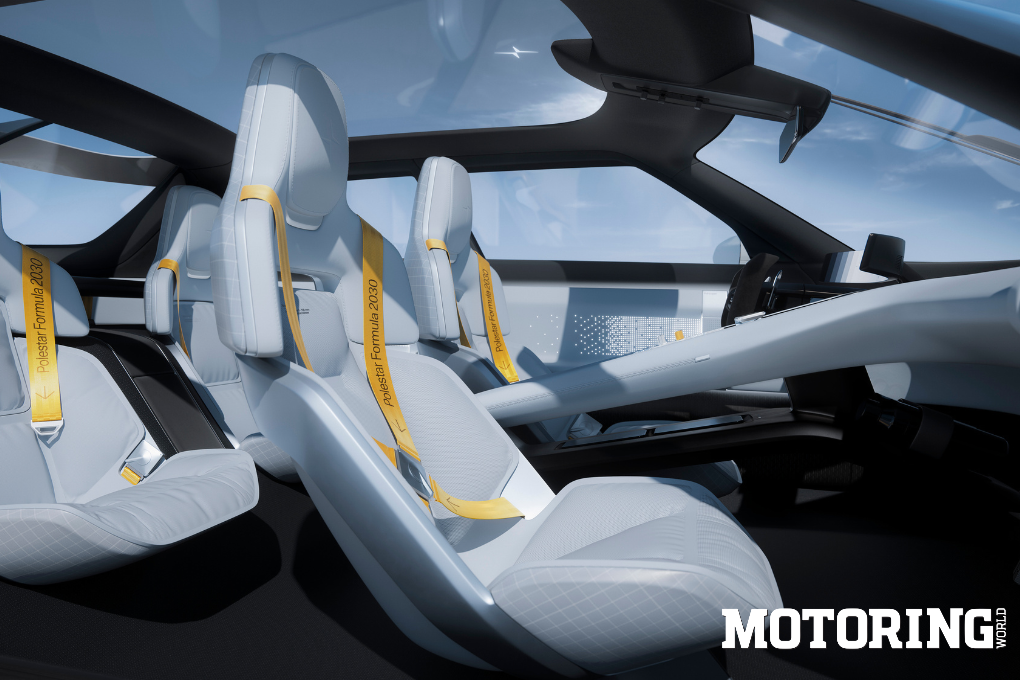
Materials are another important part of the story. The concept wears a new Nitrogen exterior finish, with different gloss, matt and satin surfaces creating a tone-on-tone appearance. Swedish Gold accents appear on the Brembo brake callipers, seatbelts and interior details. Inside, European flax and bio-based polypropylene are used in a composite seatback, while recycled materials and renewable energy contribute to the low-emission steel structures. The door interiors follow a mono-material approach designed for full recyclability.
Even the luggage area has been turned into a design feature, with exposed natural-fibre composites, visible Öhlins dampers and a front storage compartment designed to accommodate race helmets and a fire extinguisher.
Polestar has not announced any powertrain specifications, BHP, torque, acceleration or top-speed figures for Formula 2030. This is, after all, a design concept rather than a production-ready performance car.
What it does offer is a fairly clear indication of where Polestar wants to go. The Formula 2030 concept looks towards a future where electric performance cars are not defined by screens, software and outright numbers alone, but by the way they look, feel and respond to their drivers. And if even half of this concept’s character makes it into the next Polestar 2 and Polestar 7, the brand’s future could be rather interesting.