

From building India’s most trusted helmet brand to shaping the future of rider safety, Vega Helmets has spent four decades balancing affordability with uncompromising protection. In this joint conversation, Chairman Dilip Chandak and Managing Director Girdhari Chandak reflect on the brand’s journey, its deep understanding of Indian riders, and how Vega continues to scale innovation, accessibility, and trust—both at home and in global markets.
Motoring World: Affordability vs safety is a tricky balance—how does Vega ensure certified quality while keeping prices accessible for the average Indian rider?
“Affordability and safety are often seen as opposing forces, but at Vega we’ve never accepted that trade-off. The only way to balance the two is through scale, engineering discipline, and manufacturing control.
We invest heavily in in-house manufacturing, backward integration, and process efficiency, which allows us to control costs without cutting corners on safety. Every Vega helmet meets certified safety standards, but because we design for Indian riding conditions, Indian volumes, and Indian supply chains, we can make that safety accessible.
For us, safety is non-negotiable. Affordability is achieved through smart manufacturing—not compromise.”
MW: Heartland markets like UP, Bihar, and Chhattisgarh are central to your expansion. What unique challenges and opportunities do these regions present compared to metro markets?
“These markets are extremely important to us because they represent the real India. The opportunity is scale—millions of riders, growing aspirations, and increasing awareness of safety.
The challenge is diversity. Road conditions, usage patterns, income levels, and even helmet preferences vary widely. That’s why a one-size-fits-all approach doesn’t work here.
Our strength lies in our breadth of SKUs, dealer relationships, and understanding of local needs. We design products that are rugged, comfortable for long usage, and affordable—while still offering style. These markets reward brands that are consistent, available, and trustworthy.”
MW: How has omni-channel retail changed the way Vega reaches riders in Tier 2 and Tier 3 towns, and what role do dealers still play in these markets?
“Omni-channel has expanded reach, but it hasn’t replaced the dealer—especially in Tier 2 and Tier 3 towns.
Digital platforms help riders discover products, compare options, and build aspiration. But when it comes to fit, trust, and final purchase, the local dealer still plays a critical role. In many towns, the dealer is the brand.
Our strategy is to enable dealers digitally, not bypass them—whether through better product availability, faster replenishment, or visibility driven by online channels. Omni-channel works best when online discovery and offline trust work together.”
MW: Vega is moving beyond helmets into a full riding ecosystem. What prompted this shift, and how do you decide which categories to enter next?
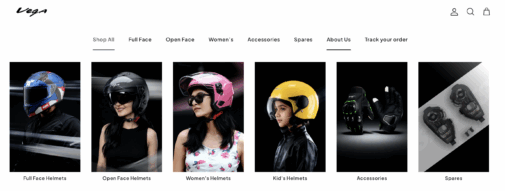
“The shift was driven by listening to riders. Helmets are the first step in safety, but they’re not the last. As riding culture evolves, riders want complete protection and convenience, not fragmented solutions. That’s where our two-brand strategy becomes important. Vega addresses the everyday rider, while Axor is built for enthusiasts and performance riders who demand head-to-toe protection.
With Axor, we’re consciously building a complete riding ecosystem—helmets, jackets, gloves, footwear, luggage, and accessories—designed to work together in real riding conditions. It’s about giving serious riders a coherent, performance-led gear solution rather than piecing products together from multiple brands.
We already had trust, manufacturing capability, and distribution reach, so expanding into riding gear and accessories was a natural progression. We enter categories only where we can add value—through design relevance, safety focus, and affordability. We don’t chase categories; we build them responsibly, just like we did with helmets.”
MW: Indian riders have diverse needs—from daily commuters to long-distance tourers. How does Vega ensure its products stay relevant across riding styles and budgets?
“India’s diversity is our biggest design input.
We segment riders not just by price, but by usage—daily commute, highway riding, touring, or performance. That’s why our portfolio spans entry-level helmets to advanced designs, and why Axor exists alongside Vega.
Our product teams work closely with riders, dealers, and riding communities. Relevance comes from staying close to the ground—understanding how helmets are actually used, not how they look on paper.”
MW: With rising awareness around road safety, have you seen a shift in consumer mindset, especially in non-metro regions?
“Yes, and the shift is real. Riders today ask better questions—about certification, fit, comfort, and durability.
In non-metro regions, especially, safety awareness is growing alongside aspiration. Riders want helmets that protect them, but they also want something they feel proud wearing.
This is where Vega’s positioning works well—we make safety aspirational yet accessible, which accelerates adoption.”
MW: What role does local manufacturing and supply chain efficiency play in scaling Vega’s presence while maintaining consistency in quality?
“Local manufacturing is the backbone of our business.
By manufacturing in India and investing in backward integration like EPS production and in-house graphics, we control quality at the most critical stages. It also gives us agility—faster launches, better inventory management, and consistency across millions of units.
We are also one of the very few helmet manufacturers in India with large-scale factories in both the North and the South. This gives us a significant supply-chain advantage—shorter lead times, lower logistics complexity, better service levels for dealers, and faster response to regional demand.
Scale without control is risky. Our distributed manufacturing model allows us to scale responsibly while maintaining uniform quality across geographies.”
MW: Looking ahead, what does “making safety accessible” truly mean for Vega over the next five years—both in India and beyond?
“For us, making safety accessible means three things.
First, wider reach—being available wherever riders are, across India and global markets.
Second, relevant innovation—from better comfort and design to smart safety technologies that actually help riders.
Third, affordability at scale—ensuring safety is not limited to a premium segment.
Over the next five years, our goal is simple but ambitious:
to ensure that choosing safety becomes the easiest, most natural decision for every rider—whether in a small town in India or a global market.”

In Conversation with Dilip Chandak, Chairmen at Vega Helmets
MW: When Vega began, India had very limited safe helmet options. Looking back, what gap in the market convinced you that an Indian brand could deliver world-class protection at scale?
Dilip Chandak: When we started, the gap was very clear. Riders either had access to imported helmets that were expensive and inaccessible, or locally available options that did not inspire confidence in safety or quality. Style was almost completely missing from the conversation, making helmets something riders wore out of compulsion, not choice.
What convinced us was the belief that Indian manufacturing, when done with discipline and intent, could match global standards. India had the scale, the talent, and the need—but not yet the focus on safety or design. We believed protection should not be a privilege, and that safety could—and should—also be stylish. That belief became the foundation of Vega.”
MW: Trust isn’t built overnight. What were the key moments or decisions over the last 40 years that helped Vega become a household name for everyday riders?
DP: Trust is built quietly, over time, through consistency.
Some of the most important decisions we made were not dramatic—they were disciplined. We chose to never compromise on certified safety, even when the market was price-sensitive. We invested in manufacturing when outsourcing would have been easier. We stood by our dealers and ensured product availability year after year.
Over decades, riders learned one thing: a Vega helmet would do its job. That reliability, repeated millions of times, is what made Vega a household name.
MW: Indian riding conditions are uniquely challenging. How has Vega’s understanding of Indian roads, climate, and rider behaviour shaped its product design philosophy?
DP: India teaches you humility as a manufacturer. Roads change every few kilometres, climates vary dramatically, and riders use helmets for hours every day.
This reality shaped our design philosophy. We focus deeply on comfort, ventilation, weight, durability, and fit, because a helmet that is uncomfortable will not be worn consistently. Safety is effective only when it is practical.
Our products are designed not in isolation, but with real Indian usage in mind. That understanding is one of Vega’s greatest strengths.
MW: Vega has consistently balanced style, comfort, safety, and affordability. How do you prioritise these elements without compromising on core protection?
DP: For us, safety is the foundation—non-negotiable. Everything else is built around it. Affordability comes from scale and efficiency, not from reducing protection. Comfort and style are essential because they encourage adoption. A helmet must protect, but it must also be worn willingly.
The balance comes from engineering discipline and manufacturing control. When you design intelligently and produce at scale, you don’t have to choose between protection and accessibility.
MW: From lightweight commuter helmets to AI-enabled smart helmets, how do you decide which innovations truly add value for Indian riders?
Innovation must solve a real problem.
DP: We ask one simple question: Will this make riding safer, easier, or more comfortable in the real world? If the answer is yes, we pursue it. If it only looks impressive on paper, we don’t.
That philosophy is why we invested early in advanced materials like carbon fibre. We have been one of the very few Indian manufacturers working with carbon fibre since 1993, long before lightweight performance helmets became a conversation in India. Today, through Axor, we are bringing that expertise back to Indian riders in a meaningful and accessible way.
The same thinking applies to smart helmets. Technology requires the right expertise, so we chose to work with the right partners to ensure the product is truly smart, reliable, and rider-focused. Our aim is not to add features for novelty, but to deliver technology that genuinely enhances awareness and safety.
Innovation, for us, is about long-term value—not short-term excitement.
MW: Producing over 10 million helmets annually is a massive scale. How does Vega ensure quality consistency and safety standards across such volumes?
DP: Scale without control is dangerous, especially in a safety-critical product like helmets.
That is why we invested early in in-house manufacturing, backward integration, and rigorous process standardisation. By controlling critical components such as EPS energy-absorbing liners and ABS shell moulding, and by embedding strong quality systems across operations, we ensure consistency across every unit we produce.
A clear reflection of this commitment is that we are the only Indian helmet manufacturer with a NABL-accredited in-house testing laboratory, which represents one of the highest levels of laboratory certification in the country. This allows us to conduct continuous validation, compliance testing, and performance benchmarking internally.
Quality, for us, is not inspected at the end—it is engineered into every stage of the process. That mindset is what enables us to scale responsibly while maintaining long-term trust with riders, regulators, and partners.
MW: With Axor as your premium brand, how do you differentiate between mass-market trust and aspirational performance without diluting either identity?
DP: Vega and Axor serve different rider mindsets, and we respect that distinction deeply.
Vega is built on everyday trust—comfort, reliability, and accessibility. Axor is built for riders who seek performance, adventure, and global standards.
The key is clarity. We don’t try to make Vega premium or Axor mass. Each brand has its own role, design language, and audience. When brands are clear about who they are for, there is no dilution.”
8. As Vega expands into Europe, Latin America, and Africa, how do Indian learnings translate to global markets, and what does global success mean for an Indian safety brand?
Chairman Response:
“Indian conditions prepare you for the world.
If a product performs well in India—across heat, dust, traffic, and long usage—it is naturally robust. Those learnings translate well to many global markets with similar realities.
For us, global success is not just about presence. It is about proving that an Indian brand can set benchmarks in safety, quality, and responsibility worldwide. That is a matter of pride, but also of purpose.”