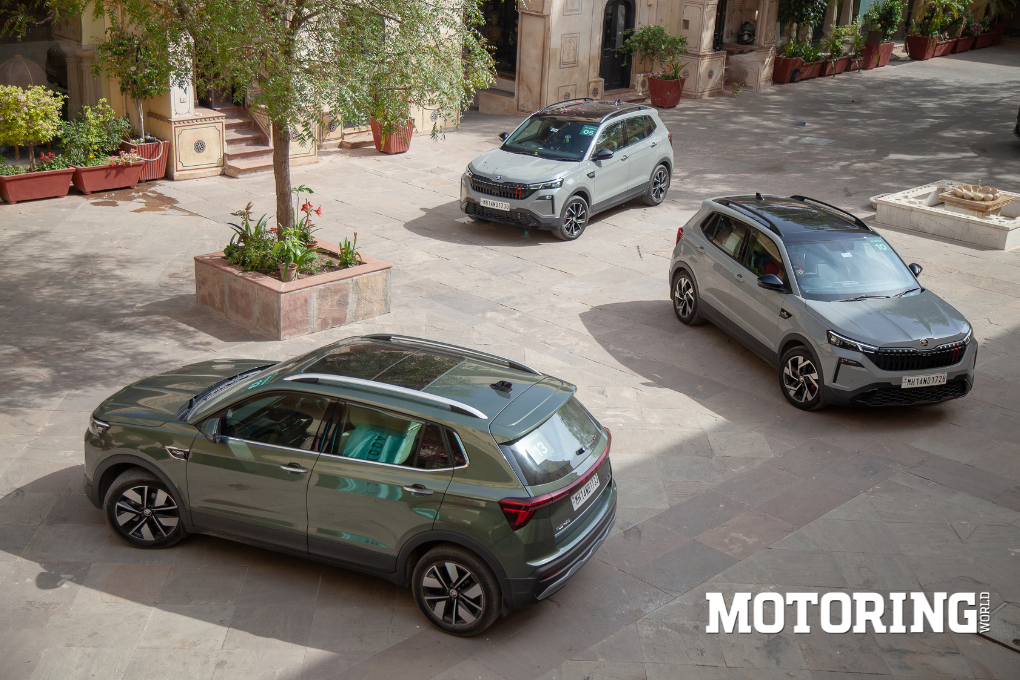


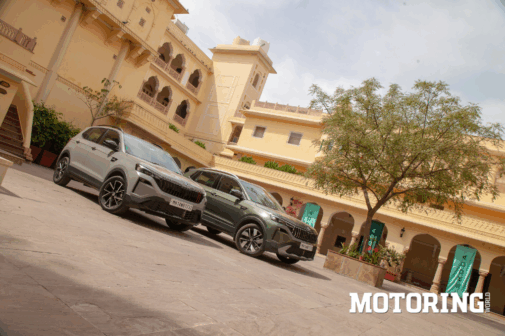
Rajasthan has become something of a default venue for automotive first drives in India, and with good reason. Wide highways, predictable terrain, and long, uninterrupted stretches of road make it genuinely useful for understanding a car. Jaipur, though, had an unexpected addition this time — a cool evening breeze that made the city feel almost pleasant, which isn’t something you associate with a desert state in the middle of the year. We weren’t there for the weather, of course. We were there for the updated Kushaq, and as first-drive settings go, it turned out to be a good one.
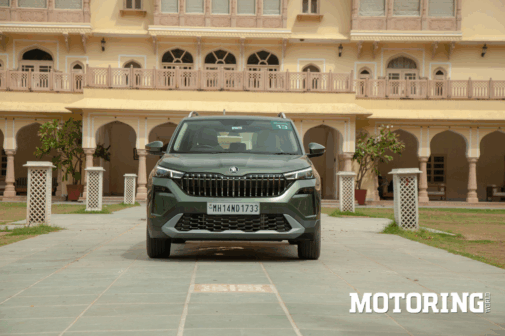
The Kushaq holds a particular significance in Skoda’s India story. When the brand relaunched itself on the MQB-A0-IN platform a few years ago, the Kushaq was its opening statement — a compact SUV built specifically for Indian conditions, priced to compete seriously, and engineered to a standard that felt genuinely European without being priced out of reach. It worked. Skoda’s India volumes climbed, customer trust followed, and the Kushaq became the car around which the revival was built. This update, then, is Skoda doubling down on what’s been working, while addressing the things that weren’t.
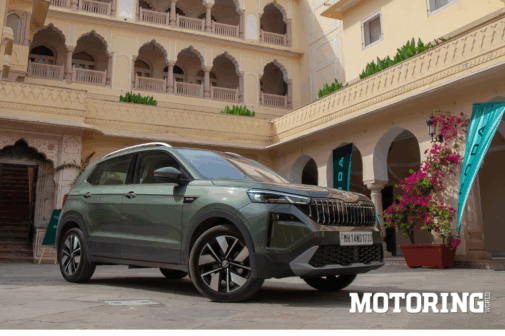
The biggest mechanical change concerns the 1.0-litre TSI variant, and it’s a significant one. The earlier 6-speed torque converter automatic has been replaced by a new 8-speed torque converter unit, and the reasoning is straightforward: fuel economy. The stop-go crawl of city driving, the constant low-speed shuffling, the heat — none of it is kind to how much fuel the engine sips, and over time, owners noticed. The torque converter doesn’t have the same razor-sharp shifts, but it offers something more useful in daily life — smoothness and consistency (and likely better long-term durability). It’s a more relaxed gearbox for a more realistic set of driving conditions, and it makes the 1.0-litre Kushaq a fundamentally easier car to live with.
The 1.0-litre TSI itself produces 114 bhp and 18.15 kgm of torque, which is an adequate if unspectacular set of numbers for a car of this size. In regular driving it’s composed and reasonably refined, though push it hard and the three-cylinder character becomes audible — an unmistakable thrum that reminds you there’s one fewer pot doing the work. It’s not harsh, just present. Real-world efficiency hovered around 17 kpl in mixed driving conditions, which is a solid return for a petrol SUV.
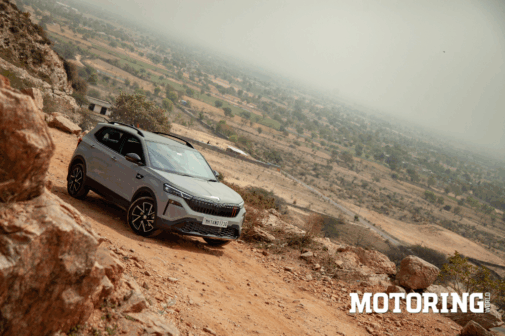
If the 1.0 is the sensible choice, the 1.5-litre TSI is the rewarding one. With 150 bhp and 25.49 kgm of torque routed through a 7-speed DSG, this engine transforms the Kushaq’s character entirely. The mid-range pull is strong and linear, overtakes happen with minimal drama, and there’s a genuine eagerness to the way it builds speed. It’s the kind of engine that makes highway driving feel effortless; you ask, it delivers, without any of the hesitation or theatrics that characterise lesser powertrains. Efficiency is, predictably, the trade-off: real-world figures came in around 15 kpl, which is acceptable given the performance on offer.
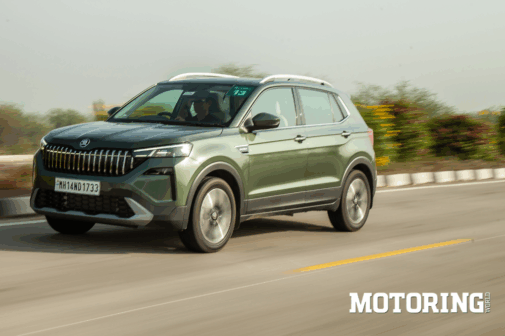
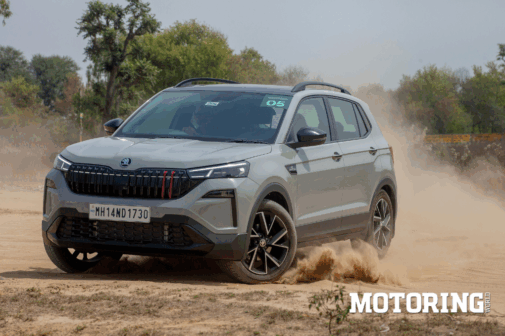
This is where the Kushaq has always had an edge over its competition, and the update does nothing to blunt it. The steering is precise and well-weighted, with a directness that gives you genuine feedback about what the front wheels are doing, a trait that’s more uncommon in this segment than it ought to be. The chassis feels solid and planted, and at higher speeds, the car settles into a composed, confidence-inspiring stride that makes you want to keep the kilometres rolling.
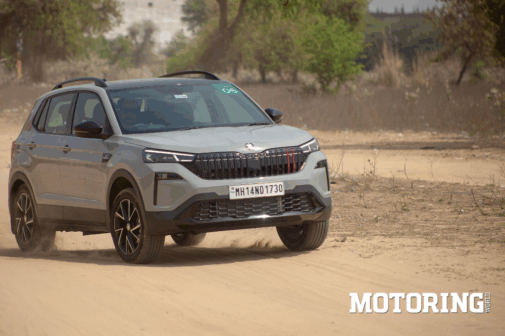
The suspension leans toward firm rather than pliant, which means sharper road imperfections do register in the cabin. It’s never uncomfortable, but buyers expecting the floaty, absorbent ride of some rivals may need a moment to adjust. The payoff is a car that corners tidily and doesn’t wallow through direction changes; this is handling that feels like it belongs to a more driver-focussed category. Rear disc brakes are a welcome addition, improving stopping performance and keeping the car stable and straight under hard braking. The overall impression on the road is of a car that’s been built to be driven, not merely transported in.
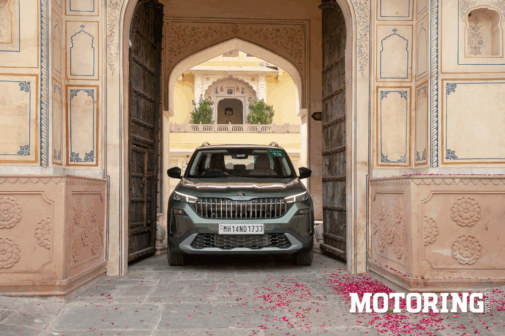
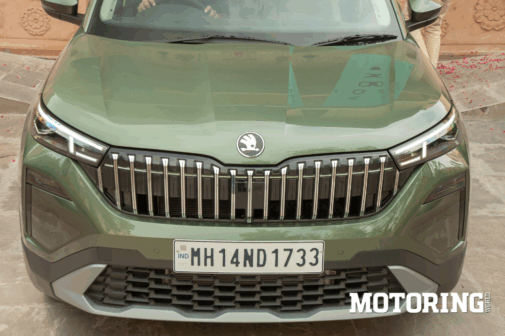
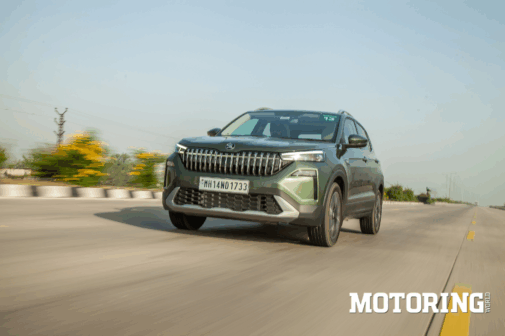
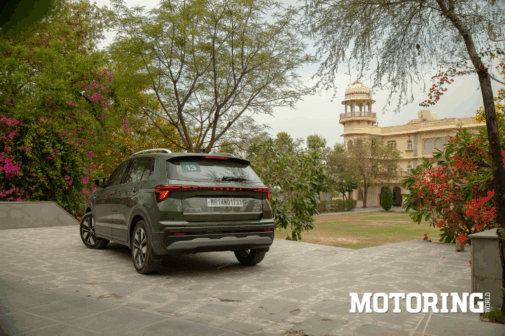
The visual changes are measured rather than dramatic, which suits the Kushaq. Up front, a redesigned grille now features integrated illumination — a slim light band that blends neatly into the LED headlamps and gives the face a more contemporary, connected appearance. It’s a design language that’s becoming widespread across the industry, but Skoda has applied it with restraint. Around the back, a connected light bar with illuminated Skoda lettering and sequential turn indicators rounds off the update. The result is a car that looks current without looking like it’s trying too hard.
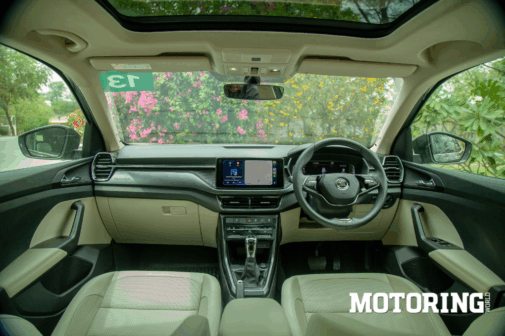
The cabin follows the same philosophy: familiar, but meaningfully improved. The layout remains clean and logically organised, with two interior themes available — a lighter, airier option and a darker, sportier one. Material quality is largely good, with isolated patches of hard plastic in less conspicuous areas that don’t particularly detract from the overall experience.
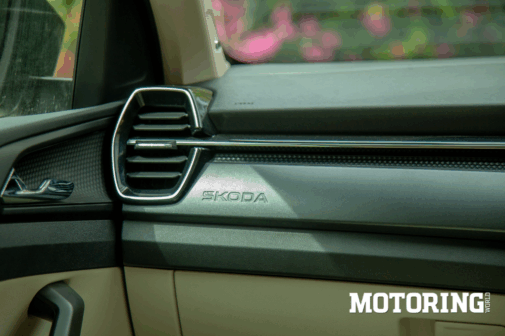
Technology takes centre stage, with a 10.25-inch digital instrument cluster and a 10.1-inch touchscreen infotainment system. Both are crisp and responsive, and the system supports wireless Apple CarPlay and Android Auto, along with a Google Gemini-powered voice assistant that actually proves useful rather than ornamental. Front seats in higher variants are ventilated and electrically adjustable, appreciated on long drives and in warmer months, which in India is most of the year.
The rear passenger experience has received a particularly thoughtful upgrade: a massage function that genuinely works. This isn’t the faint, barely-there vibration that some manufacturers pass off as massage. It’s properly rhythmic and pronounced, like a cat walking across your back, something rear-seat passengers will actually want to use. The one curious omission is that the driver doesn’t get it. On a long highway run, the person behind the wheel arguably needs it more than anyone, but that’s a conversation for the next update.
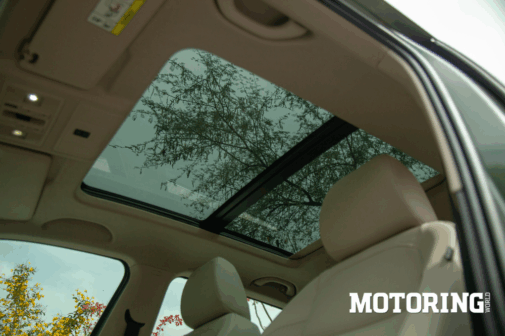
The panoramic sunroof opens the cabin up considerably, flooding it with light and making the interior feel larger than its dimensions suggest. Rear seat space is comfortable for most adults, and the boot — now at 491 litres — is large enough to swallow a weekend’s worth of luggage without complaint.
The Kushaq carries five-star ratings from Global NCAP, and the standard equipment list reflects that seriousness: six airbags, electronic stability control, ABS, traction control, tyre pressure monitoring, and ISOFIX mounts. It’s a comprehensive package, and in a market where safety is increasingly a purchase consideration rather than an afterthought, it’s a strong card to hold.
The updated Kushaq is a study in knowing your customer. The switch from 6-speed to 8-speed on the 1.0-litre automatic may seem like a step back to those who value shift speed above all else, but for the majority of buyers navigating Indian roads and traffic, it’s a step toward something more durable and more liveable. The 1.5 TSI DSG remains the enthusiast’s weapon of choice — quick, engaging, and entirely convincing on a flowing road. Either way, the Kushaq wraps the powertrain in a package that drives better than most things at the price, looks quietly assured, and now offers enough tech and comfort features to compete seriously with rivals who’ve been bulking up their specifications.
Skoda’s India comeback has been one of the more creditable stories of the past few years, and the Kushaq has been its anchor. This update suggests the brand has no intention of resting on what it’s built. They’ve identified where the car could be better, made those changes without losing what was already good, and produced a result that’s hard to argue with. It may not shout, but it makes a compelling case.