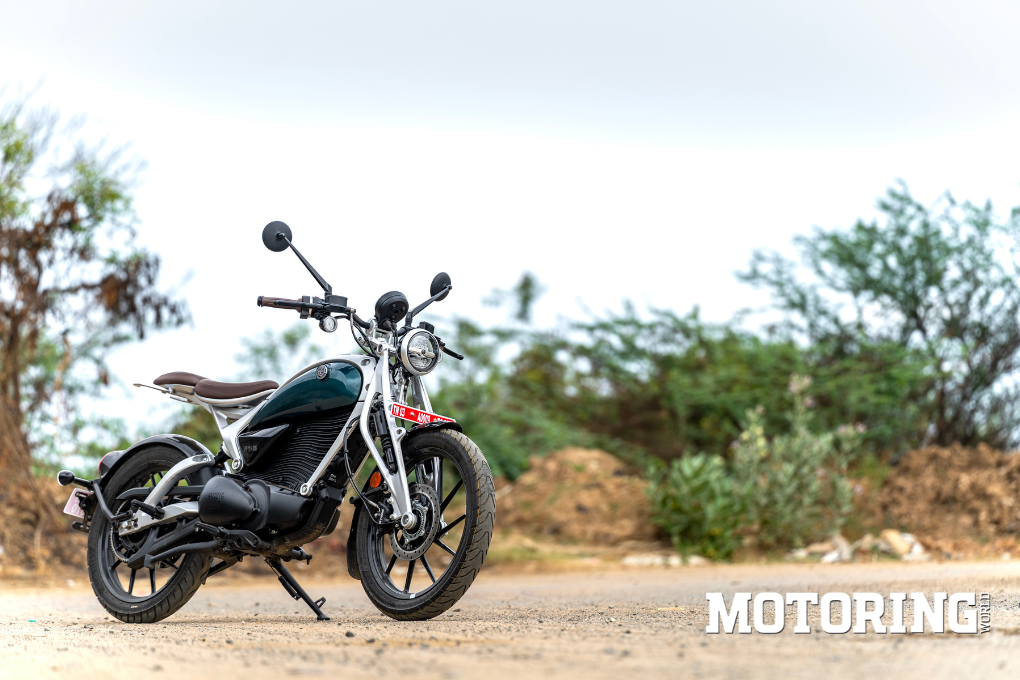


The girder forks stopped me first. Standing in the hotel car park, looking at the Flying Flea C6 for the first time, I couldn’t stop staring at them — elegant, slightly anachronistic, the kind of component you want to watch work in slow motion over a broken road. Then I looked at the rest of the motorcycle and thought: this is tiny. Almost comically so. The tank was long and narrow. The wheels were skinny 19-inchers front and rear. The whole thing looked like it had been designed for someone considerably smaller than me.
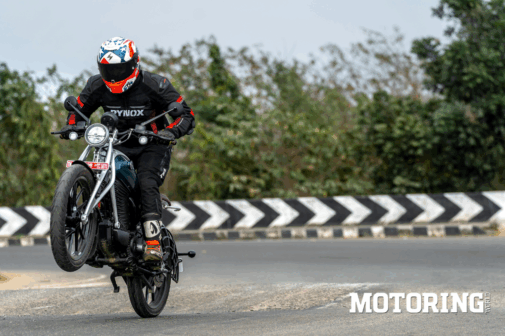
The badge said Royal Enfield. Almost nothing else did.
The name, at least, has history behind it. The original Flying Flea was a wartime machine — lightweight, stripped down, small enough to be dropped from aircraft and expected to run when it landed. Simple and purposeful, it went where bigger motorcycles couldn’t. The C6 borrows that spirit and rewrites the brief entirely, because this is Royal Enfield’s first electric motorcycle, and nothing about it asks you to pretend otherwise. No thump at startup. No idle. No familiar cues to lean on. Just a clean-sheet rethink of what an Enfield can be when tradition isn’t the loudest voice in the room.
Swinging a leg over made things stranger before they got clearer. The saddle sits at 823 mm, and the moment I settled onto it, the absence was physical. Every Enfield I’d ridden before — the 350s, the 411, the newer 450s and 650s — had a certain mass to it, a planted, engine-forward presence you felt through your legs and your wrists. The C6 had none of that. The long, narrow battery housing where a tank would normally sit only reinforced it. Gripping the bike felt almost beside the point.
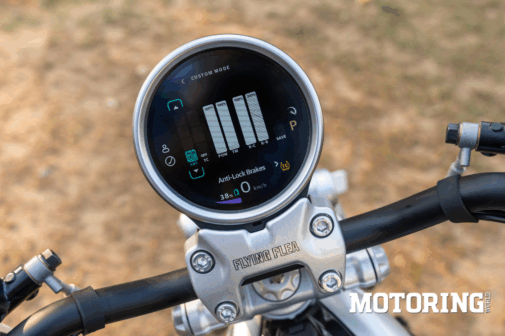
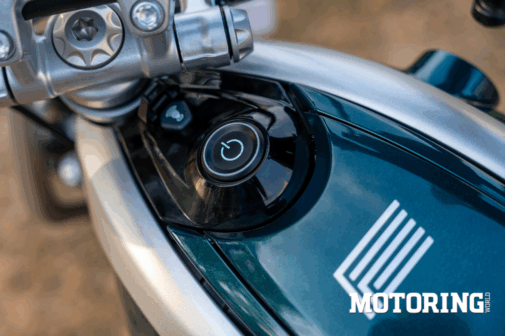
The startup is a ritual that takes getting used to: press the button on the housing, squeeze both brakes simultaneously to arm the motor, and then — nothing. No sound, no vibration, no acknowledgement beyond an illuminated 3.5-inch TFT display that tells you the bike is ready and offers a real-time prediction of remaining range based on how you’re riding. It’s more sophisticated than I expected, and more useful than it sounds.
I rolled off, and most of my reservations went with it.
At 124 kg, the C6 is unlike anything Royal Enfield has made. The narrowness between your knees is striking — there’s simply less motorcycle there than you’re used to — and the lightness means your inputs feel almost over-amplified at first. It takes a few minutes to recalibrate, to stop riding it like something heavier and just let it move.
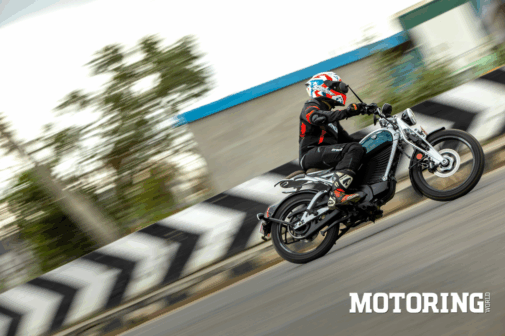
City mode does what it promises — manageable, enough performance to keep pace with traffic and dispatch overtakes without drama. It’s not slow. Hit a clear stretch and it reaches 80 kph with no fuss and no warning. Highway mode sharpens everything: more urgency off the throttle, more confidence at speed. Sport mode is the final step, and it’ll take you to the 115 kph top speed without much ceremony.
What stayed with me wasn’t the performance figures, though. It was the motor. The PMSM (Permanent Magnet Synchronous Motor) unit has a sound, a mechanical whine that’s louder than you’d expect and more present than most electric vehicles I’ve ridden. Louder than I’d have liked, frankly. But it didn’t diminish the experience. At around 80 kph, with the morning air coming in and the road opening up, I found the same mental state that the best Enfield rides produce — unhurried, present, unconcerned with who’s behind you or what’s ahead. The C6 got me there without a single cylinder firing. That’s either a trick or a testament, and I’m not sure it matters which.
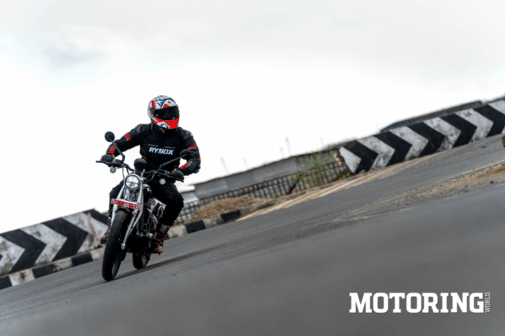
The tyres gave me pause. The CEAT EnergyRide rubber on those 90/90 R19 rims is skinny, and in corners it demands a degree of commitment before it inspires confidence, even with lean-sensitive ABS and traction control in the background. It’s not that the grip isn’t there; it’s that you have to trust it before it tells you it’s trustworthy.
The front brake is a related issue. The 260 mm disc does the job, but the feel at the lever is vague and the initial bite is soft. On a motorcycle this light, with this much potential to be ridden with enthusiasm, sharper braking feedback would be welcome.
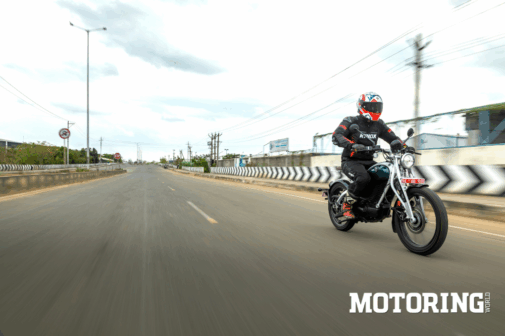
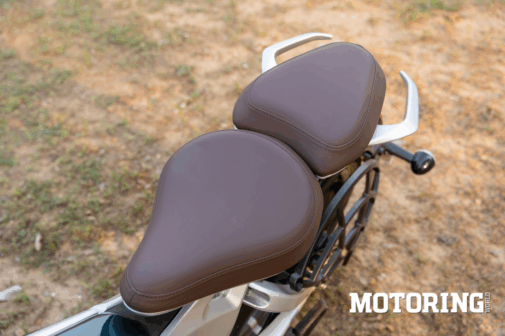
The girder forks, which I’d been watching nervously since the car park, turned out to be one of the better surprises. Over small bumps, broken surfaces, and the kind of patchy road that defines most Indian riding conditions, they felt composed and precise in a way that conventional telescopic forks sometimes aren’t. The rear suspension, on the other hand, runs firm, and the seat doesn’t compensate for it. On longer stretches, you feel it. It’s not painful, but it’s not comfortable either, and it limits how long you’d want to stay on the bike.
Which brings up the range. The claimed certified figure is 154 kilometres. In mixed riding — city, highway, the occasional moment of indiscretion in Sport mode — real-world returns will land somewhere below that, as they always do. The TFT’s predictive range display is genuinely clever: it shows you how your current riding style is affecting your remaining distance in real time, adjusting as you ease off or push on. It’s the kind of feature that changes how you ride without making you feel managed.
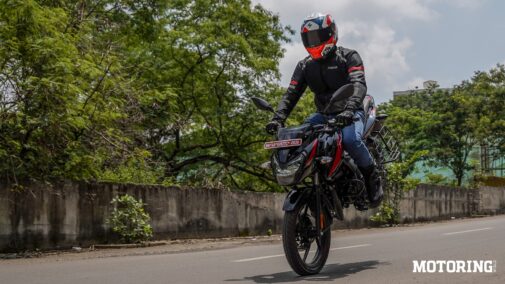
Somewhere on the ride, after jumping it off a speed breaker harder than was strictly necessary and finding the C6 respond with more enthusiasm than I’d anticipated, I stopped thinking of it as a small motorcycle and started thinking of it as a playful one. It reminded me, in temperament if not in character, of the Guerrilla 450 — the mischief it encourages, the way it rewards riders who push rather than cruise.
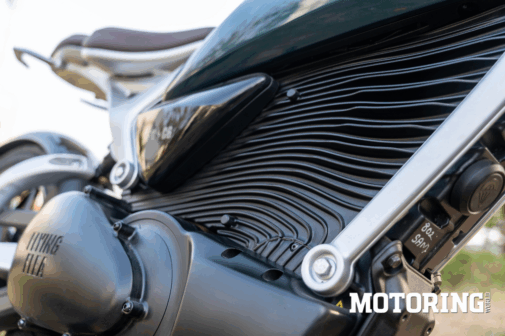
That’s an interesting place for a Royal Enfield electric to land. Not earnest and commuter-focussed. Not aggressively performance-oriented. Something in between — a motorcycle that’s clearly been thought through rather than simply specced out. The seat height and the suspension and the range all point to the same conclusion: this isn’t built for 200-kilometre days. It’s built for the kind of riding that most people actually do most of the time, done with more engagement and more personality than they might have expected.
It isn’t going to be inexpensive. Nothing about the girder forks, the forged aluminium chassis, or the level of detail in the electronics suggests it will be. And it will ask something of its riders — a willingness to recalibrate, to let go of what an Enfield has always felt like and accept what this one is instead.
But here’s what I keep coming back to. By the end of the ride, I wasn’t cataloguing its shortcomings. I was thinking about the motor sound at speed, the way the forks moved over broken tarmac, the moment somewhere around 80 kph when it stopped being an unfamiliar object and became, simply, a motorcycle I was enjoying riding.
Royal Enfield has been here before — new platform, new format, sceptical audience. The Meteor, the Himalayan 450, the Guerrilla. Each time, the brief was to expand what the brand could mean without abandoning what it stood for. The C6 is the most ambitious version of that brief yet, and on this evidence, they haven’t dropped it.