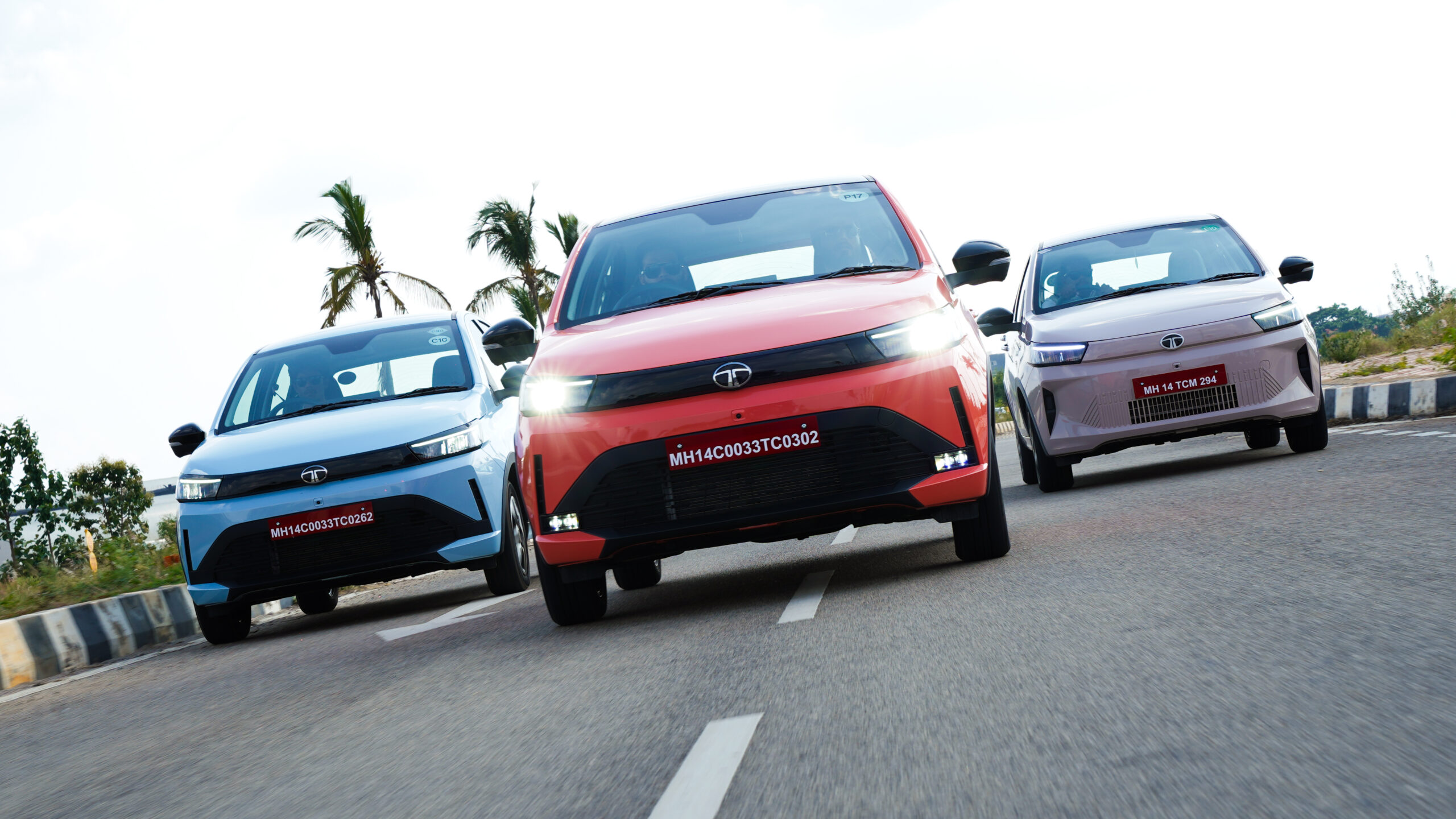


This is going to be a slightly long article. Not because it needs to be, but because Tata Motors has handed us three different cars wearing the same badge, and expected us to make sense of it all in a single day. Honestly, they might just have a point.
We keep hearing that the hatchback is a dying breed. Industry commentary, sales charts and general market wisdom all point to an India that is rapidly abandoning small cars in favour of compact SUVs. If you zoom in a little, the picture isn’t so simple. The Tata Tiago continues to hold its ground in this shifting landscape, and with this latest update — spanning EV, iCNG and petrol variants — it feels less like a survivor and more like a calculated counterpunch. This is a full-spectrum rethink of what the humble hatchback can be in 2026.
View this post on Instagram
Bengaluru and EVs go hand in hand. As India’s Silicon Valley and a startup hub, the city is often an early adopter of new technology. And fittingly, the first EV sold in India was built here. The Tiago EV was our starting point, and it immediately sets itself apart from its siblings without trying too hard.
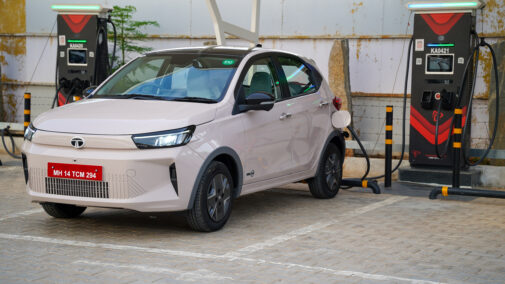

There’s no grille, no unnecessary chrome, and no attempt to pretend it is anything other than electric. The front end is clean, almost concept-like in execution, with body-coloured surfaces doing most of the talking. It’s a small detail, but Tata has gone to considerable lengths to ensure the EV doesn’t feel like an afterthought or a conversion.
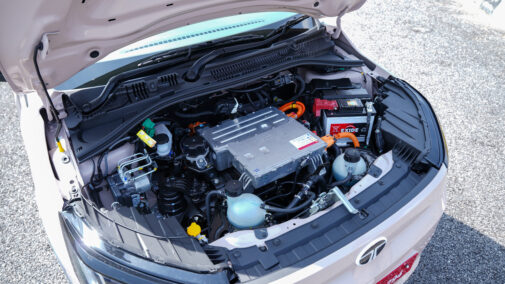
Then there are the Easter eggs. Tata continues its now-familiar habit of adding subtle identity markers across its range. The Tiago EV gets a squirrel motif, scattered across the cabin and tucked into door pockets, cupholders and the glovebox. There’s also a small but telling detail on the mirror housing: ‘Designed in India.’ It feels deliberate, almost like Tata responding to the global ‘Designed in California’ narrative with its own quiet counterpoint.
View this post on Instagram
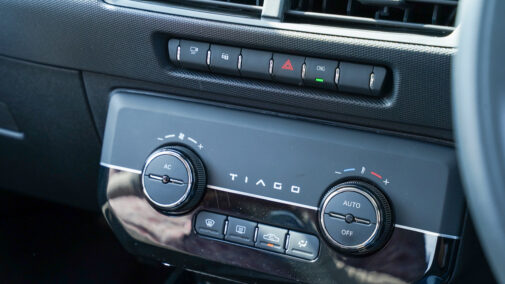
Inside, the cabin is where the real transformation lies. Tata has made a conscious effort to move away from glossy piano-black surfaces towards a more matte, textured finish. It immediately feels more durable and less likely to look tired after a few months of use. Materials are noticeably better, with soft-touch elements in key contact areas and a stronger use of fabric across touchpoints. Tata also claims significant use of recycled materials, which adds a sustainability angle without turning the cabin into a lecture. The new infotainment screen and digital driver display modernise the dashboard considerably. The interface is cleaner, sharper and more aligned with what buyers expect today. There is a minor glare issue on the instrument cluster under harsh sunlight, though brightness levels are otherwise adequate.
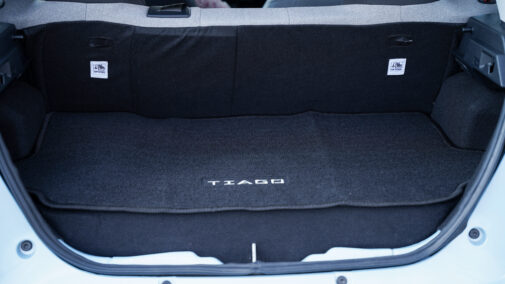
Space remains one of the Tiago’s strongest suits. The driving position is upright, visibility is excellent, and there’s a natural ease to placing the car in tight city gaps. Rear seat space continues to impress; there is genuine headroom and usable legroom, making it more practical than its footprint suggests. Boot space is reasonable for an EV, though predictably affected by battery packaging. A frunk would have been a clever addition, but packaging realities likely won that argument.
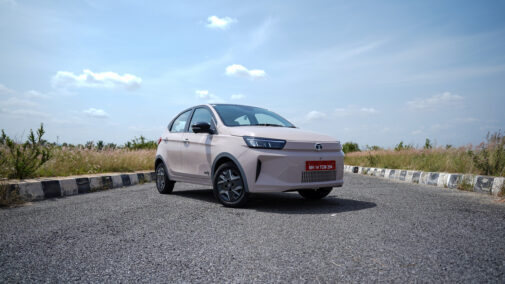
The Tiago EV continues with two battery options: a 19.2 kWh pack and a larger 24 kWh unit. Our drive was in the long-range 24 kWh version, officially rated at 285 km. Realistically, expect closer to 200–220 km in mixed conditions. The most impressive update is charging speed: reclaiming 100 km of range now takes just 18 minutes.
View this post on Instagram
More important than numbers, though, is behaviour. This updated EV feels better resolved than before. Earlier versions had a slightly abrupt torque delivery that could catch you off guard in tight city conditions, but that edge has been softened. Power delivery is smoother, more progressive and far easier to modulate. Wheelspin under hard acceleration is much better controlled, which may disappoint those who enjoy the occasional electric punch, but will please anyone who values consistency. Regenerative braking has also been refined. It no longer feels overly aggressive when you lift off. Instead, it transitions more naturally, making stop-and-go traffic considerably less fatiguing.
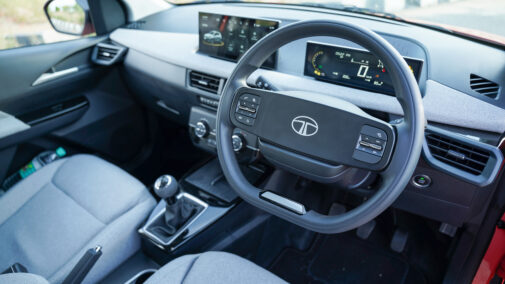
The Battery-as-a-Service (BaaS) model remains available, bringing the entry price down significantly. On paper it is an attractive proposition, but for most private buyers the long-term numbers still favour outright ownership. Fleet operators and corporate users may find more logic in the subscription route. As a package, the Tiago EV feels like Tata doing what it does best — refining rather than reinventing, and making electric mobility feel normal rather than novel.
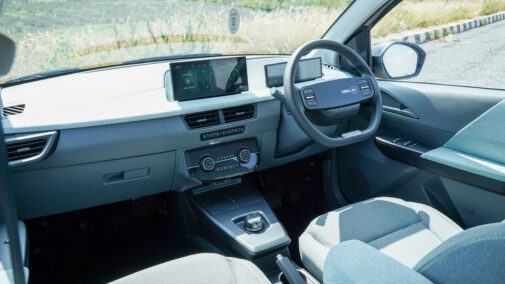
The switch from EV to internal combustion is immediate and almost symbolic. The petrol and iCNG Tiagos share the same visual updates as the EV, but the experience behind the wheel is naturally quite different.
View this post on Instagram
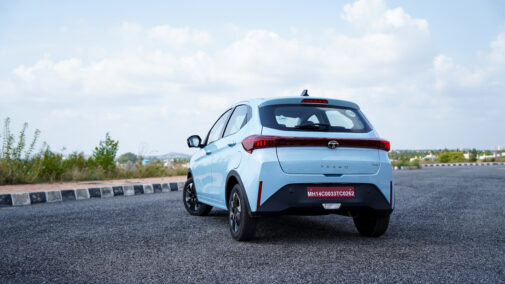
The design remains one of the strongest in the segment. It looks more European than ever, with a clean front fascia, sharper lighting elements and a more cohesive overall stance. The profile is its most characterful angle, defined by a distinct shoulder line that gives it a sense of motion even when standing still.
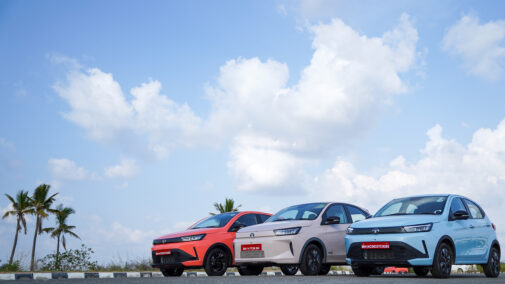
Tata has also leaned into colour more aggressively this time. The new Tiago comes in Pristine White, Pure Grey, Daytona Grey, Pangong Pulse, Varanasi Vibrance and Sobo Surge, a palette that includes some genuinely standout shades, with regionally inspired names that add personality in a segment usually dominated by silvers and whites. It worked, too. During our drive in and around Bengaluru, the car drew consistent attention. People wanted to know what it was, when it was launching and how much it cost. That kind of curiosity doesn’t come easily in this segment any more.

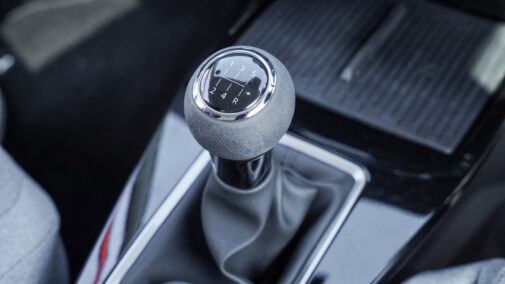
The 1.2-litre petrol engine continues here, producing 85 bhp and 11.52 kgm of torque. Paired with a five-speed manual, it feels familiar but improved. The gearbox deserves a mention, noticeably slicker than before, with less notchiness and a more positive shift action. It isn’t sporty in any hot-hatch sense, but it is easy to use, which cannot be said of every entry-level manual today. Performance is adequate rather than exciting. There is enough mid-range pull for city overtakes, and the car feels happiest when driven with a light, flowing rhythm rather than aggressive intent.
View this post on Instagram
What stands out most is how much lighter the petrol Tiago feels compared to the EV. More eager to change direction, and easier to place in traffic, it trades the EV’s planted stability for agility, and depending on your driving style, either could be the better car.
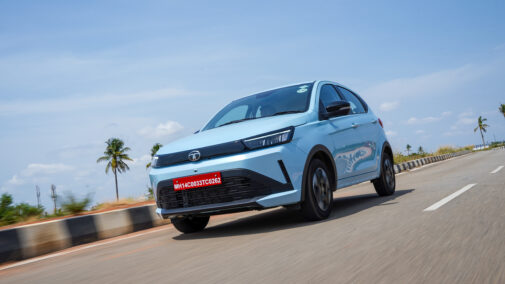
The CNG variant uses the same 1.2-litre engine, tuned to 74 bhp and 9.68 kgm. The numbers are lower, but the intent here is efficiency, not urgency. Tata’s twin-cylinder CNG packaging remains one of the smartest solutions in this space. Instead of a single bulky tank eating into boot space, the dual-cylinder setup allows for more usable luggage capacity.
On the move, the switch between petrol and CNG is seamless. Most drivers will barely notice it unless they are actively paying attention. There is a slight drop in performance in CNG mode, as expected, but it never feels underpowered in city conditions. Ride quality remains consistent across both fuels, though there is a marginal shift in rear weight distribution owing to the tanks; nothing dramatic.
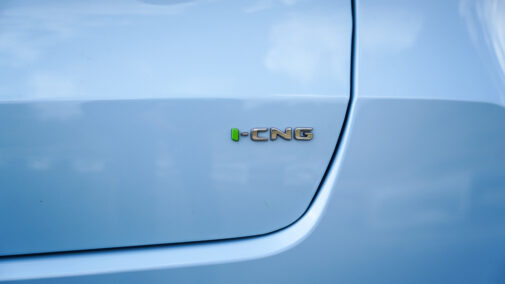
Most interestingly, Tata now offers the iCNG with an AMT option. In stop-and-go urban traffic, this combination makes a strong case for itself, removing clutch fatigue while still delivering meaningful running cost advantages. For a large section of urban buyers, this may actually be the most sensible Tiago of them all.
Driving all three back-to-back reveals something important: these are three interpretations of the same idea. The EV is the forward-looking urban commuter, calm and quietly confident. The petrol is the engaging, familiar everyday hatchback. The CNG is the pragmatic middle path, built around value. Tata hasn’t tried to force a single identity across all three, instead letting each variant develop its own character within the same shell. In today’s market, that is a surprisingly rare approach.
The Tiago has primarily been about accessibility and value, but this latest version feels more upmarket and confident. In a market obsessed with SUVs, the Tiago reminds you why hatchbacks worked in the first place; they’re simple, efficient and, in the right hands, still compelling. With this cars, Tata has made a case for an entire category.