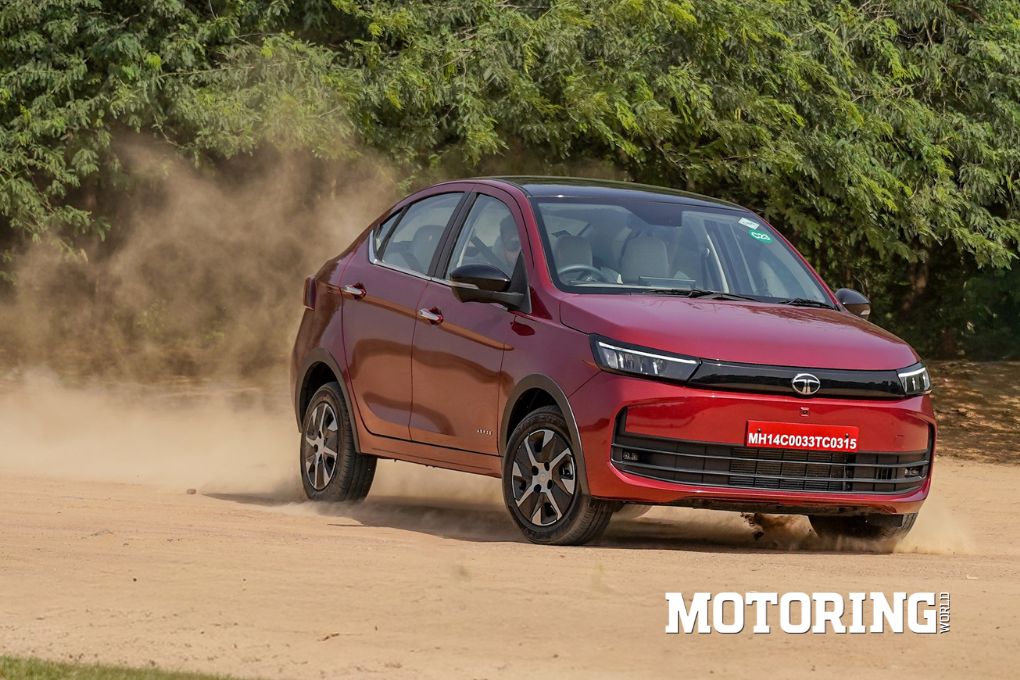



Tata Motors is now Tata.Cars, and the Tata Tigor is now the Tata Aeris! The facelift brings with it a revised design, more features and the option of an automatic on the iCNG variant. But why the name change, you ask? Well, the Tigor has been a hot seller for the big T, and with the Aeris facelift, the brand wants to differentiate it from the fleet-only Tigor (the Xpres-T). In short, the Aeris with its added pizzazz will be sold exclusively to private buyers, while the basic Xpres-T will remain a fleet-only offering.
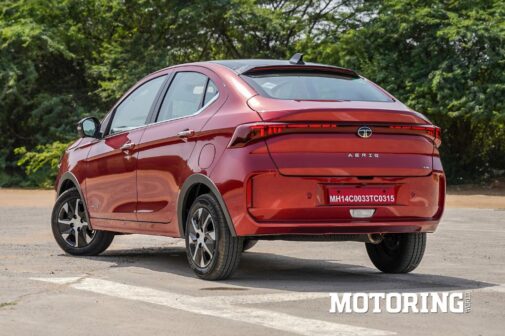
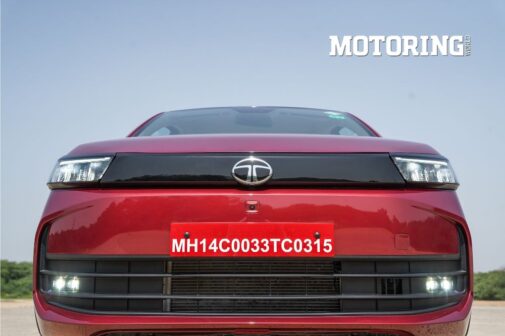
Major changes on the outside start with a completely new front end, which takes inspiration from the new Tiago. It gets sharper LED headlights and DRLs, a slimmer grille and a tweaked bumper that houses LED foglights. Move to the sides and you’ll find black body cladding around the wheel arches, an Aeris logo and chrome trim around the window surrounds and door handles. The iCNG variant rides on 14-inch steel wheels dressed with wheel caps, while the top-spec petrol version gets 15-inch diamond-cut alloys with a really cool design. Around the back, there are connected wraparound LED tail-lights and a new bumper, the iCNG gets a boot badge, giving the Aeris a tidier look. Tata has also added two new colours to the Aeris — Nitro Crimson and Dandeli Drizzle — and I have to say, both suit the car rather well. They shift character depending on the light and really come alive in the sunlight, adding a bit of much-needed drama to the otherwise familiar silhouette. The Aeris certainly looks more modern and striking than its predecessor, which was already a good-looking car. I reckon it’ll appeal to a wider range of buyers, especially younger ones.
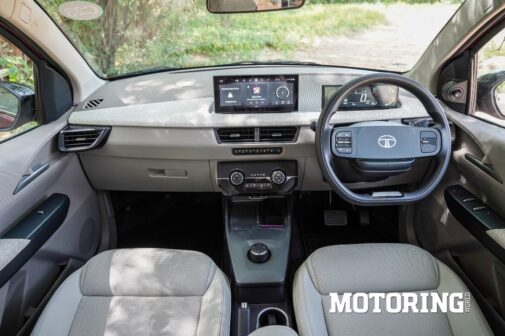
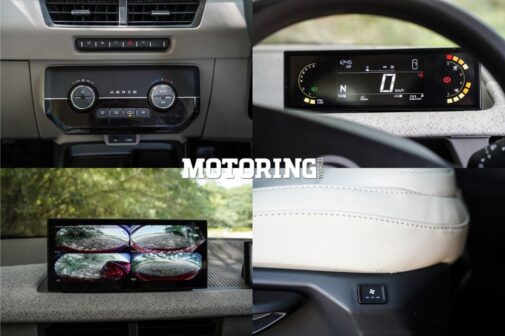
Step inside and the first thing you’ll notice is the new upholstery theme, which combines grey leatherette with a fabric pattern that’s also carried across the doors and dashboard. Ahead of the driver sits a 5-inch digital instrument cluster, while the two-spoke steering wheel gets a smart matte-finish horn pad. Next to it is a 12.3-inch landscape-style infotainment touchscreen with wireless connectivity. The centre console now houses a wireless charging pad and two cup holders, which come in handy because storage in the door pockets is fairly limited. There’s also a new centre armrest for the front seats. The Aeris also gets front seat coolers (segment first), which work extremely well and get a big thumbs-up from me. Other features include a six-speaker audio system, which is technically a downgrade from the eight-speaker setup offered earlier but which still sounds pretty good, rear air-con vents, a rear centre armrest with cup holders, cruise control, a cooled glovebox and a 360-degree camera that doubles up as a dashcam recorder. You also get six airbags, hill-hold control and a tyre-pressure monitoring system. So, on the features front, the Aeris gets pretty much everything you’ll need and then some.
My only real gripe is the cabin quality. There are hard-touch plastics almost everywhere, while the beige sections on the doors and dashboard look particularly cheap. Some of the edges are also surprisingly sharp, and a few trim pieces around the pillars and steering wheel don’t feel particularly well finished. Even the upholstery stitching in places leaves a bit to be desired. More importantly, the cabin simply doesn’t have the solidity you’d expect, and it doesn’t give you the feeling that it’s built to last. It’s a shame, because the equipment list is impressive, but the cabin could certainly do with a little more attention to detail. The same thing continues on the outside, with large panel gaps and a few inconsistent ones.
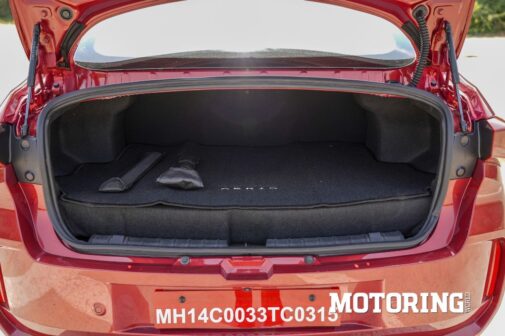
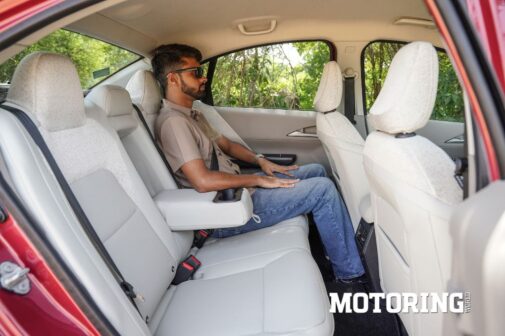
That said, outward visibility is good, and because of its compact size, the car is easy to place on the road. The driver also gets a height-adjustable seat that can be lowered quite a bit. What could be better, though, is the space inside. Yes, it is a small car, but taller occupants will certainly find it a little cosy. Three average-sized adults will also rub shoulders in the back, while knee room is limited to around 2–3 inches if the driver and front passenger are both around 5 ft 8 in and have their seats adjusted to give themselves a similar amount of knee room. Headroom is decent, though, and the 217-litre boot (on the iCNG) can swallow about one fairly large bag and a small duffel bag. There’s also a clever little change underneath the boot lid. The old internal swan-neck mechanism has been replaced by external hydraulic struts, freeing up more usable space inside.
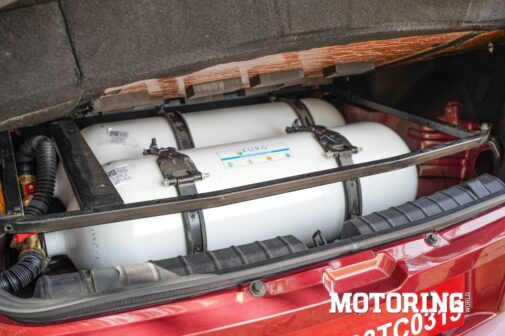
Under the bonnet, the Aeris gets a single engine option: a 1.2-litre naturally aspirated three-cylinder petrol engine, paired with either a five-speed manual or a five-speed AMT. It can also be had with a twin-cylinder CNG setup that boasts a 70-litre water volume, in both transmission guises, and that could be a significant volume driver. There’s growing demand for CNG automatics, and by offering one in the Aeris, Tata is opening the door to buyers who previously had to choose between the lower running costs of CNG and the convenience of an automatic.
We drove both the petrol and iCNG variants, and here’s how they drive. In petrol mode, the 1.2-litre engine produces 85 bhp and 113 Nm of torque, while those figures drop to 74 bhp and 96.5 Nm in CNG mode. Hit the start/stop button and the Aeris iCNG always fires up in CNG mode, provided there’s enough fuel in the tank. Get going and the first thing you notice is the torque — or rather, the lack of it. You really have to stomp on the accelerator, and it’s only once you cross the 3000 rpm mark that the Aeris starts to make progress. It isn’t painfully slow, but it does take its own time, taking around 20 seconds to reach 100 kph from a standstill. Things get even harder for the engine with five people on board, as there’s a constant need to drop a gear even for relatively short overtakes.
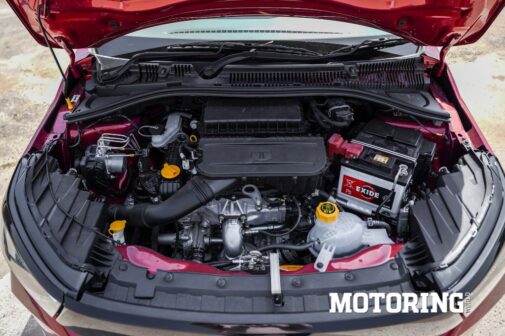
For a three-cylinder mill, though, it is fairly refined at low revs and only becomes vocal when you start to gun it. Surprisingly, it’s also quite tractable, meaning it doesn’t hesitate or judder even when you find yourself in a gear too high at low speeds — something you’d expect given the lack of initial oomph. We drove the CNG-AMT combo, and with the paddle shifters, you can actually be pretty smooth with this combination, provided you lift off the accelerator for a split second during shifts. This is one of the better AMTs I’ve driven, and its short gearing means it doesn’t feel as lethargic as you might expect from the CNG powertrain.
On the ride and handling front, the Aeris scores big points. It gets a light steering wheel that feels direct, along with a superb ride quality that smooths out pretty much everything you throw at it. For a car of this size, it rides like something much bigger, soaking up the bad stuff extremely well, only feeling a little bouncy at mid speeds; that does get better when the car is fully filled. But, at the same time, it feels surprisingly confidence-inspiring when you throw it around a few bends, and it encourages you to push harder. It turns in nicely, holds a line well and doesn’t get unsettled mid-corner when you encounter an undulation or two. At triple-digit speeds, though, the car does start to wander a little in a straight line.
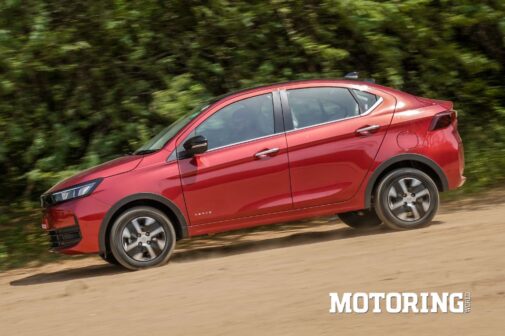
Starting at Rs 5.29 lakh (ex-showroom), the Tata Aeris brings a lot of value to the table. It looks very smart, rides very well, and comes loaded with all the genuinely useful features you’ll need. The cabin quality could certainly be better, and the CNG powertrain isn’t exactly quick, but the availability of a CNG-AMT combination adds a big dose of convenience without giving up the lower running costs that make CNG so appealing. For the money, the Aeris is practical, comfortable, easy to drive and, most importantly, feels like a car that gives you a lot without asking for too much in return. If you’re looking for an affordable family car with plenty of kit, good road manners and the option of an automatic CNG powertrain, the Aeris makes a very strong case for itself.