

I came to the Madras International Circuit after three years. That’s a long time to stay away from a place where muscle memory matters almost as much as horsepower. The first few laps were less about going fast and more about remembering where to slow down, where to turn in and, most importantly, how much confidence I actually had left. Then there was the Yamaha YZF-R2M.
It turned out to be the perfect companion for the job. Not because it was particularly fast or aggressive, but because it was remarkably easy to understand. There was enough performance to have fun once I got my head back into the circuit, but enough forgiveness to accommodate the mistakes that inevitably came with being rusty.
And that became apparent within the first few corners.
Familiar Face
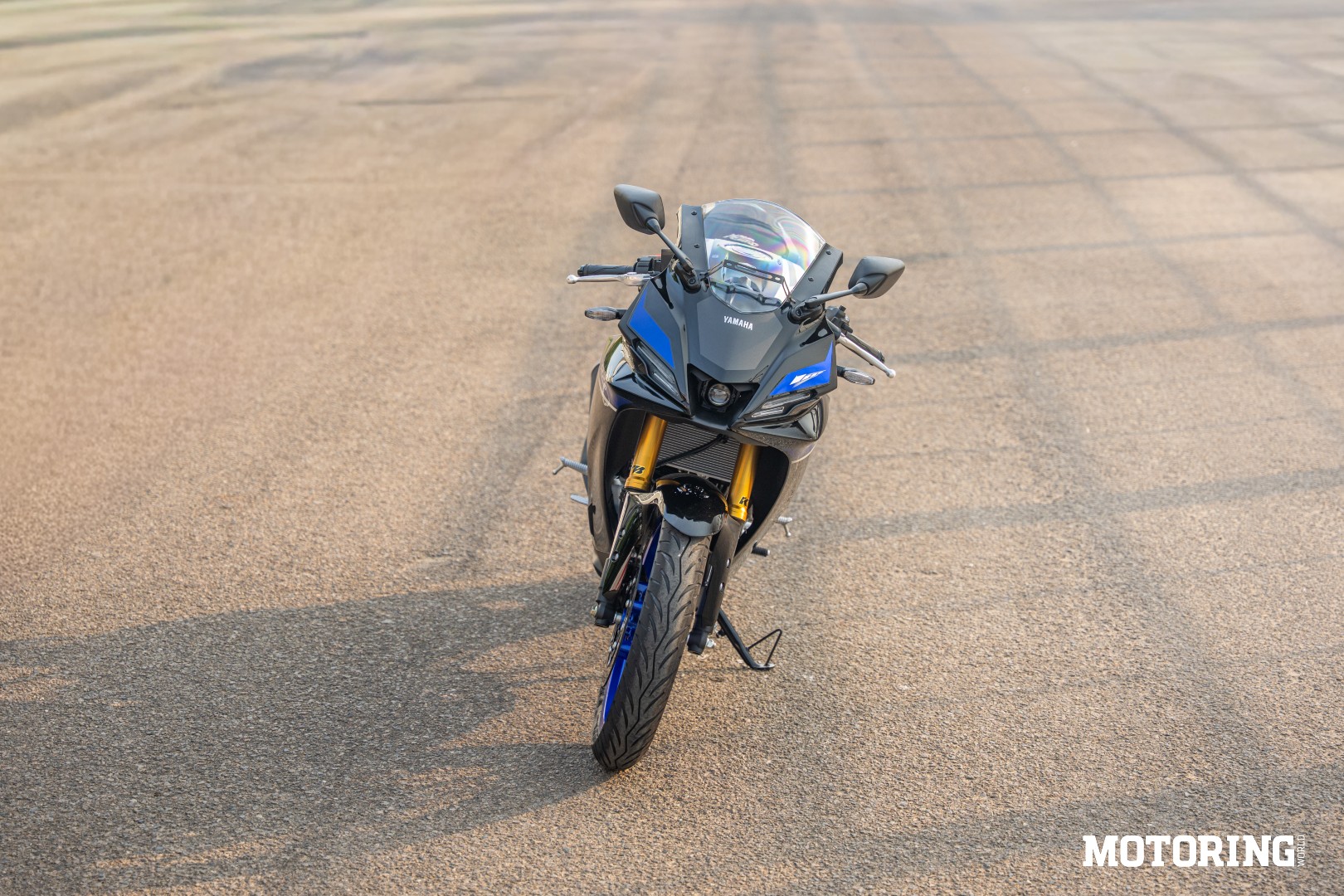
At first glance, you could mistake the R2 for an R15. Look closer, though, and almost every panel tells you otherwise. Yamaha has borrowed plenty of design inspiration from the 2026 YZF-R3, particularly around the front. The dual-stack LED DRLs flanking the mono-projector, the upper half of the fairing and even the mounting position of the front indicators are all reminiscent of its bigger sibling. From almost every angle, it looks like a proper R-series machine.
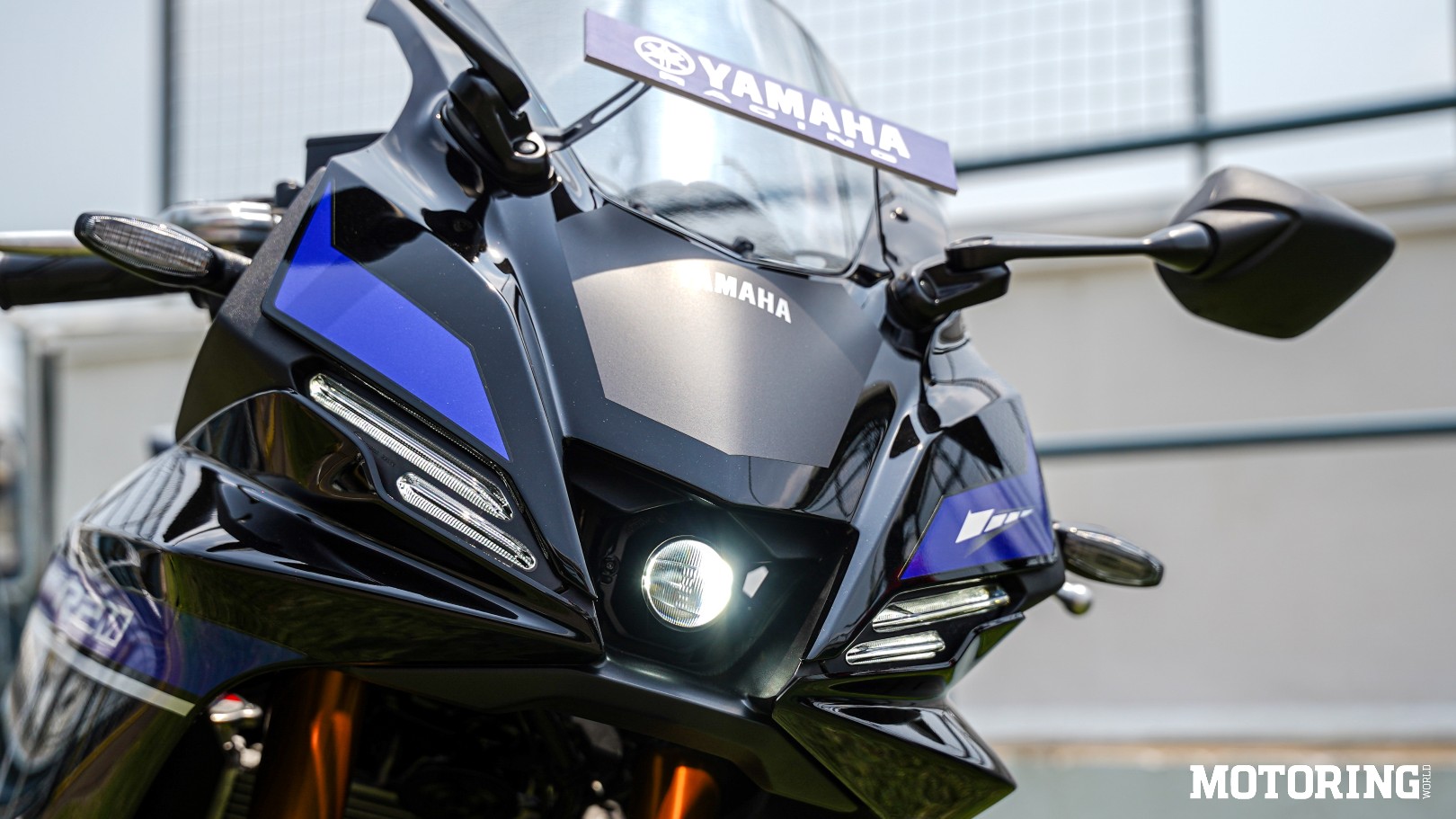
The front is especially convincing. Those LED DRLs give the R2 its own identity, while the sculpted fuel tank, complete with faux vents, draws a line towards the YZF-R1. The only element that feels slightly out of place is the exhaust on an otherwise beautiful machine.
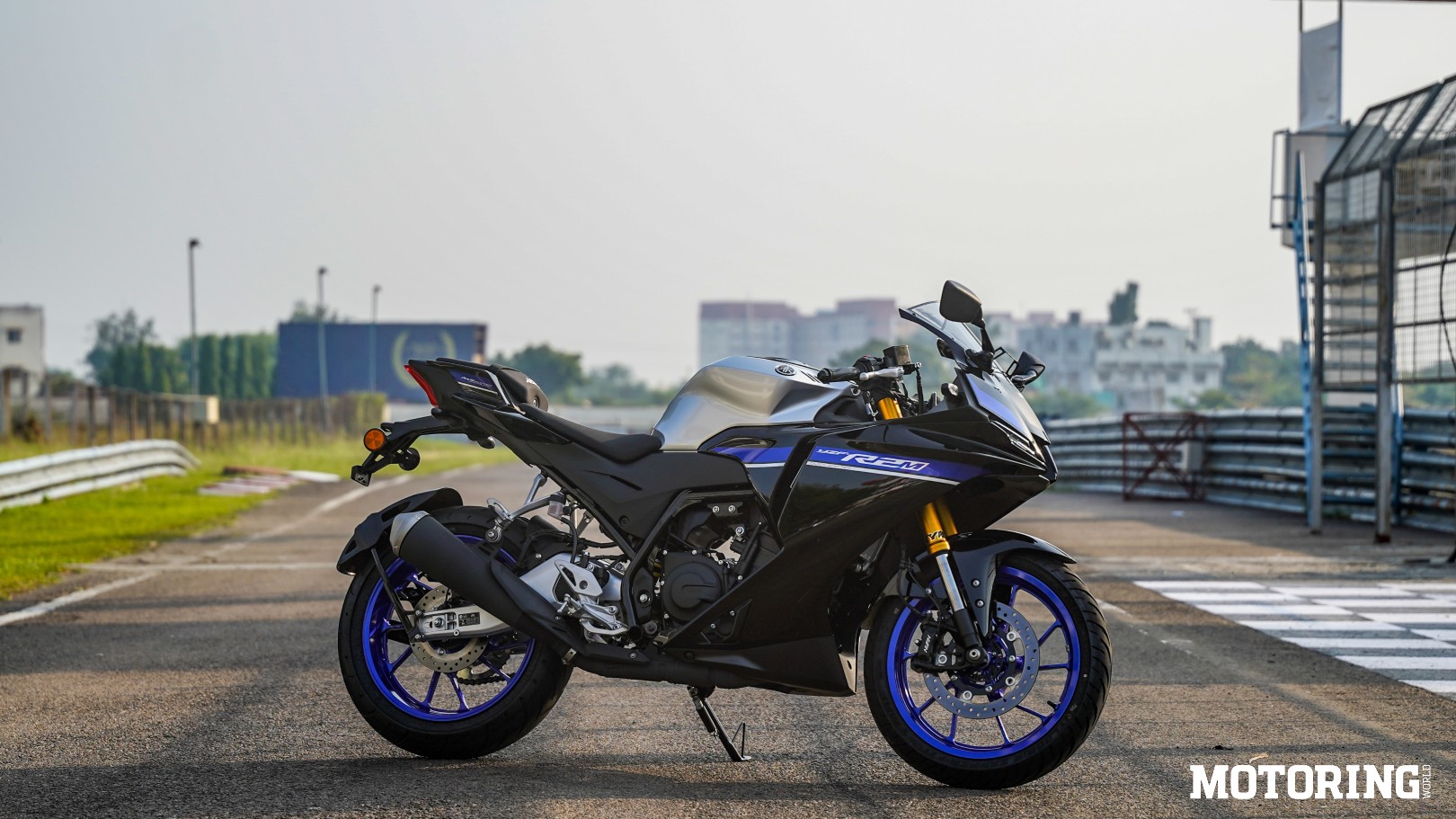
But the overall proportions work. And that matters because the R2 occupies an interesting space between the R15 and R3. The R15 always felt a little too small for me, which made its riding position feel more committed than it perhaps needed to be. The R3, meanwhile, went too far in the other direction, with ergonomics that felt almost sport-tourer-like. The R2 gets the middle ground right.
The clip-ons aren’t so low or tucked in that they make everyday riding miserable. The seat has enough real estate for larger riders, while the footpegs don’t leave you feeling cramped. Yet they sit high enough to provide useful cornering clearance. It felt surprisingly accommodating without compromising its track intent.
Easy Does It
The biggest number on the R2 isn’t its 26.1 bhp. It’s the way that power arrives. The 204cc single-cylinder engine initially had me sceptical. More specifically, I was wondering whether losing Yamaha’s VVA technology would leave the R2 feeling flat. It doesn’t. The engine is a riot in its own way, with predictable, smooth power delivery and a healthy mid-range. It also loves to rev.
Keep it spinning and there is a useful reserve of power towards the top end, which is where the R2 feels happiest. It was quick enough for MIC, too, managing the tight corners as easily as it handled the longer, sweeping ones. But I wanted a little more mischief.
The engine is almost too well behaved. There is no sudden surge, no little kick in the backside to make you grin when you open the throttle. On the road, that smoothness could prove to be a virtue. On a racetrack, though, I found myself wishing for just a little more urgency. A little more naughtiness.
The gearbox and quickshifter didn’t help. There were no dead shifts, but the gearbox wasn’t as slick as the R15’s. The quickshifter was similarly disappointing. Upshifts lacked that satisfying seamlessness, while downshifts could be abrupt. On occasion, it even refused to drop three gears when I wanted it to. That said, none of this stopped me from enjoying the engine itself.
Point. Turn. Go.
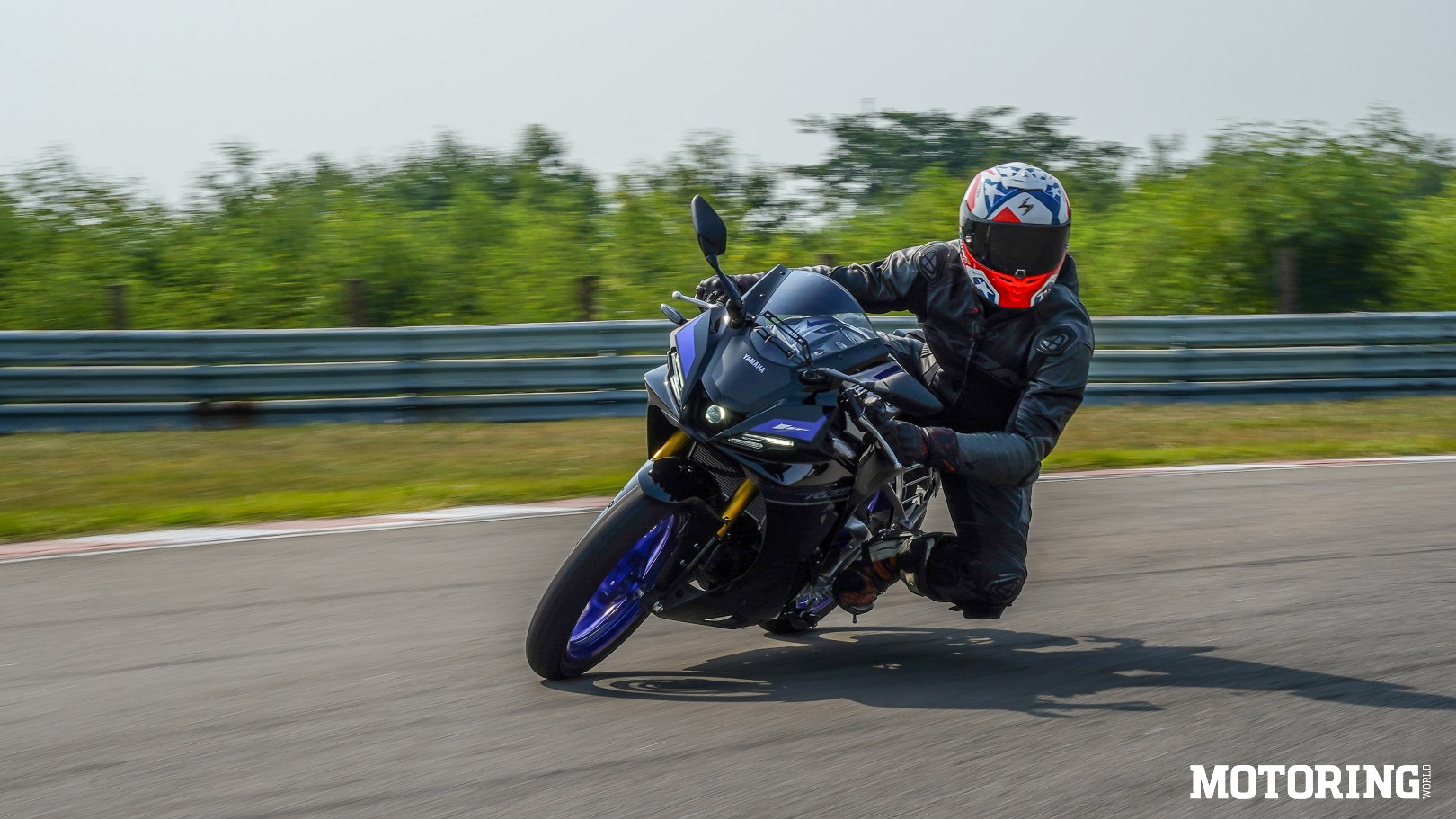
At 150 kg, the R2 is stupidly light. And on a racetrack, that shows immediately. Point it at a corner and the bike simply complies.
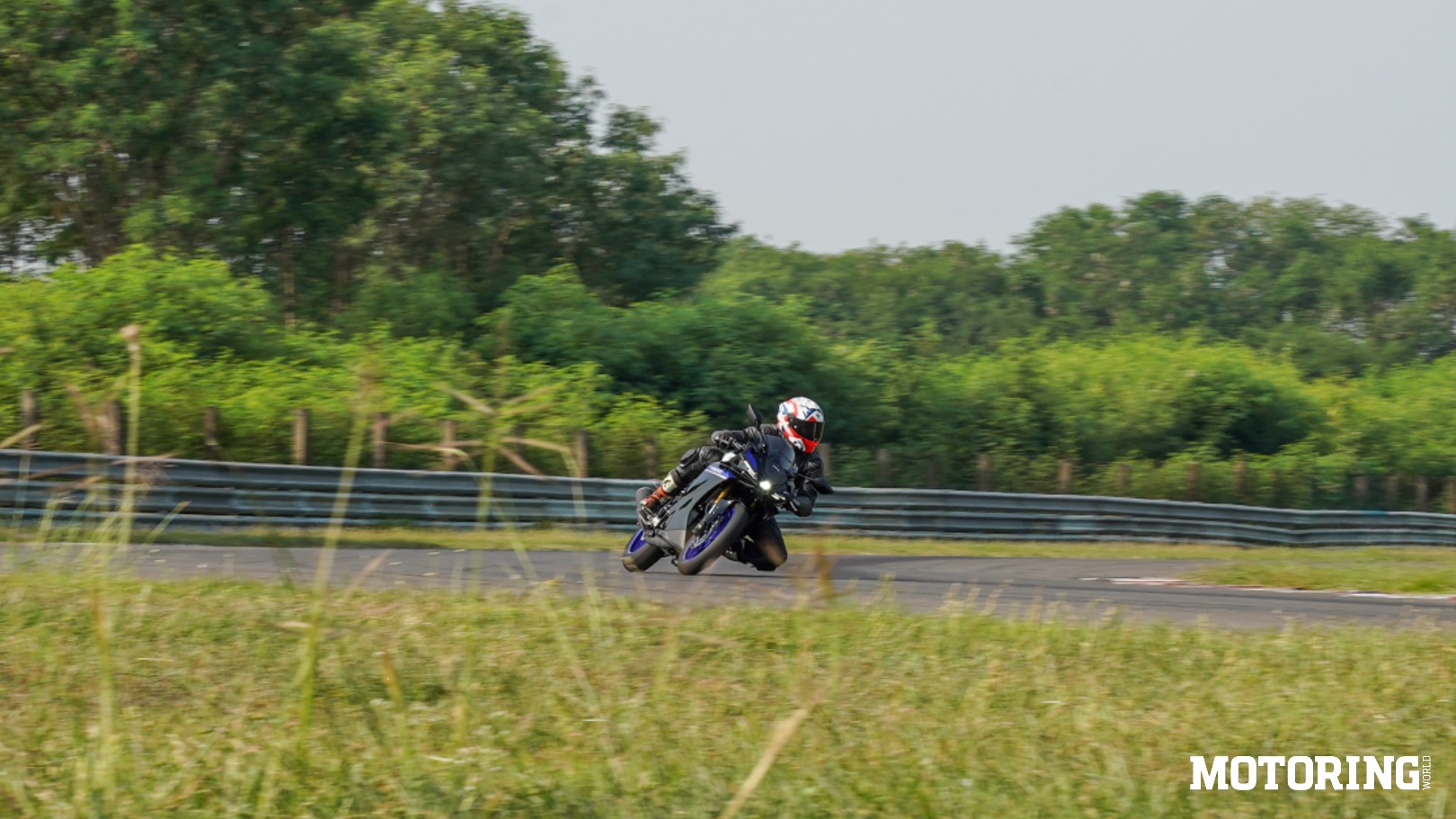
The steering isn’t super quick, but it is confidence-inspiring. It turns in naturally, settles into a line and stays there without requiring constant corrections. That made it particularly useful for someone who was trying to rediscover a circuit rather than set a lap record. Within the first few corners, I was already scraping my knee sliders. More importantly, the R2 felt completely unfazed by it. It was willing to do more, and so was I.
There is a naturalness to the way this motorcycle handles that makes it very easy to forget about the motorcycle underneath you. By the fourth lap, I had stopped thinking about the R2 and started thinking about my lines again. It felt like I’d been riding it for much longer than I actually had. That’s perhaps the biggest compliment I can give it.
Even when I made mistakes, the R2 didn’t punish me for them. I could correct a line without drama. At one point, I even felt the rear start to move mid-corner. I caught it, carried on and was back into the same rhythm almost immediately. It was that forgiving.
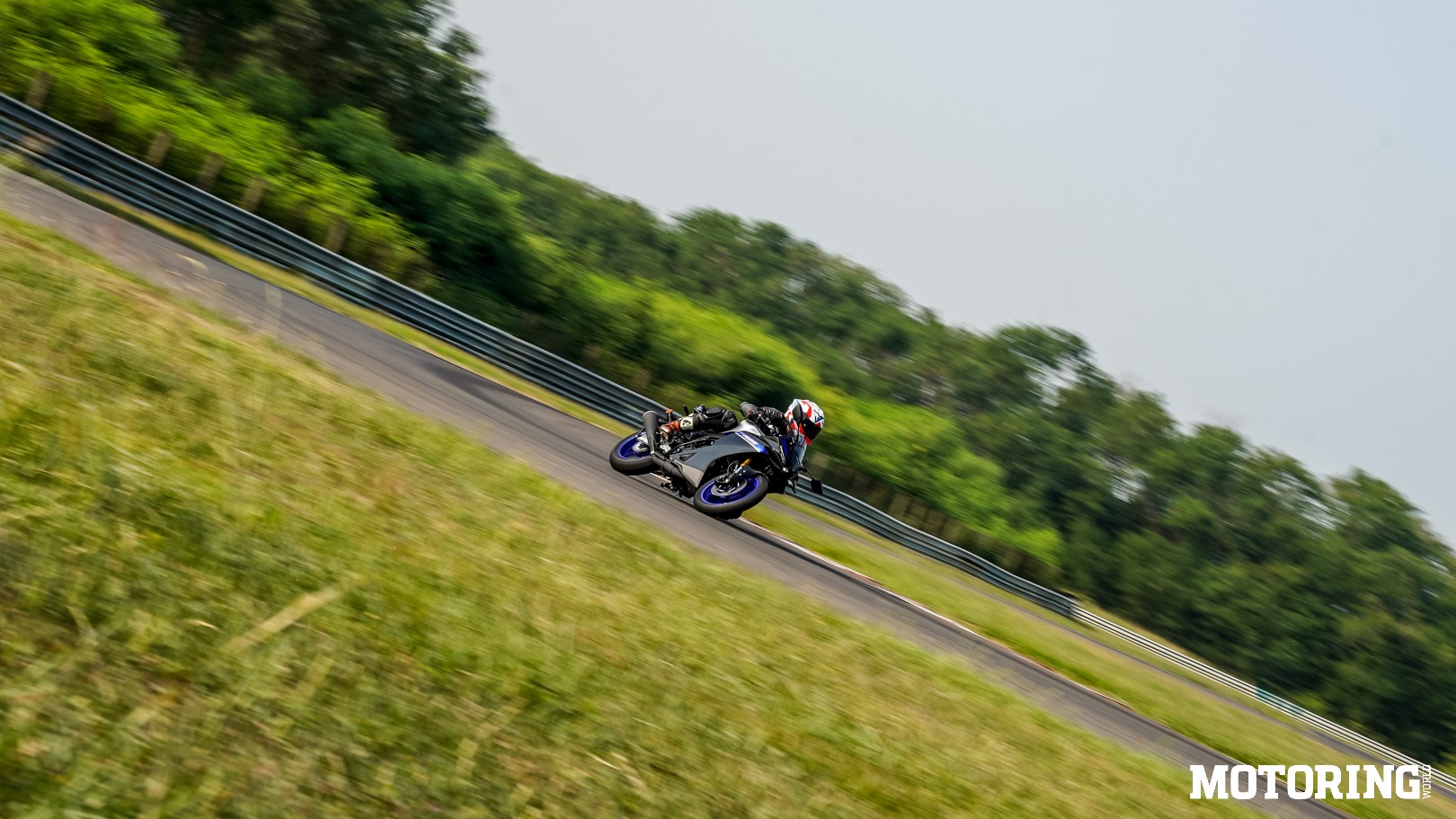
The chassis clearly had more to offer than the tyres could give it, though. As the session progressed and my confidence grew, the MRF Nylogrip Zappers began showing their limitations. The front-end feedback was a little vague, while the rear started feeling less convincing when I pushed harder through the corners. The bike was asking for more than the tyres were willing to give.
Running Out
The brakes followed a similar trajectory. Initially, they felt good. There was decent bite, good progression and enough stopping power to make the first few braking zones feel reassuring. For those first laps, I was happy to lean on them.
Then the heat arrived. Brake fade became severe, and the ABS started becoming intrusive. The ABS light came on twice, and by that point the system felt overly conservative for what I was asking of it on track.
That exposed the R2’s limits rather clearly. The brakes are perfectly suited to the sort of everyday riding and occasional spirited riding this motorcycle appears designed for. But for extended track sessions, they will need an upgrade. The same applies to the tyres.
And that’s interesting because the rest of the motorcycle seemed perfectly happy to keep going. The suspension, for instance, impressed me. The R2 gets a USD fork up front and a monoshock at the rear, and even over the bumps at MIC, it managed to absorb the imperfections without disturbing the bike. I didn’t have enough time to start experimenting with its adjustability, though. With just one 20-minute session, there simply wasn’t enough time to start chasing suspension settings.
Perhaps that’s something I’ll explore when I get more time with the bike.
The 5-inch TFT, meanwhile, was easy to read even under the harsh Chennai sun. There are multiple display layouts, including a dedicated track setup with a lap timer. There are also Street and Rain riding modes, along with Sport, which was the mode I stuck with. Traction control is available too, although I didn’t have enough time to properly explore its intervention.
The keyless ignition, meanwhile, was one of those features I appreciated without really thinking about it.
Back Again
My 20 minutes at MIC passed surprisingly quickly. The first lap was about getting reacquainted with the circuit. The next couple were spent remembering braking points and testing my confidence. Then, somewhere around the fourth lap, it happened. The rhythm came back.
Not completely. Not perfectly. But enough. And perhaps that’s why the R2 made such an impression on me. It wasn’t trying to scare me into respecting it. It wasn’t demanding that I be at my sharpest before it would start making sense. It simply gave me the space to get better.
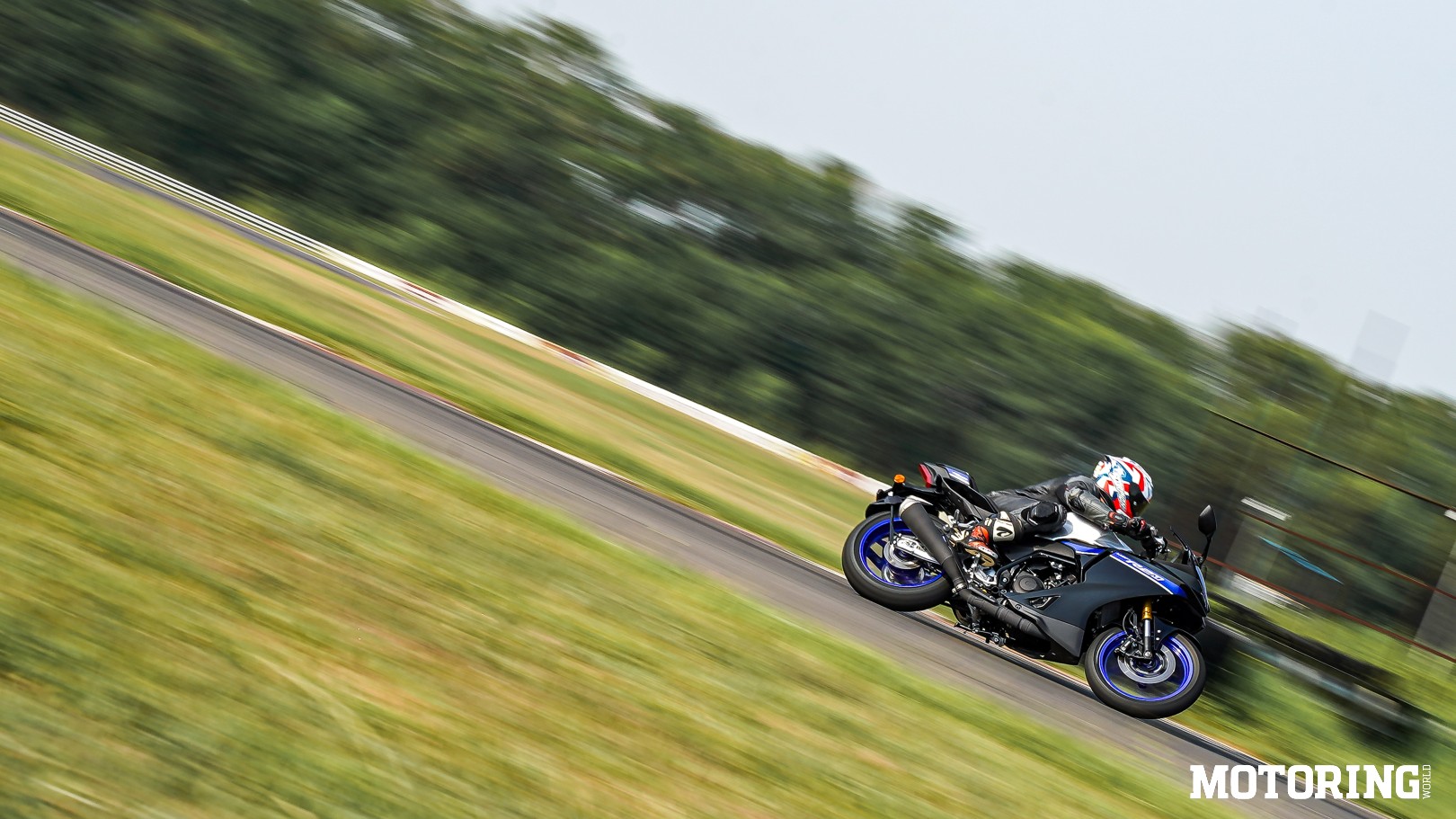
That makes it a compelling proposition for someone who feels the R15 is a little too small, both physically and dynamically, but isn’t looking for the intimidating aggression of an European supersport.
The R2 feels like a motorcycle you can grow into. It is sporty enough to make an early-morning weekend ride interesting, while its relatively friendly ergonomics should make it easier to live with. On track, it is approachable without feeling dull, capable without being intimidating and forgiving enough to let an amateur make mistakes without immediately paying for them.
Of course, I’d want considerably more time with it before passing judgement on how it works away from the circuit. This was only a 20-minute track session, after all. But that short session told me something important.
After three years away from MIC, I was a little rusty. The R2 wasn’t. And something as predictable and friendly as this was exactly the tool I needed to find my rhythm again