

To call the Tesla Model Y L simply a stretched, three-row version of the standard Model Y would be scratching the surface. Yes, it is the more practical version of the American EV, but it is also quicker and a better driver’s car. Tesla should make more of that with Indian buyers, because at present it isn’t. At Rs 61.99 lakh (ex-showroom), the Model Y L costs Rs 11 lakh more than its smaller sibling. In return, you get 507 bhp, almost twice the power, more equipment, a larger 88.2 kWh battery, faster 250 kW charging and a claimed range of 681 km. So, is this the Model Y to buy? Let’s take a closer look.
The price also puts the L in an awkward position. Buyers spending this much may cross-shop premium electric SUVs that look more conventional and make a stronger first impression. Tesla’s appeal is different: the design is restrained, the cabin is unusual and the software matters. Whether that works for you depends on how much you value novelty over familiar luxury-car touches. I suspect the L will win people over once they spend time in it, particularly if they regularly carry passengers.
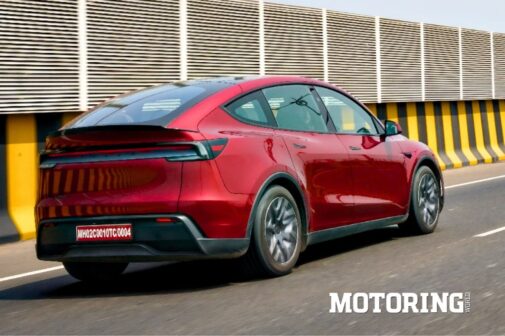
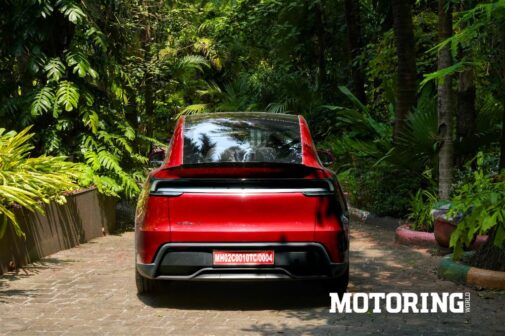
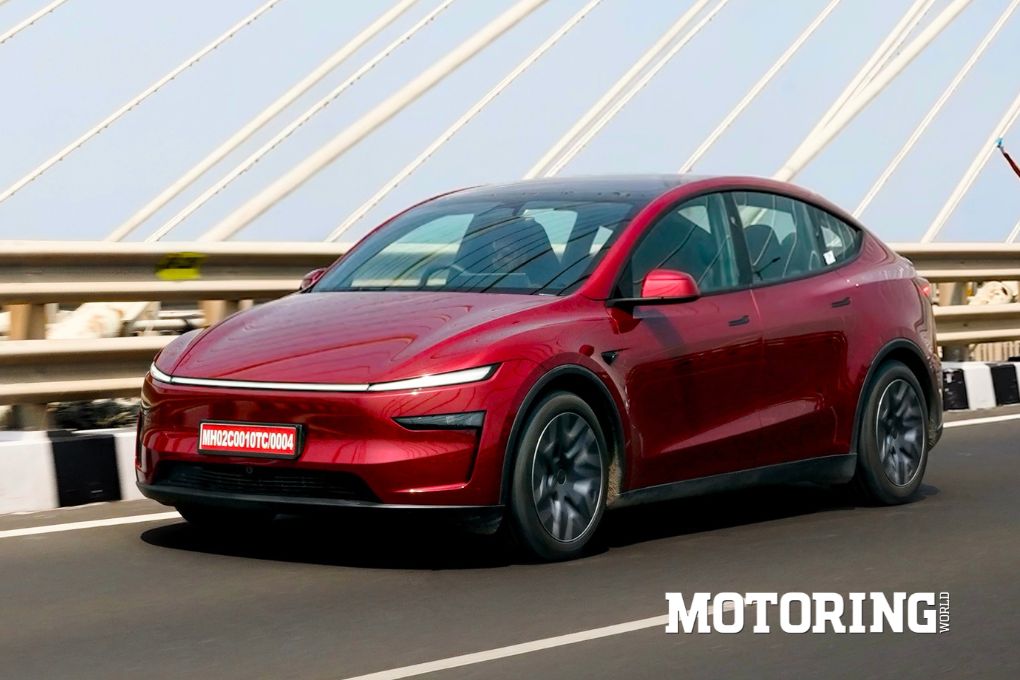
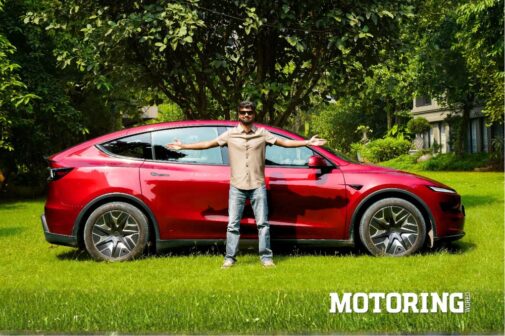
Start with the metal. The L is 179 mm longer and 44 mm taller than the standard car, with a wheelbase stretched by 150 mm. Those extra dimensions give it quite different proportions. Mid-size SUV? It looks more like a mid-size MPV, and it attracts a surprising amount of attention despite its minimalist styling.
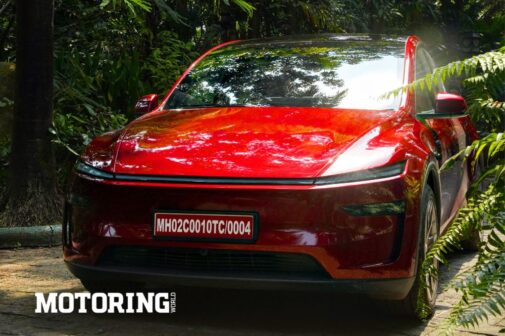
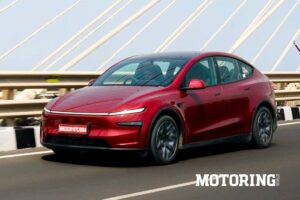
The nose is blanked off, with split LED headlights and slim daytime-running lights linked by a light bar. In profile, the extra height gives the body a slightly bulbous look. Flush door handles, 19-inch aero-optimised alloy wheels and thin black cladding keep things tidy. At the rear, wraparound LED tail-lights span the width of the almost vertical tailgate, while a ducktail spoiler is intended to improve high-speed stability.
It isn’t as handsome as the BYD Sealion 7 or as cool as the Kia EV6, but the Model Y L has an identity of its own. The Tesla badge brings a certain head-turning appeal, even if the design itself is hardly dramatic. The real story is inside, beneath the skin and on the road.
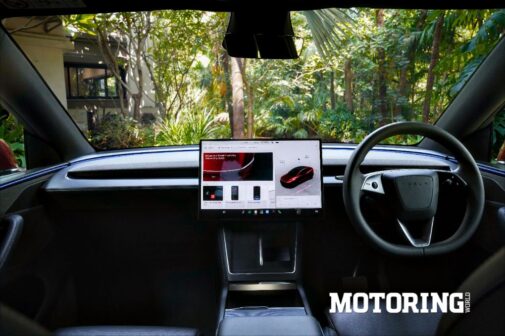
The cabin follows the familiar minimalist formula. A large 16-inch infotainment screen dominates the dashboard, with a single air-con vent running across it and a simple three-spoke steering wheel. Almost everything, from drive modes to airflow direction, is controlled through the screen. It looks clean and futuristic, but the lack of physical buttons gets tiresome when you want to adjust the temperature or switch on the seat coolers. Both are buried in menus.
The screen itself is responsive, the interface is reasonably intuitive and the exterior camera feed is excellent. There is also plenty to play with: themes, games, apps, karaoke and Party Mode, along with the little software quirks that make living with a Tesla entertaining. Apple CarPlay and Android Auto are absent, but Tesla’s own navigation, media and vehicle-control software is good enough that I didn’t miss them. Fit and finish are very good overall, though a few hard-plastic surfaces feel less convincing.
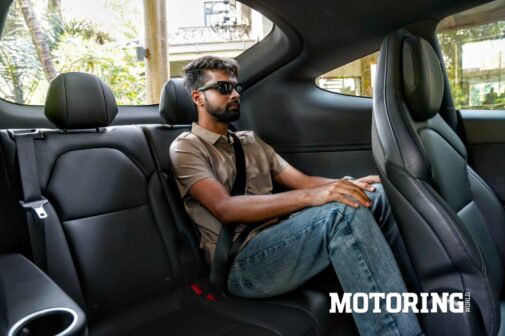
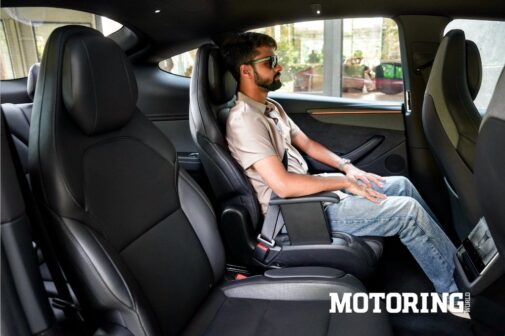
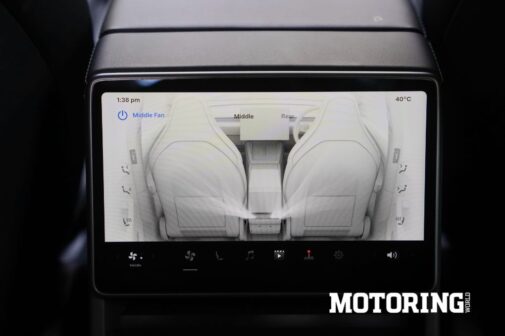
The L uses a six-seat, 2-2-2 layout. The second row gets powered captain’s chairs trimmed in vegan leatherette, with heating, ventilation and powered armrests. An eight-inch rear screen controls various functions and has a few quirks of its own; it can even play YouTube videos on the move. The third row gets a powered backrest, air-con vents, cup holders and Type-C charging ports.
That longer wheelbase pays off in the second row. The seats are comfortable and supportive, though the high floor leaves taller occupants wanting more under-thigh support. It isn’t a deal-breaker, but you notice it. The third row is best left to children, shorter adults or occasional journeys. Space is usable, but the knees-up seating position won’t suit taller passengers for long trips.
There are a couple of other compromises. The rear windscreen comes close to the third-row occupants’ heads, which could be uncomfortable in Indian summers. The panoramic roof has no blind, and neither do the second-row side windows. The air-conditioning is powerful, however, and cools the cabin quickly. A useful swing function helps circulate air around the interior, too.
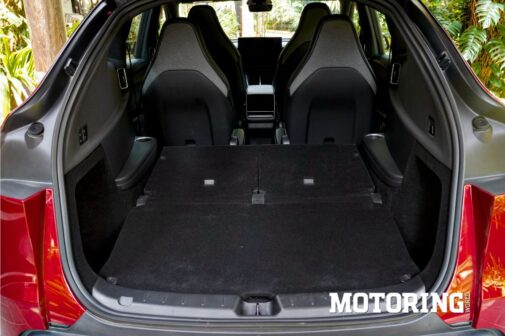
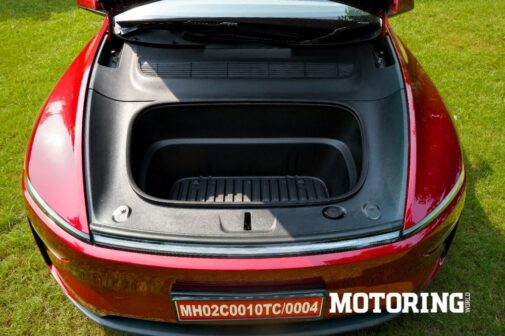
Boot space makes a strong argument for the L. Fold both rear rows and capacity rises to a huge 2,423 litres. Buttons in the boot electrically fold the seats, a simple convenience that saves a bit of wrestling. Storage elsewhere is generous, with large door pockets, a deep centre-console cubby incorporating two cup holders and a smaller compartment for everyday odds and ends.
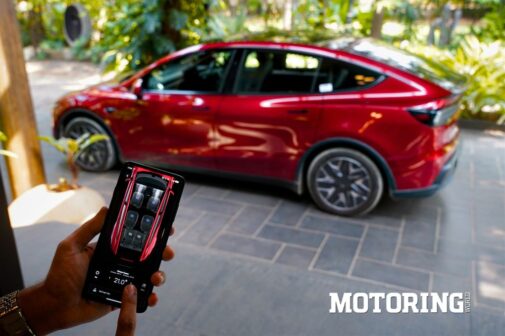
Power comes from a dual-motor, all-wheel-drive setup producing 507 bhp and 570 Nm. That is around 210 bhp more than the standard Model Y, which uses a single motor. The L reaches 100 kph from rest in 4.5 seconds, so there is no shortage of pace. Two drive modes, Chill and Standard, let you temper the response when you don’t need the full shove.
The 88.2 kWh battery and claimed 681 km range give it an advantage over the standard Model Y, whose claimed range is 181 km lower. Real-world range will depend on speed, weather, traffic and how enthusiastically you use the acceleration. With 250 kW peak charging, the L can accept power faster when conditions and the charging station allow. That helps on longer journeys, although fast-charger availability remains part of the equation. The headline figures are impressive, but the real benefit is combining range and pace in a car that can serve as a family runabout.
The more significant mechanical change is the suspension. Where the standard Model Y uses frequency-dependent passive dampers, the L gets electronically controlled continuously variable shock absorbers. The difference is clear on the road. It does a commendable job of taking the sting out of broken surfaces and most bumps. At low speeds, particularly over really rough patches, the body can rock and feel unsettled. Pick up the pace, though, and it settles down considerably.
High-speed stability is excellent, and the car feels planted. Ground clearance is 169 mm, enough for most everyday conditions; even taller speed breakers are manageable if you approach them sensibly. The steering is light without being vague and offers three weight settings. I kept it in the lightest, which felt right even when driving briskly. The front end responds eagerly, and the throttle calibration is spot on. The brakes deserve credit, too: their progressive action makes slowing down smooth and predictable.
The standard Model Y was already a good-handling car. Despite the L’s extra length and height, much of that ability remains. The shorter version feels a little tighter and more flickable, but the L is impressively composed for a three-row family EV. It is quick, sure-footed and genuinely enjoyable to drive. That matters, because the added space could easily have come at the expense of the qualities that make the Model Y appealing in the first place.
The Model Y L is therefore more than a larger Model Y. It is quicker, rides better, offers a claimed range 181 km greater than the standard car and adds a usable third row to a more spacious cabin. That third row has limits, and the absence of physical controls remains irritating, but there is plenty to like.
I would choose the standard car only if budget were the deciding factor. For the extra Rs 11 lakh, the L brings a meaningful increase in performance, comfort, equipment and practicality. Its appeal is not just that it can carry six people; it also manages to be involving from behind the wheel. Rivals may take a more conventional approach to family motoring, but Tesla gives the Model Y L a character that feels distinctly its own. It’s a compelling all-rounder, and one Indian buyers should look at for reasons beyond the extra seats.